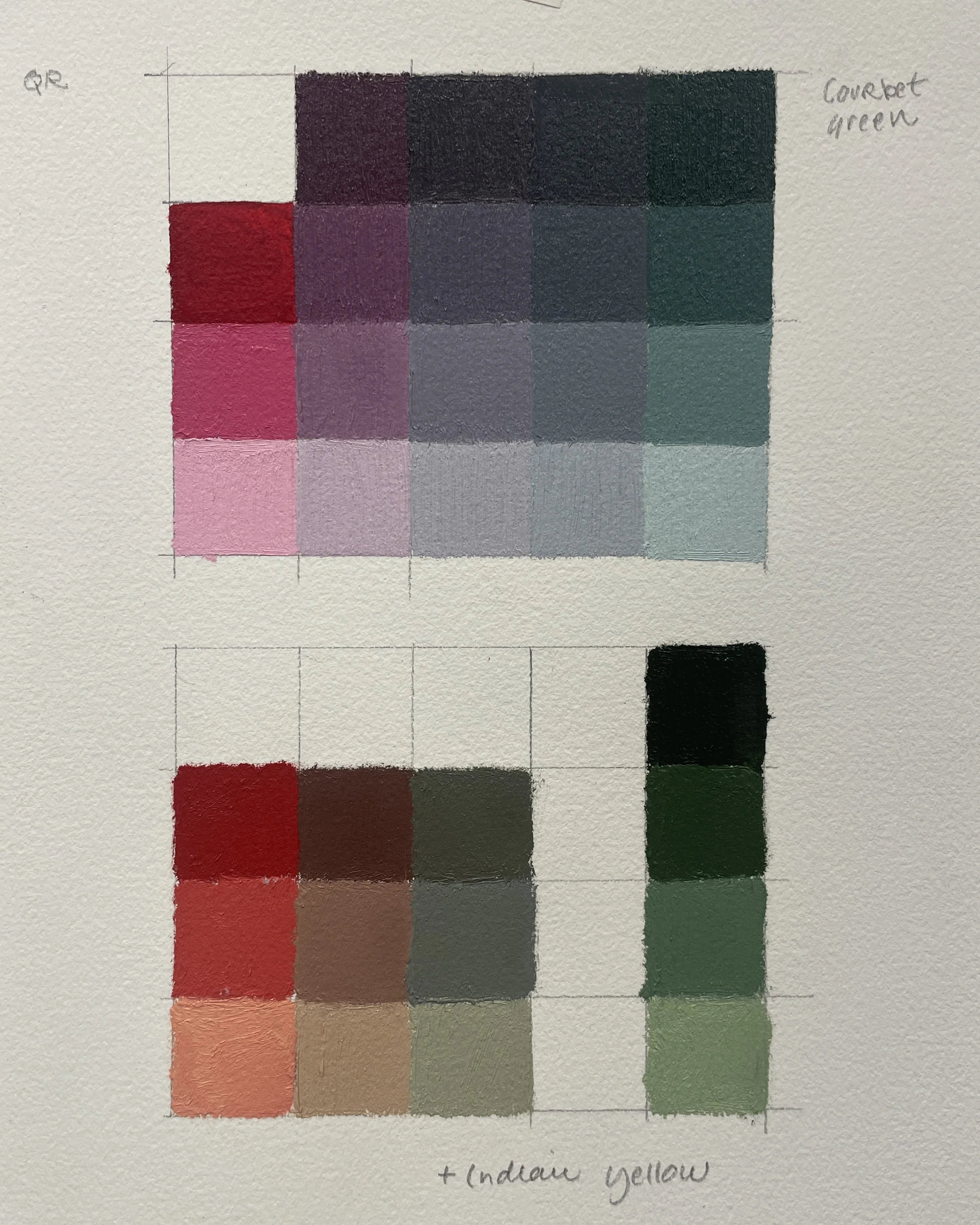
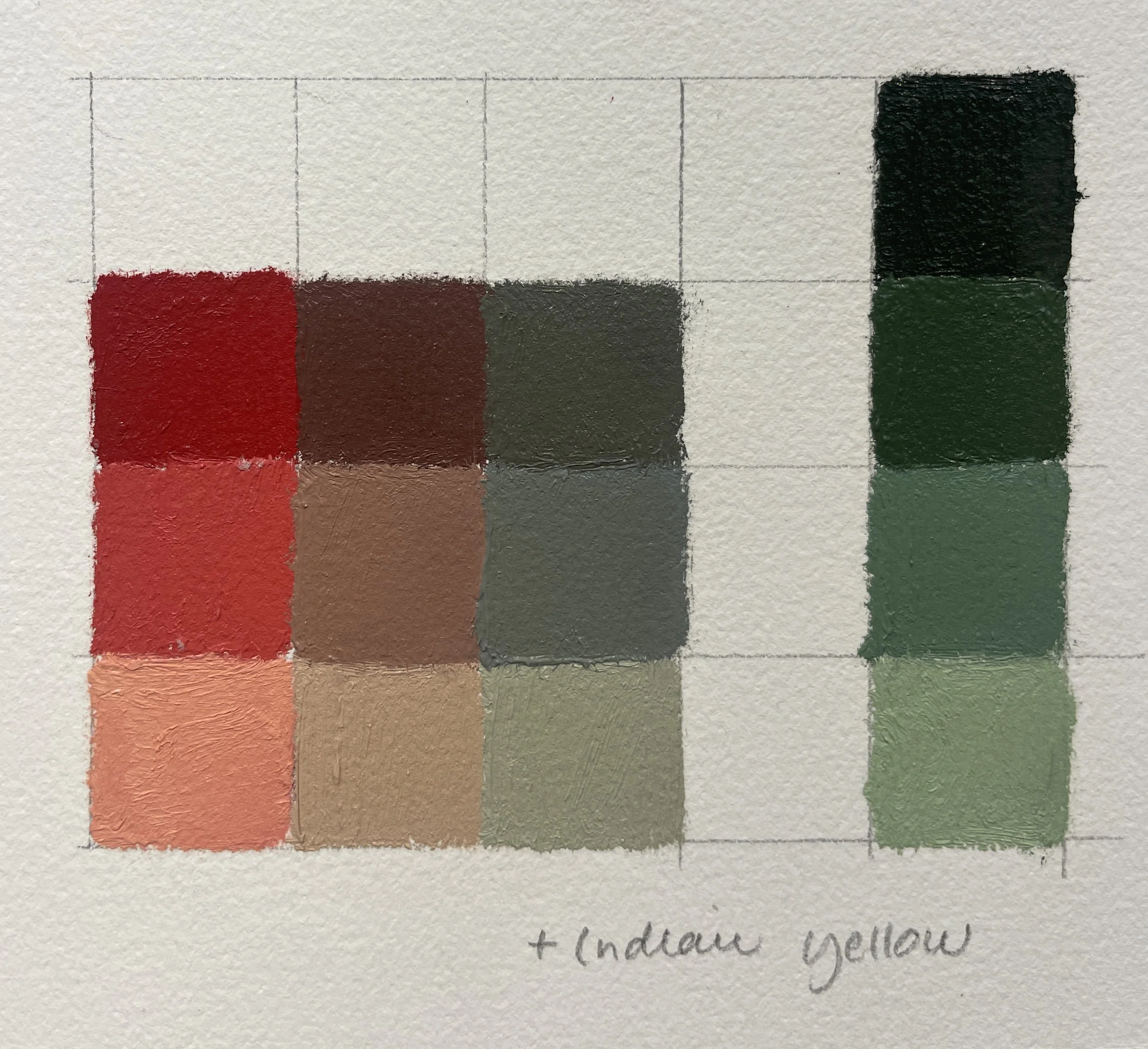
Red / Green with Yellow Satellite
Yellow is a wonderful hue for satelliting into the Red/Green complement set palette because it allows this temperature-ambiguous set to more clearly express warmer versions of its hues. Yellow creates Reds that are clearly warmer, AND it creates Greens that are clearly warmer. Additionally, Yellow added to our neutrals can create new tertiaries that support and express an assigned temperature structure.
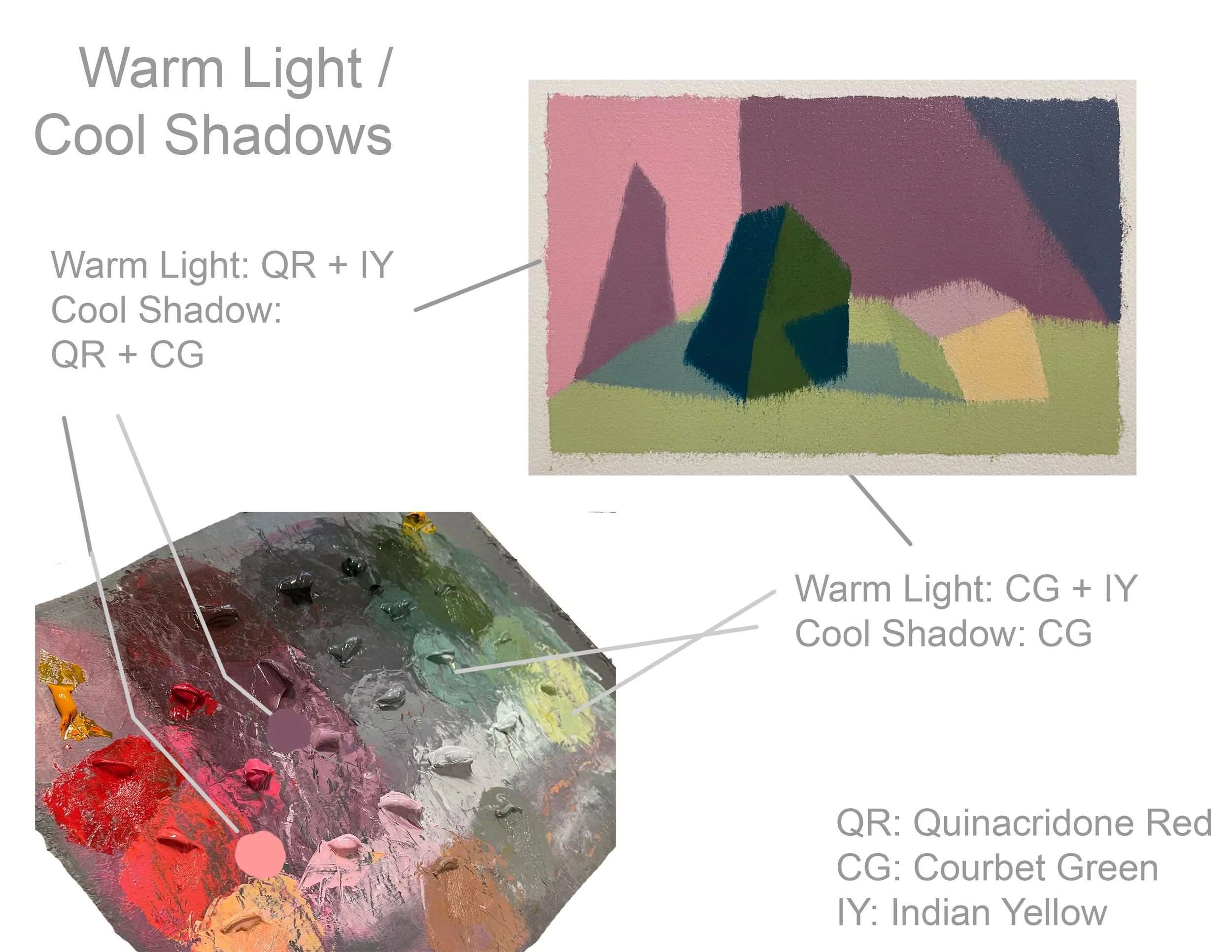
How yellow interacts and alters your set of course depends on the pigments used. In the set below I am using a cold red (Quinoacridone), and a fairly neutral green (Courbet). My satellite color is Indian Yellow, a very warm, orangish yellow. My coolest cools in the set, then, are my greenish neutrals.
In this 30min video I consolidate my palette, simplifying it and making room on the palette for mixing satellite hues with yellow. My starting palette is Quinoacridone Red (a colder red, transparent, thin, saturated) and Courbet Green (earthy, already a tertiary color, opaque and viscous). I am using Indian Yellow (transparent, thin, intense, warm) as my satellite hue. AUDIO ON.
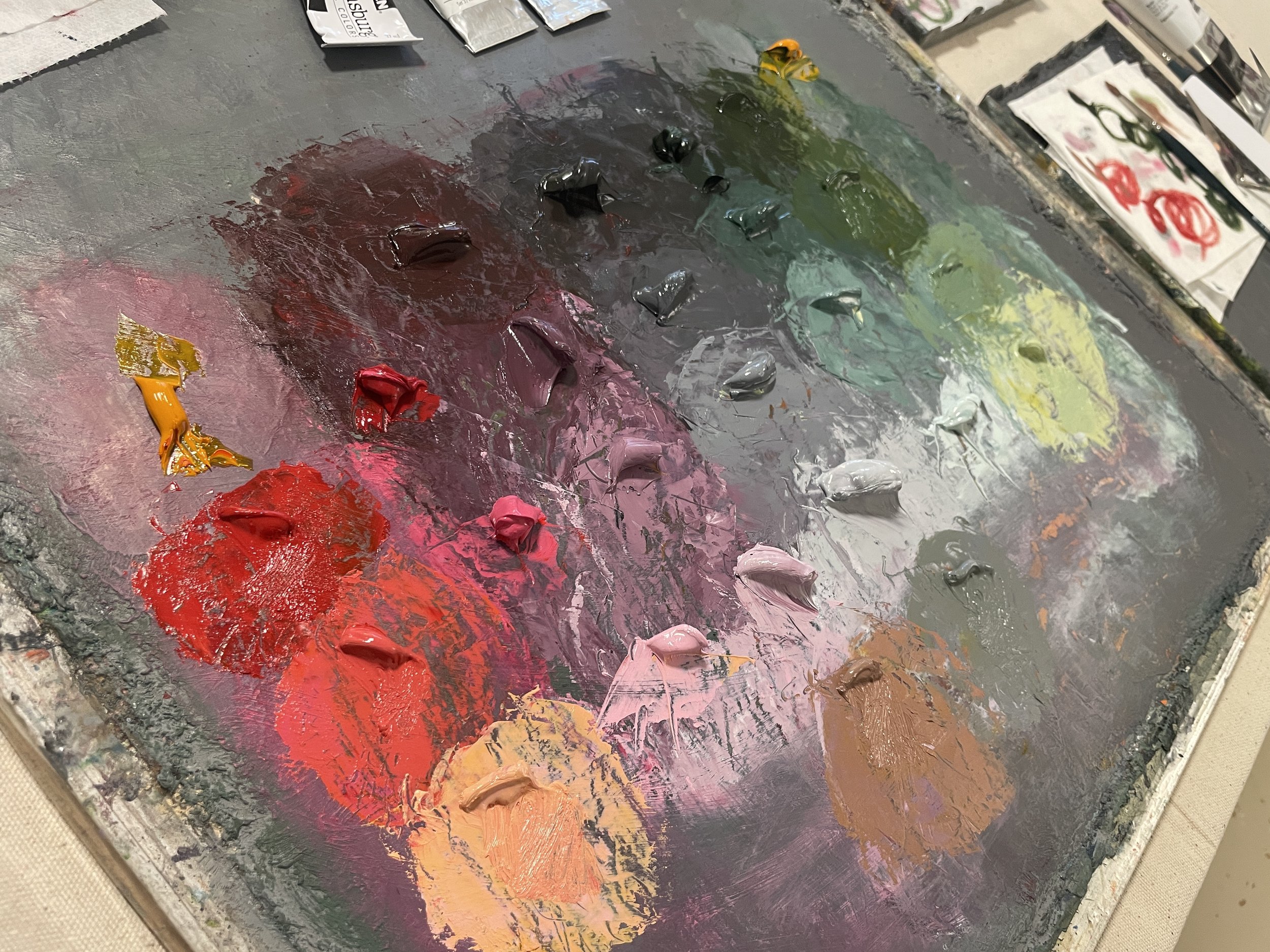
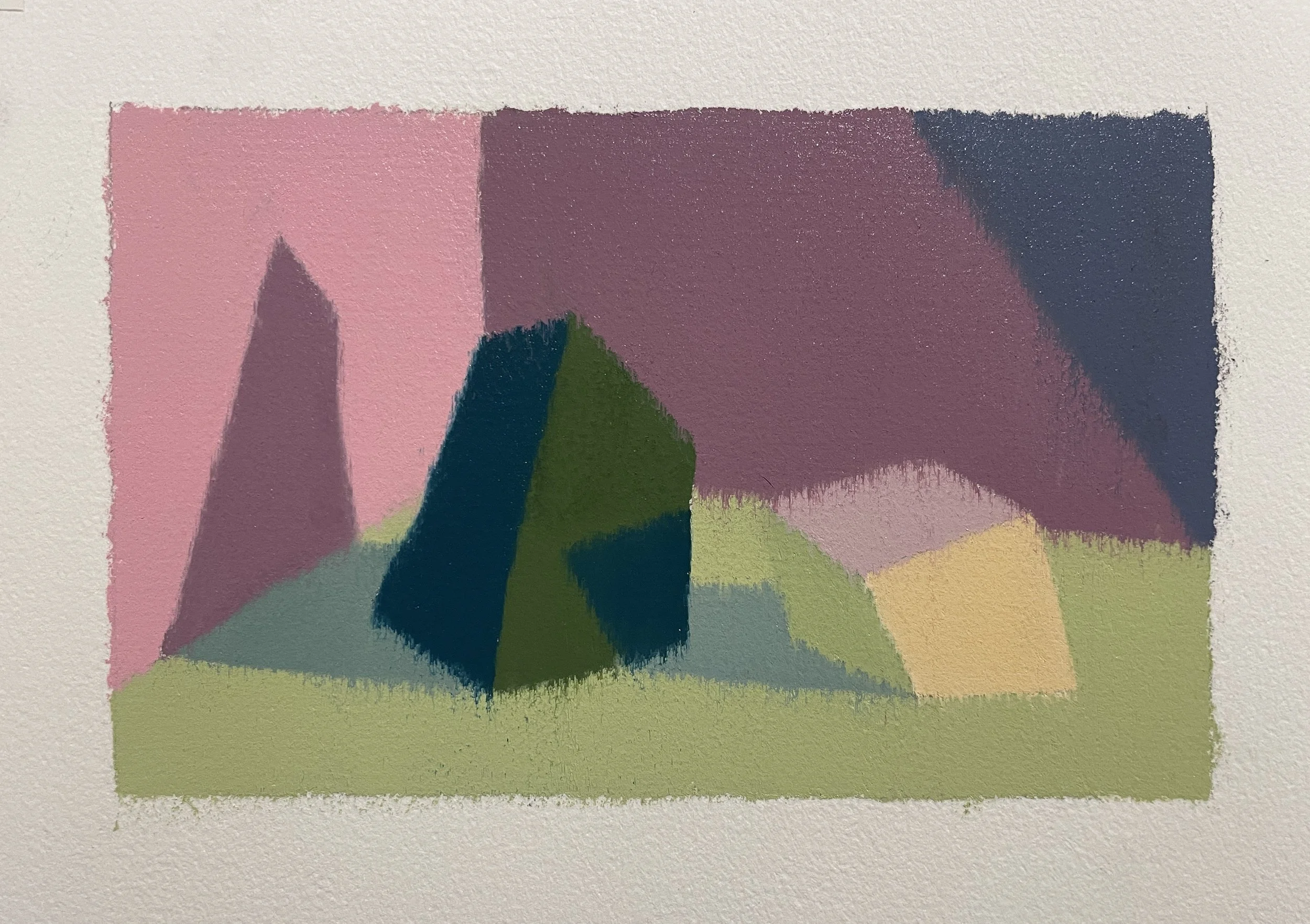
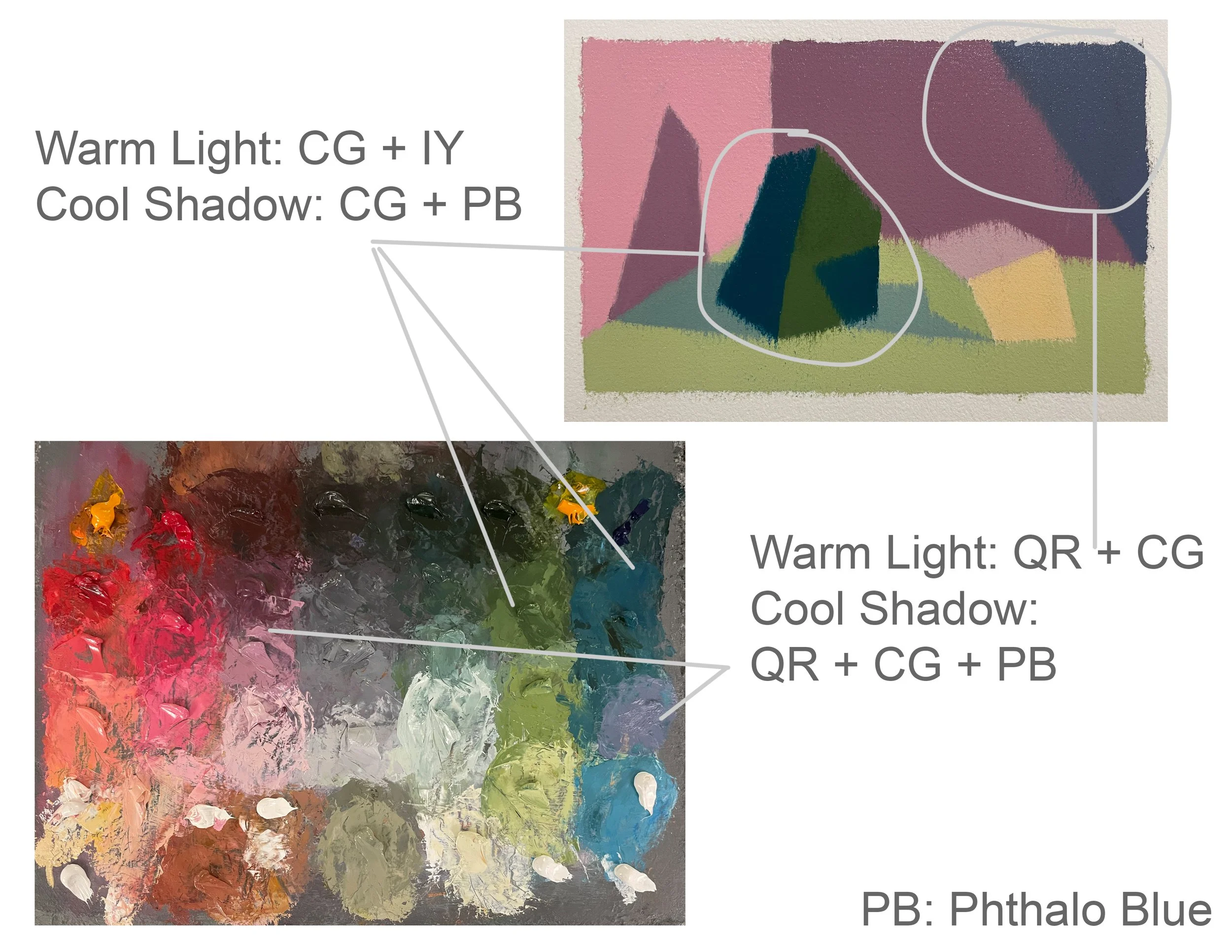
Palette Extension: Phathlo Blue for some cooler cools. I happen to have this extension on my palette from my de Heem study, so decided to use it in this study.
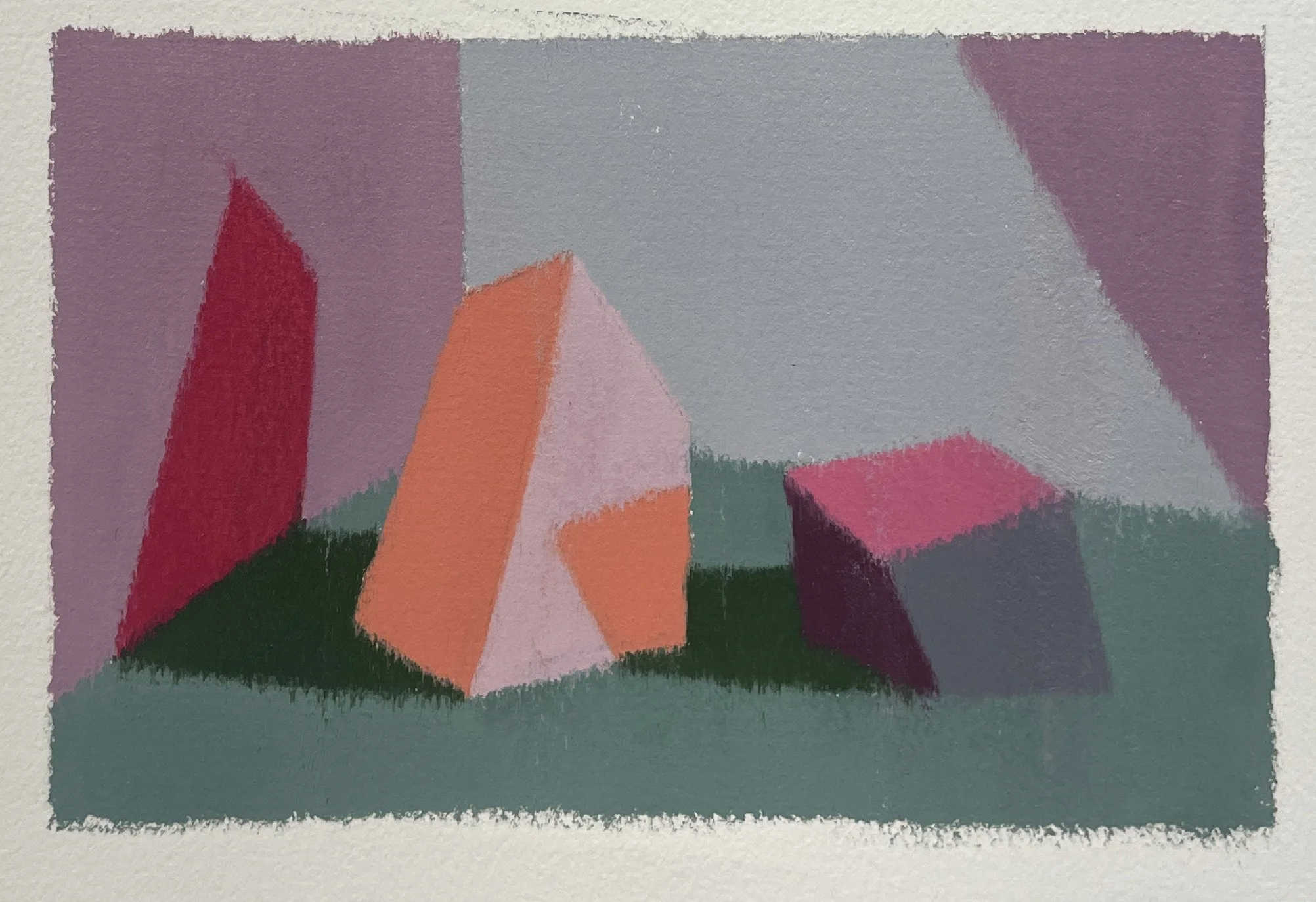
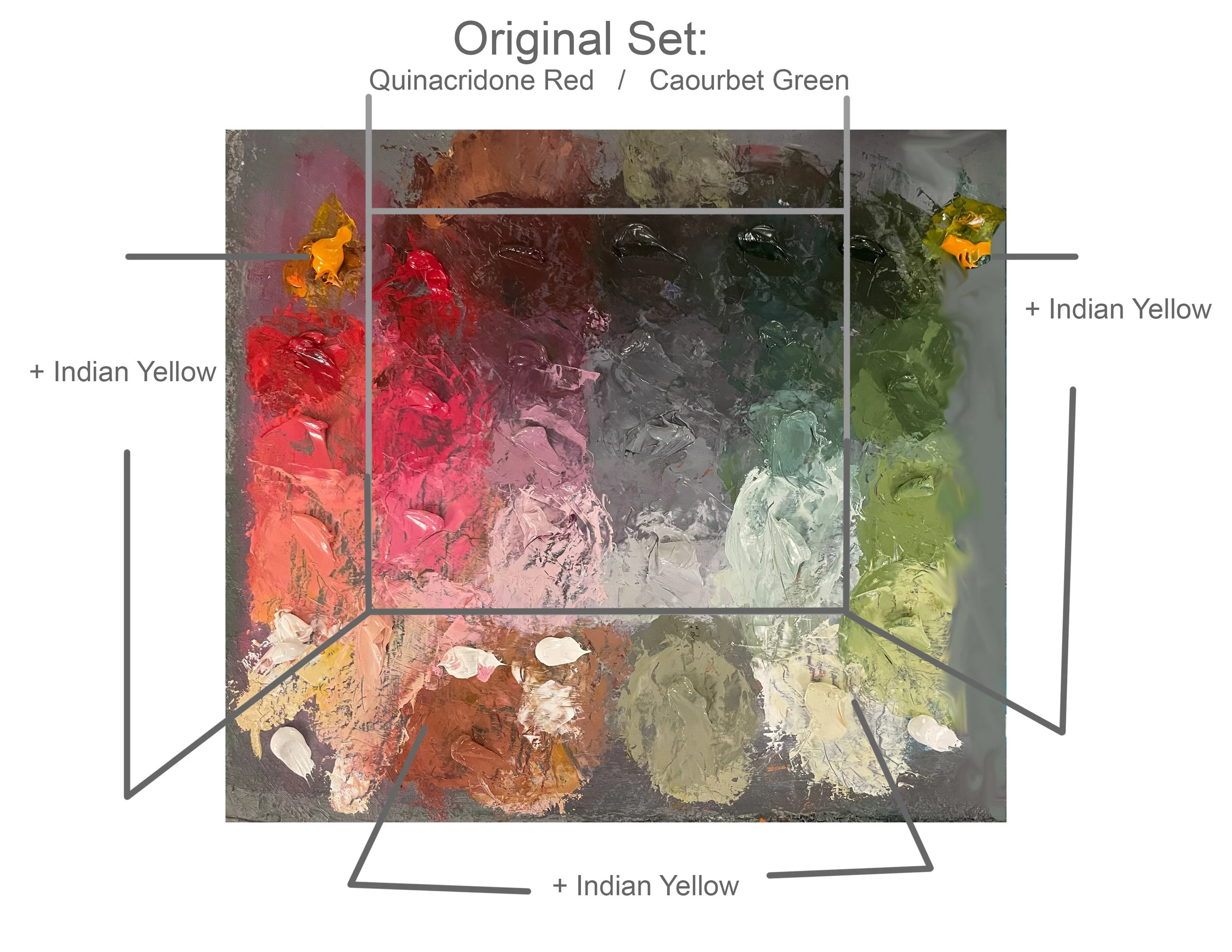
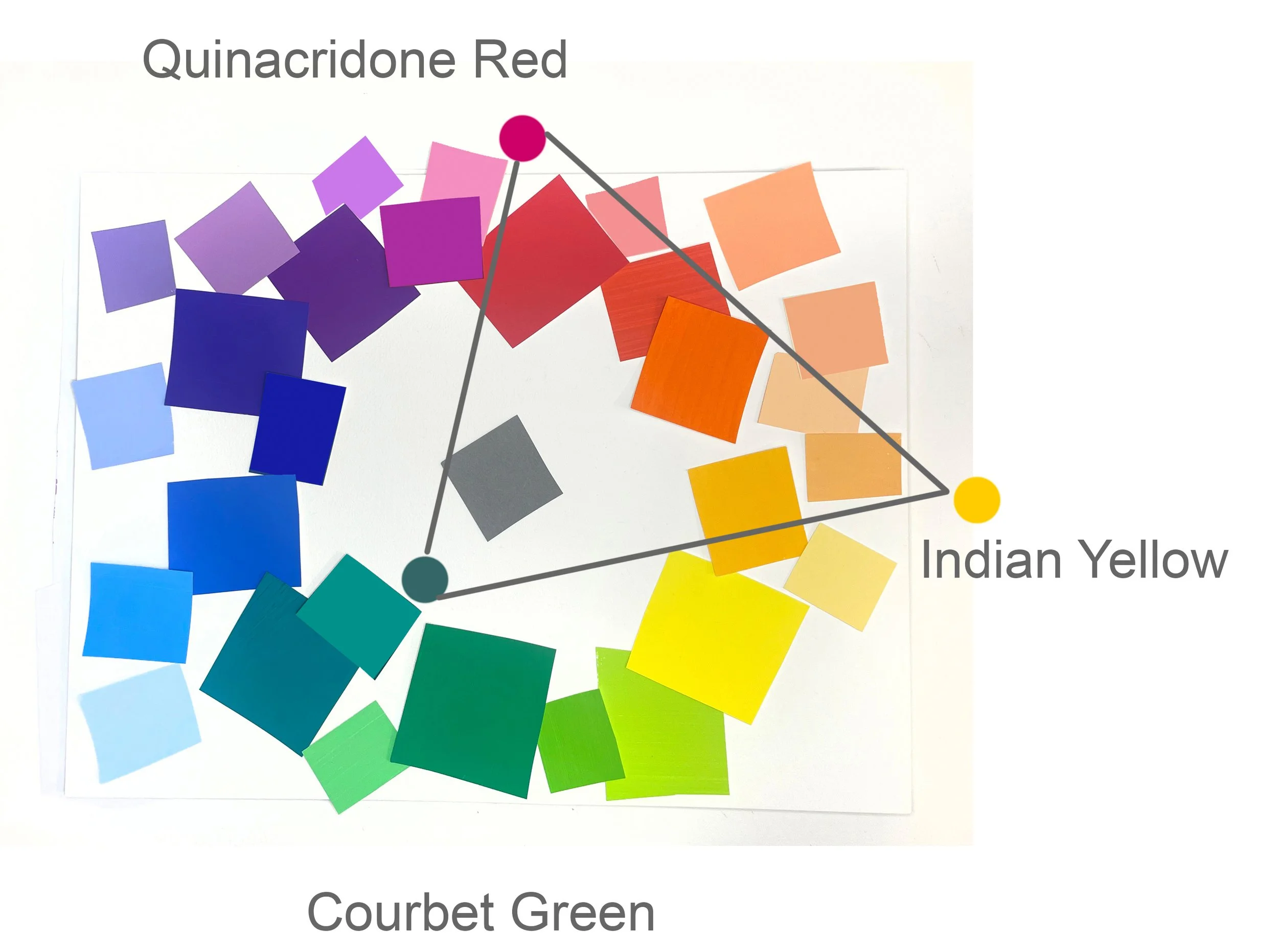
Please keep in mind that there are no “right” answers for what set and what satellite to use. Every option carries it’s own interesting relationships and limitations. The point here is to get acquainted with your pigments, to experiment, and to expand your color awareness.
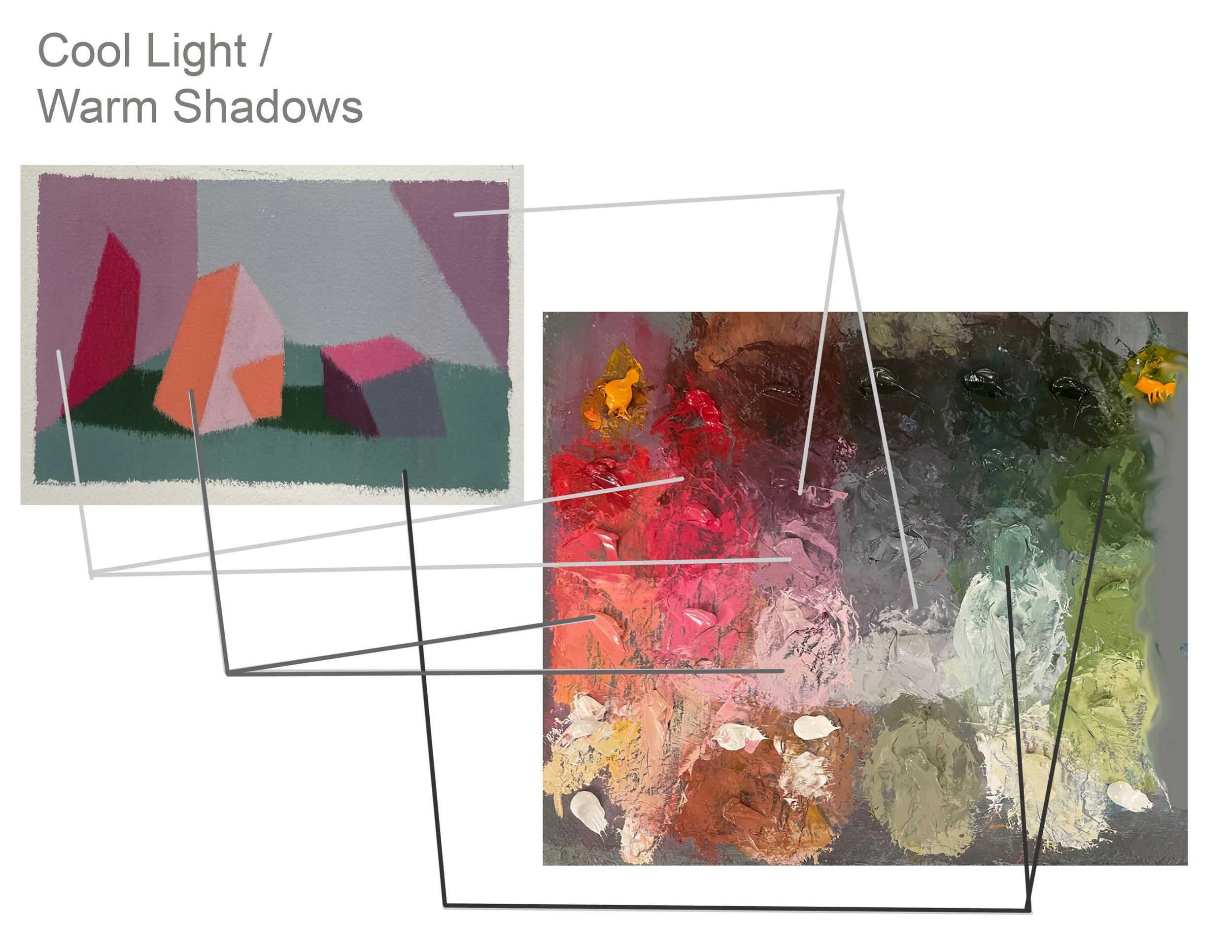
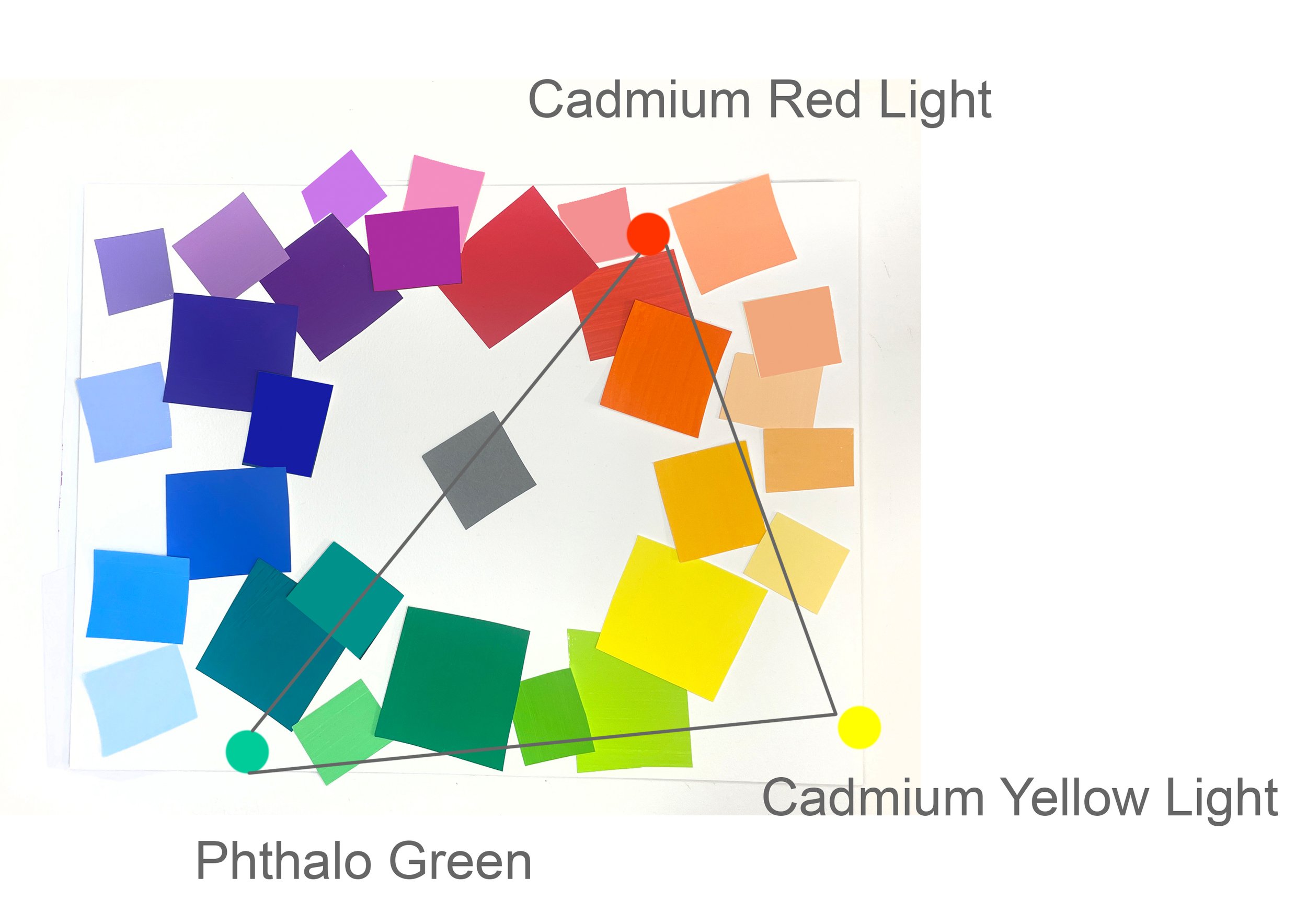
Here is another example of hue range with other pigments. The Phthalo Green, being very cold and saturated, expands our temperature and hue range. An Ultramarine Blue and/or a Quinacridone Magenta would be great, additional satellite options for rounding things out.
MIXING THE PALETTE