
UNIT 4:
OIL PAINTING OF FABRIC:
STRUCTURE AND SENSUALITY
OBJECTIVE:
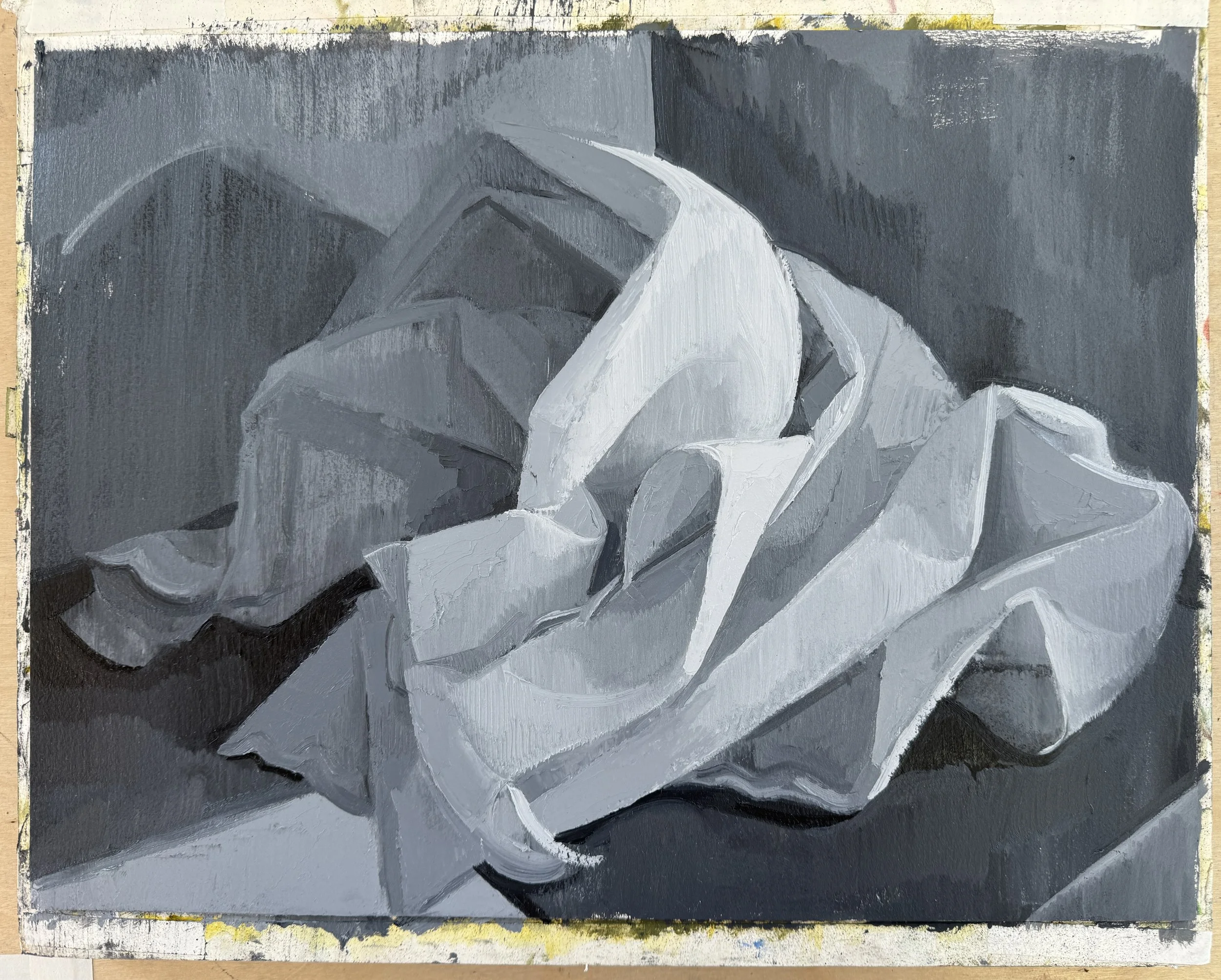
A sensitive study of fabric that has a simple, planar, geometric foundation that upholds a series of more subtle, relative-value shifts.This is an exercise in holding onto the big, structural shapes, while going into the smaller, more detailed nuances of form.
UNIT 4
FABRIC PAINTING IN OILS
Step 1: The Setup
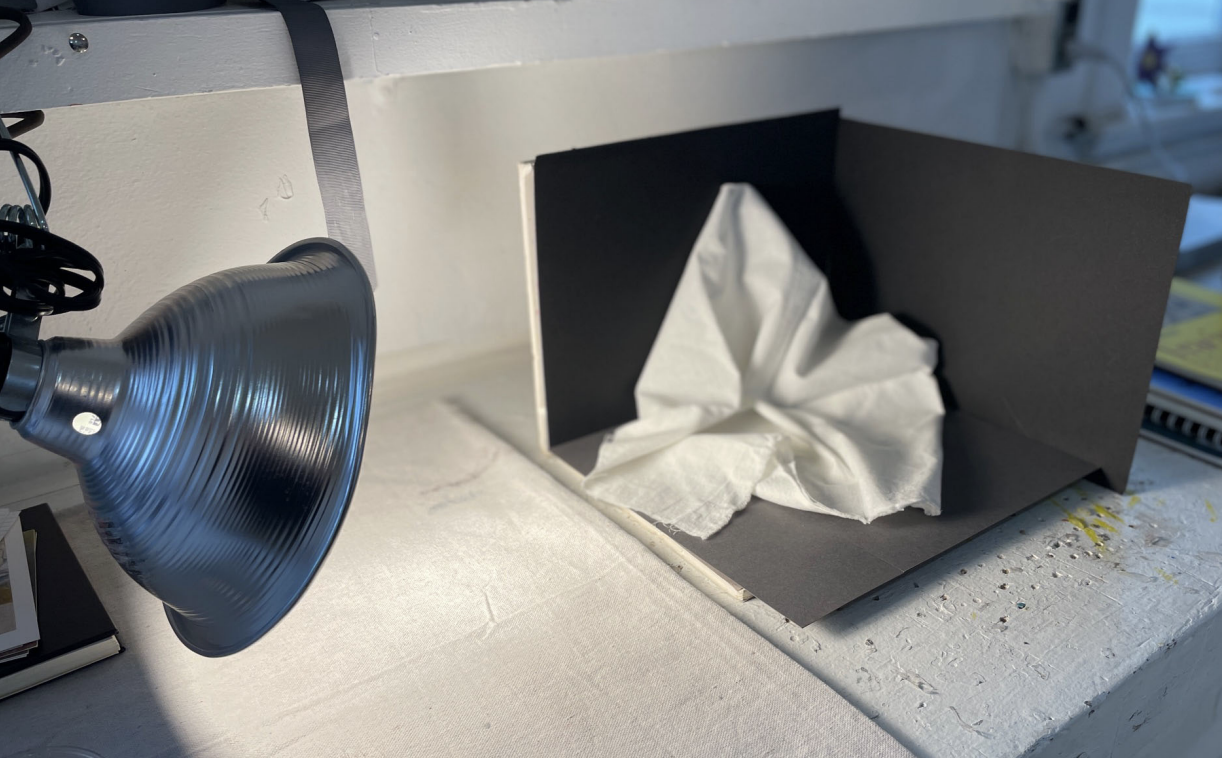
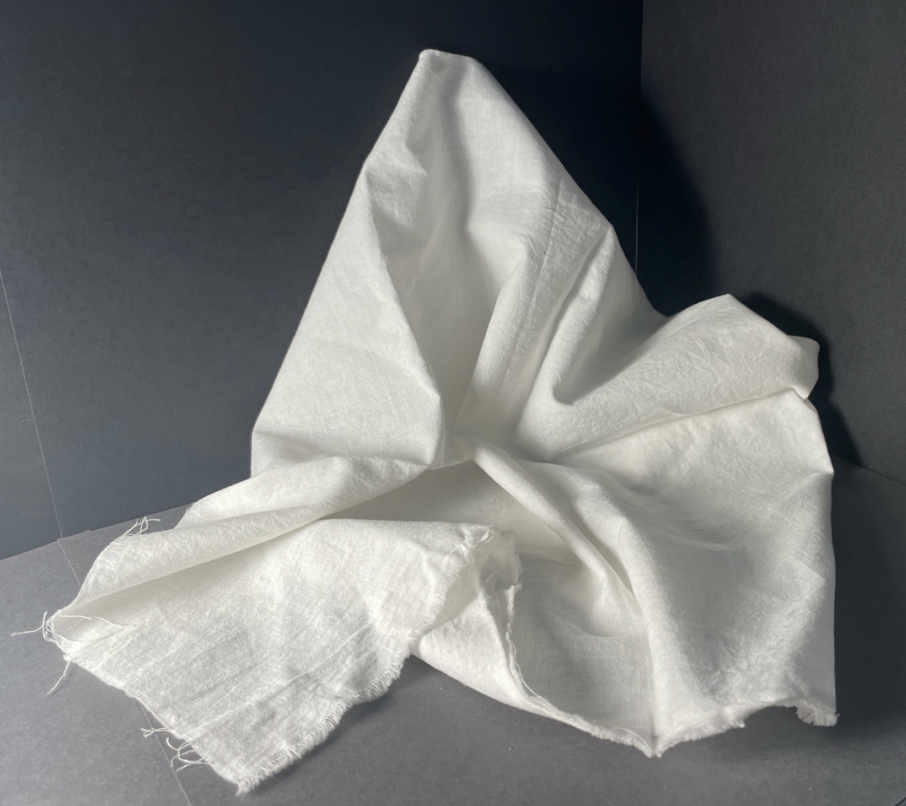
Line your theater with black, gray, and/or white papers. Arrange a scrap of white fabric: In a heap on the floor, shrouding an object,suspended from the wall, etc. Fabric is very sensual and expressive. Move your light around to create a dynamic series of light and dark shapes. This will be a study in the subtle, relative values in the lighter range of your value scale. Look for larger zones of value to help you organize and group your hierarchy of values.
Step Two: The Drawing
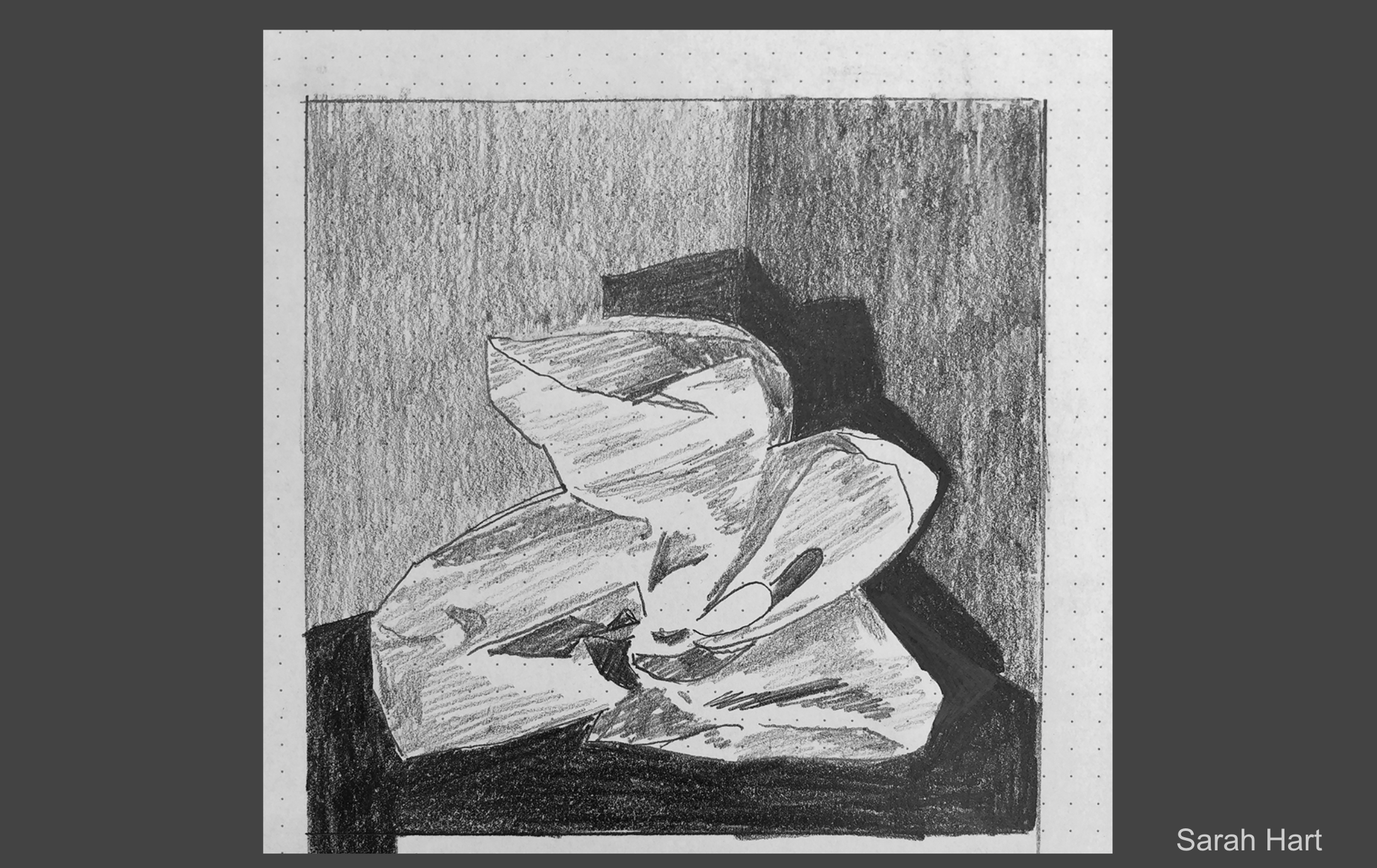
In your sketchbook, get acquainted with the overall structure and shape of the fabric, and how it fits within your rectangle (composition). Start with the “envelope” and then notate the major shifts in value/structure. Feel free to use whatever material feels free and investigative to you ie: graphite, sharpie, crayon etc. We are not necessarily concerned with making a beautifully shaded drawing, but rather using the drawing as a tool for research into the larger gesture of your fabric and the planes of value.
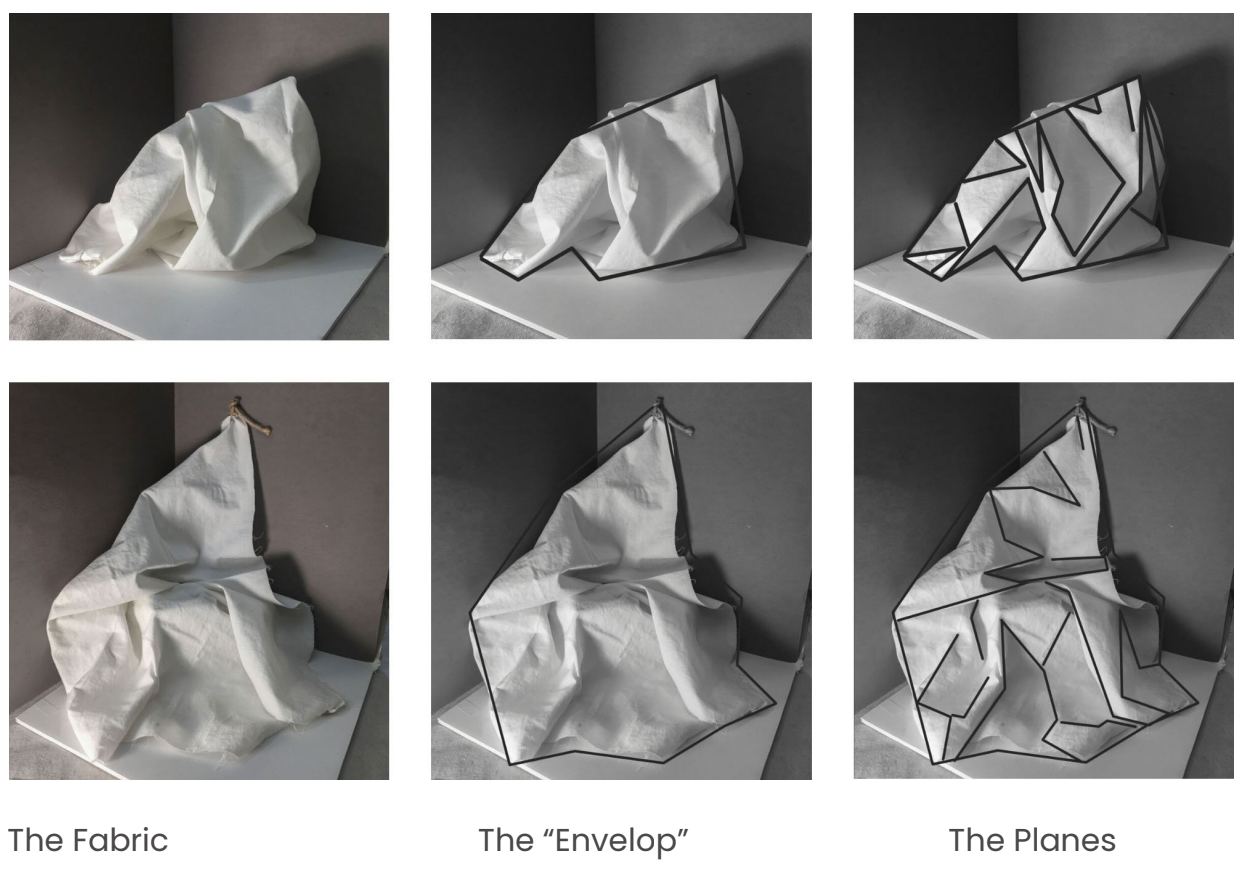
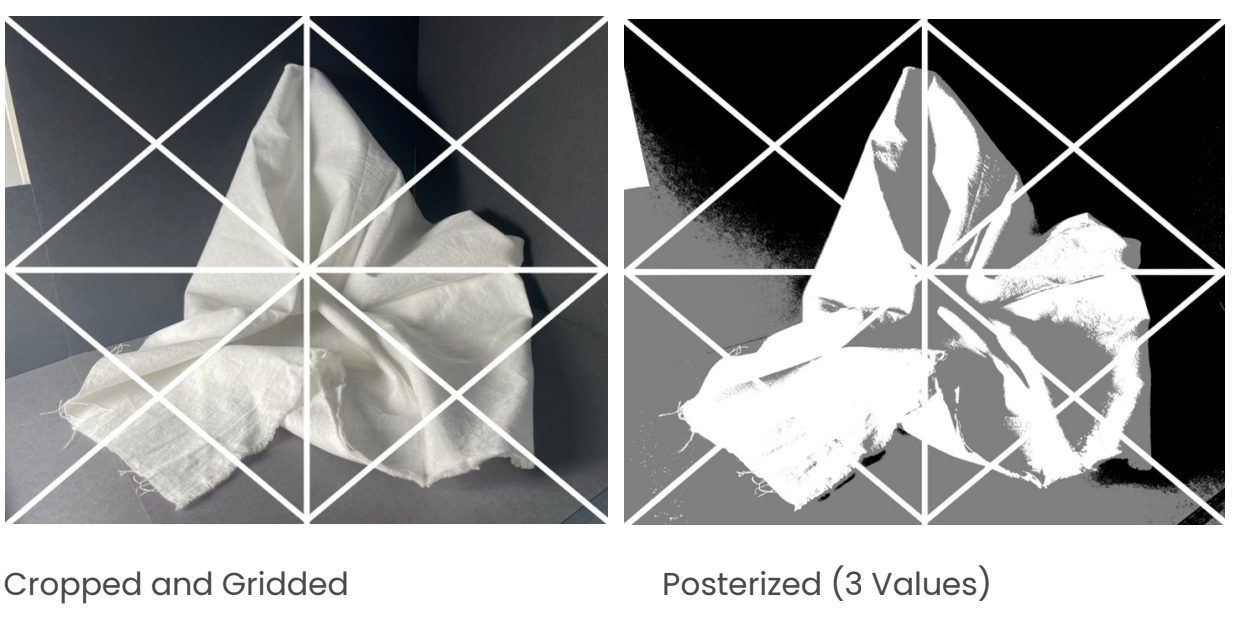
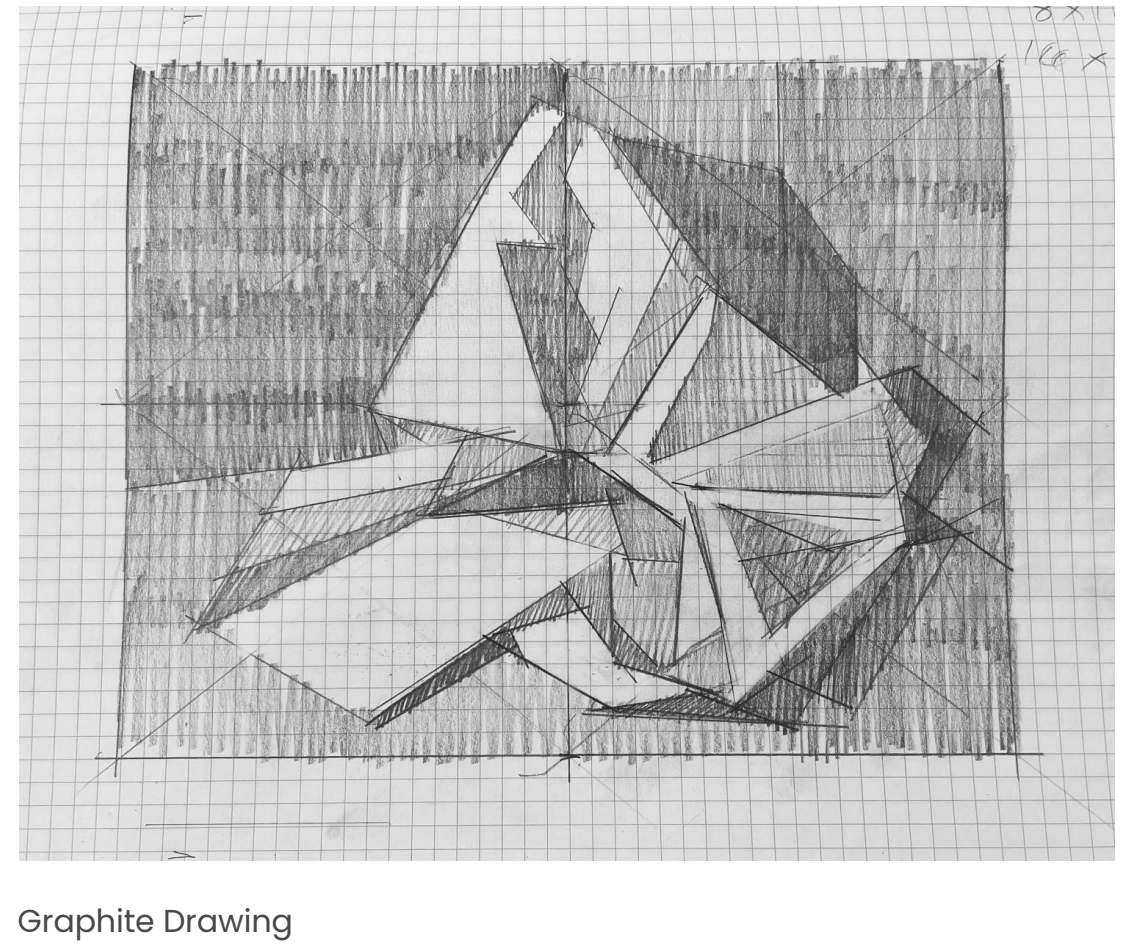
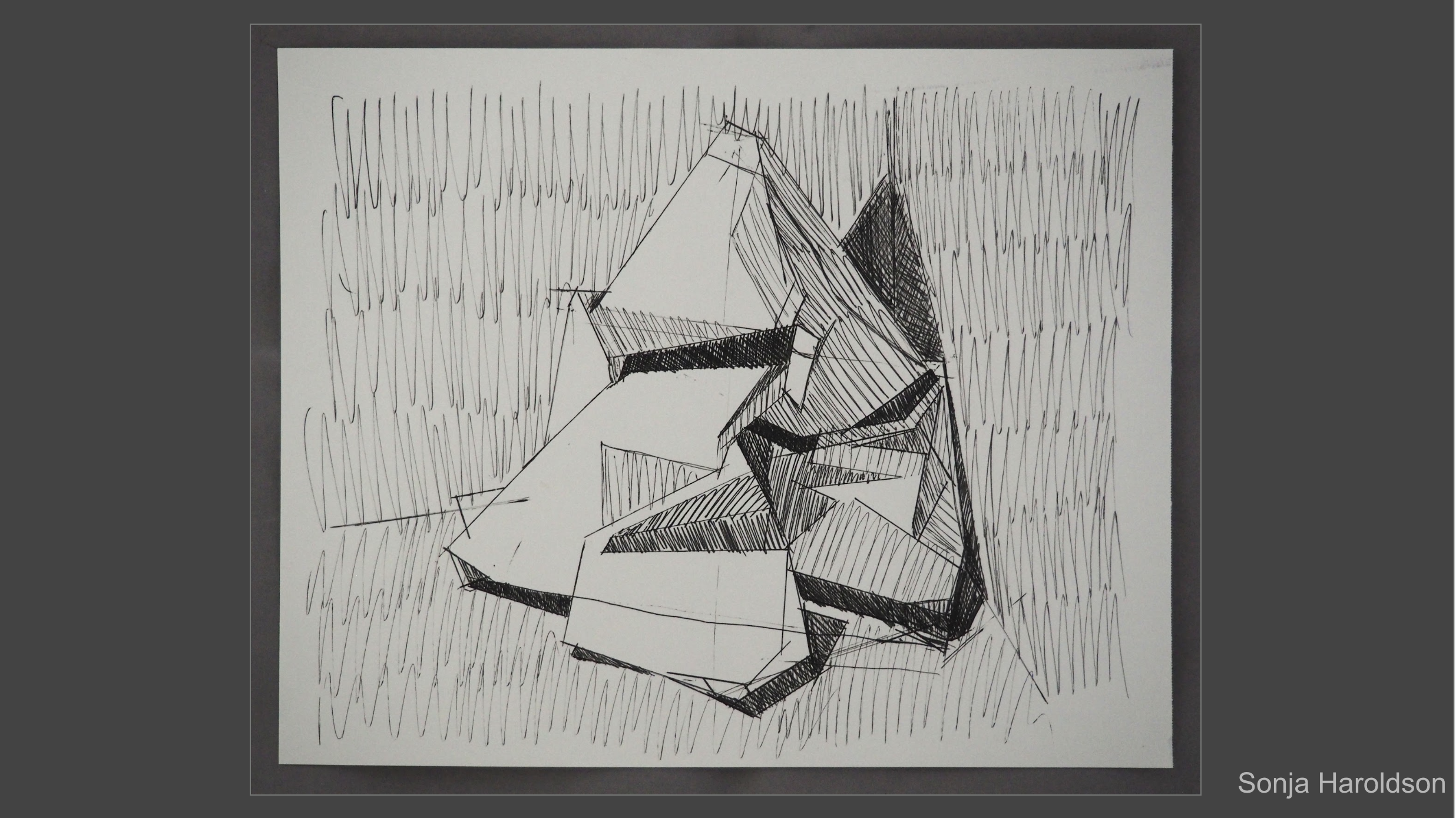
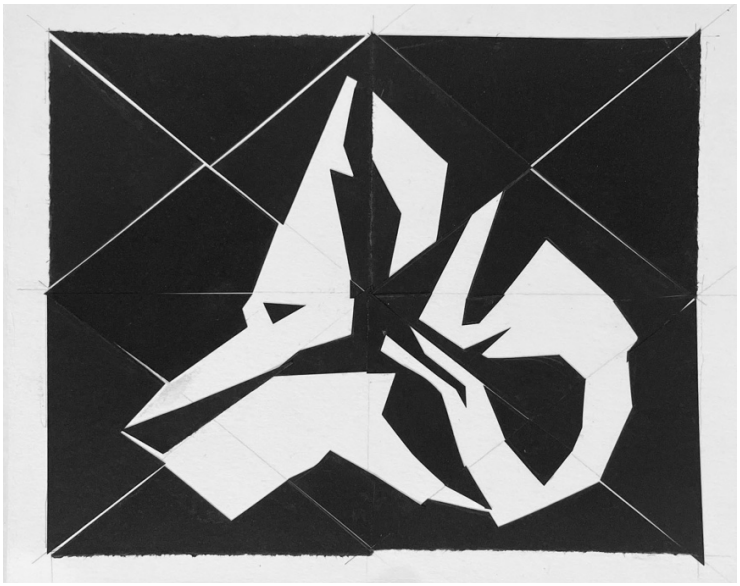
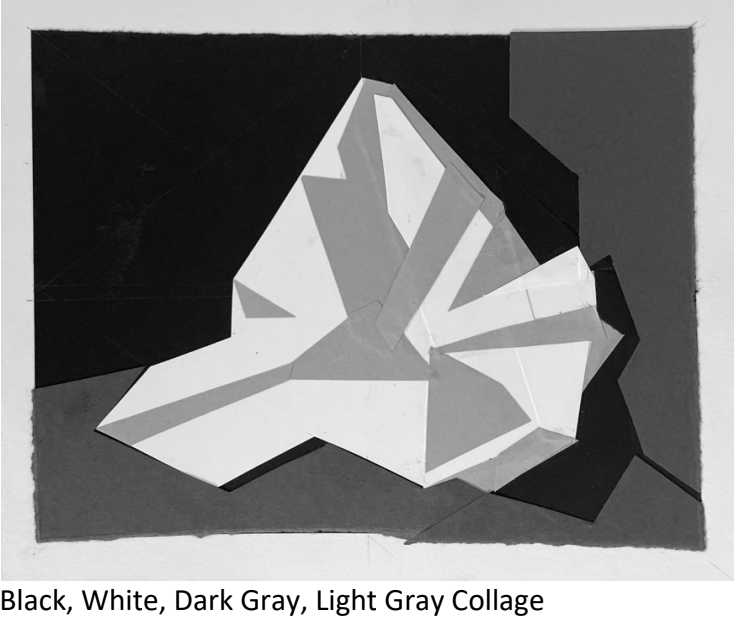
Student examples:
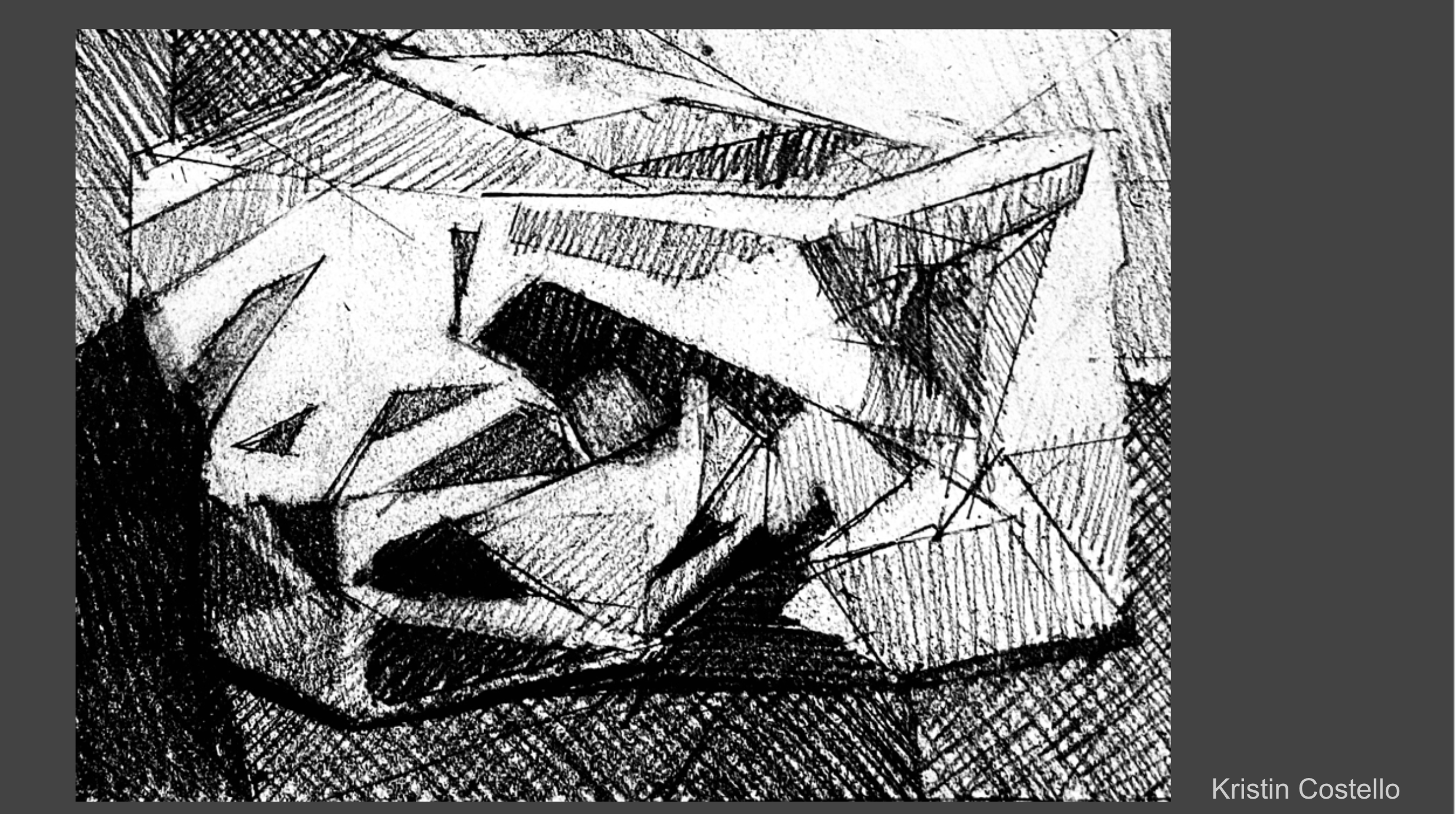
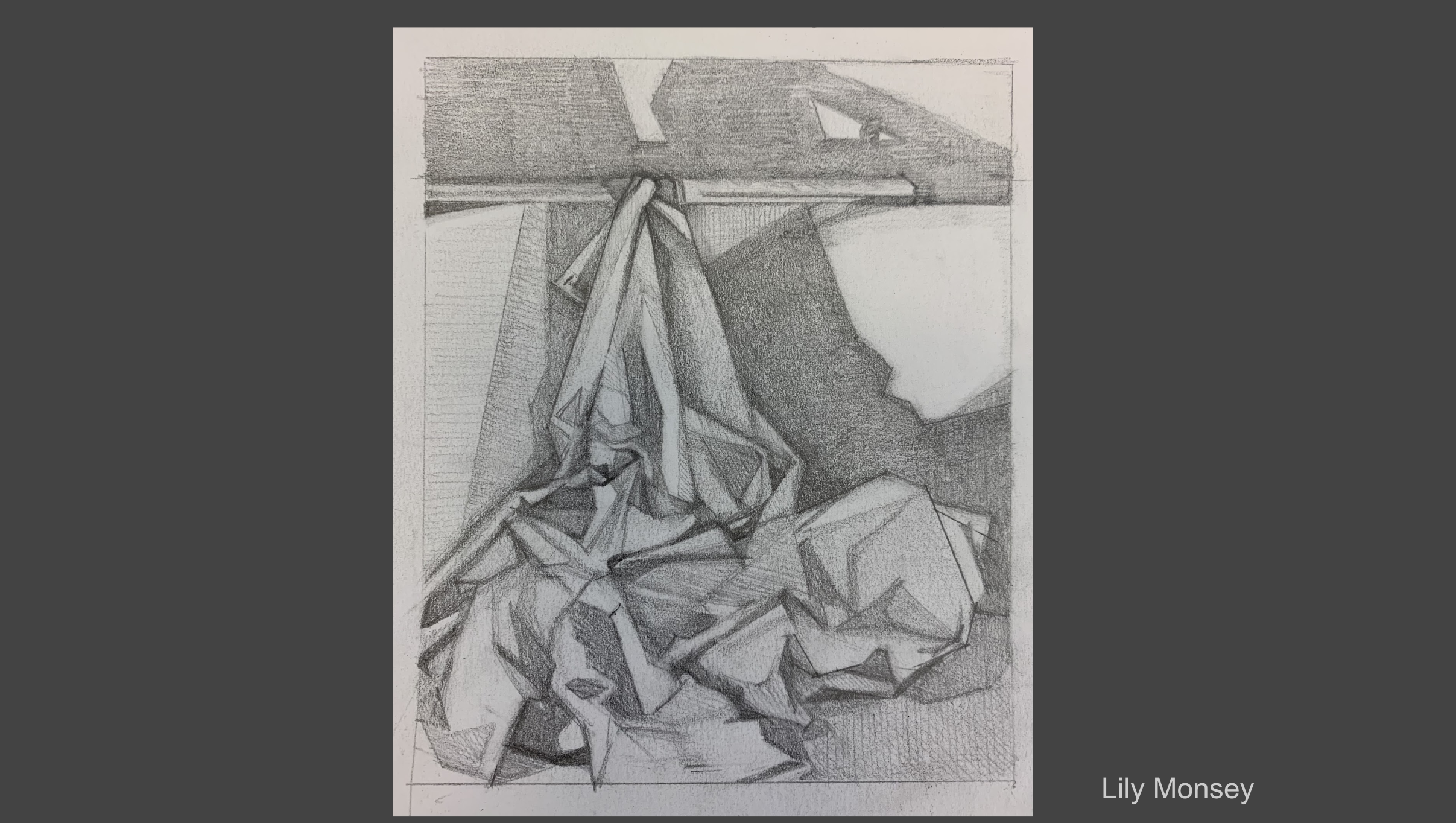
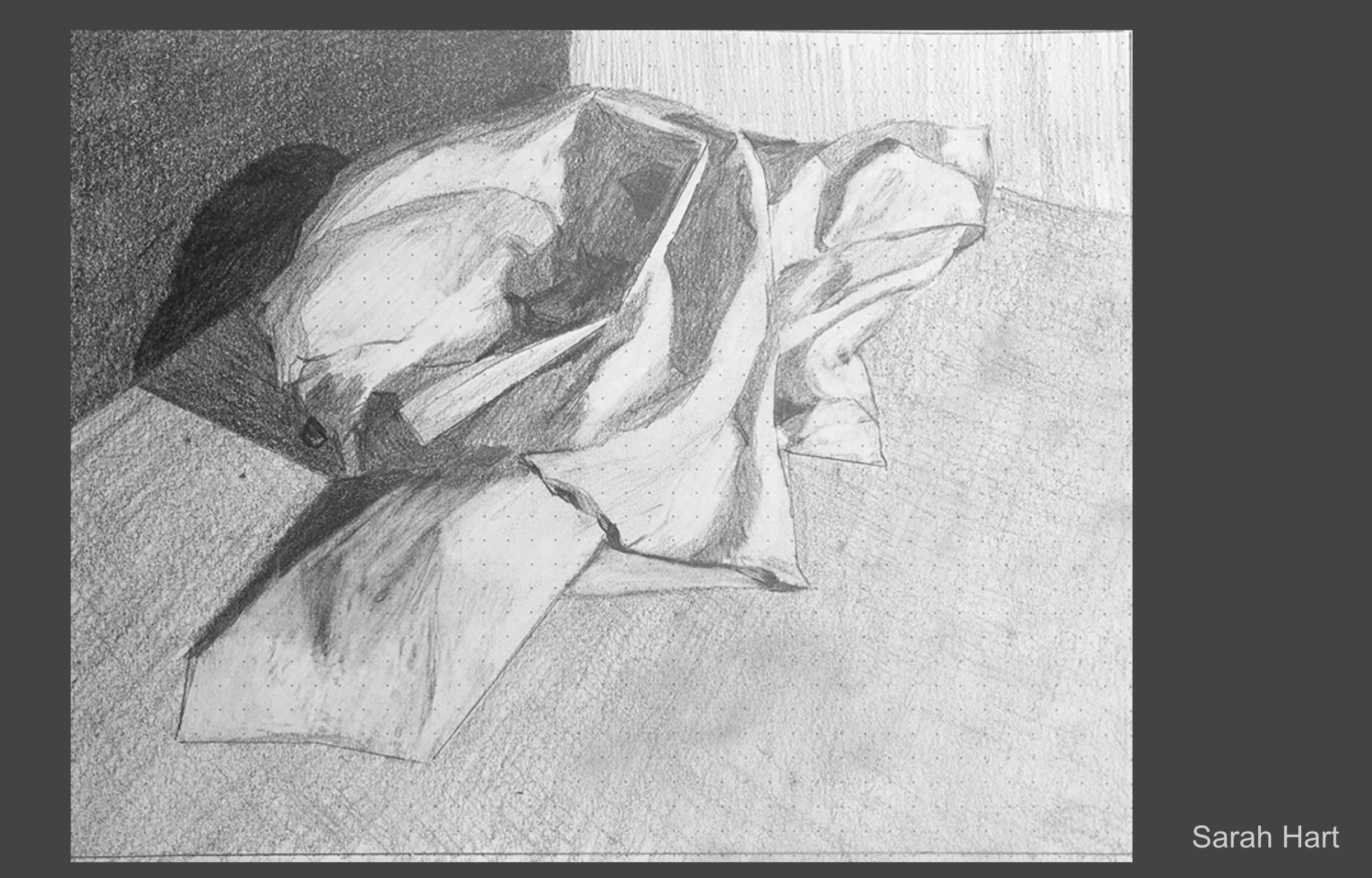
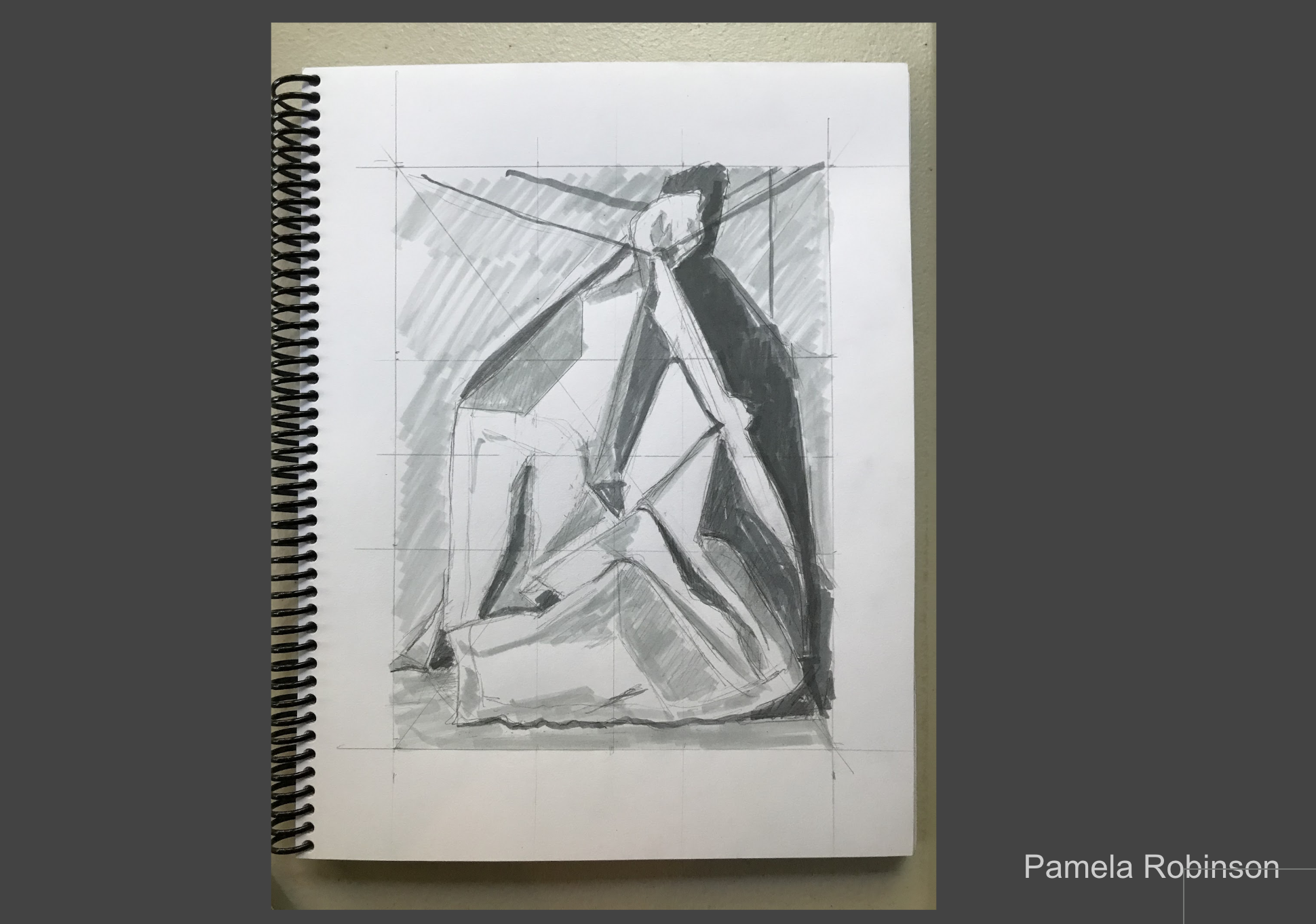
Optional: Create a series of 3-Value gouache/collage studies at this stage, keeping to the larger shapes.
Step 3: The Painting
-Using your sketch as a guide, begin with a simple, linear gesture to divide your rectangle into its main shapes. In this example I am working on a 12” x 16” sheet of Arches Oil Paper.
-Block-in the larger shadow shapes with thinned-paint, using OMS.
-Next, using opaque mixtures of your value-scale, block-in the main shapes of value, covering the white of the page.
-Begin building-into some of the more subtle relationships and folds, using smaller brush strokes, slowing down, getting a tactile sense of
the form. At this stage, it is a constant dance between the larger structure (notated in your sketch), and the smaller moments. It is a challenge to hold onto that larger, planar structure— to not dismantle it while paying close attention to details.
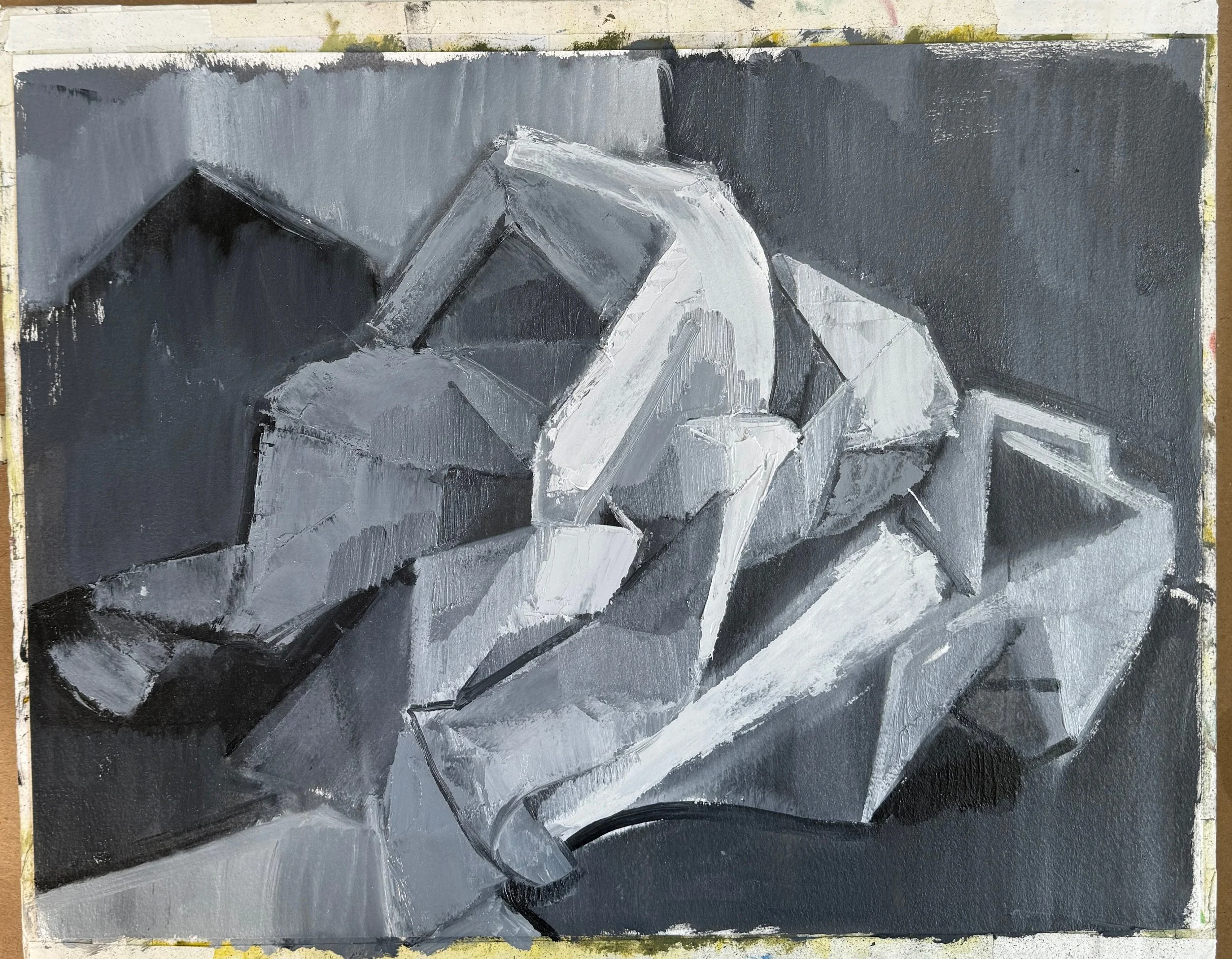
The Painting - First pass
Inky wash using thinned-down ivory black and titanium white. Finding large shapes/planes.
Alternating between big chunky shapes and drawing with paint.
Mixing 3-4 values and blocking-in with a palette knife and bristle brush.
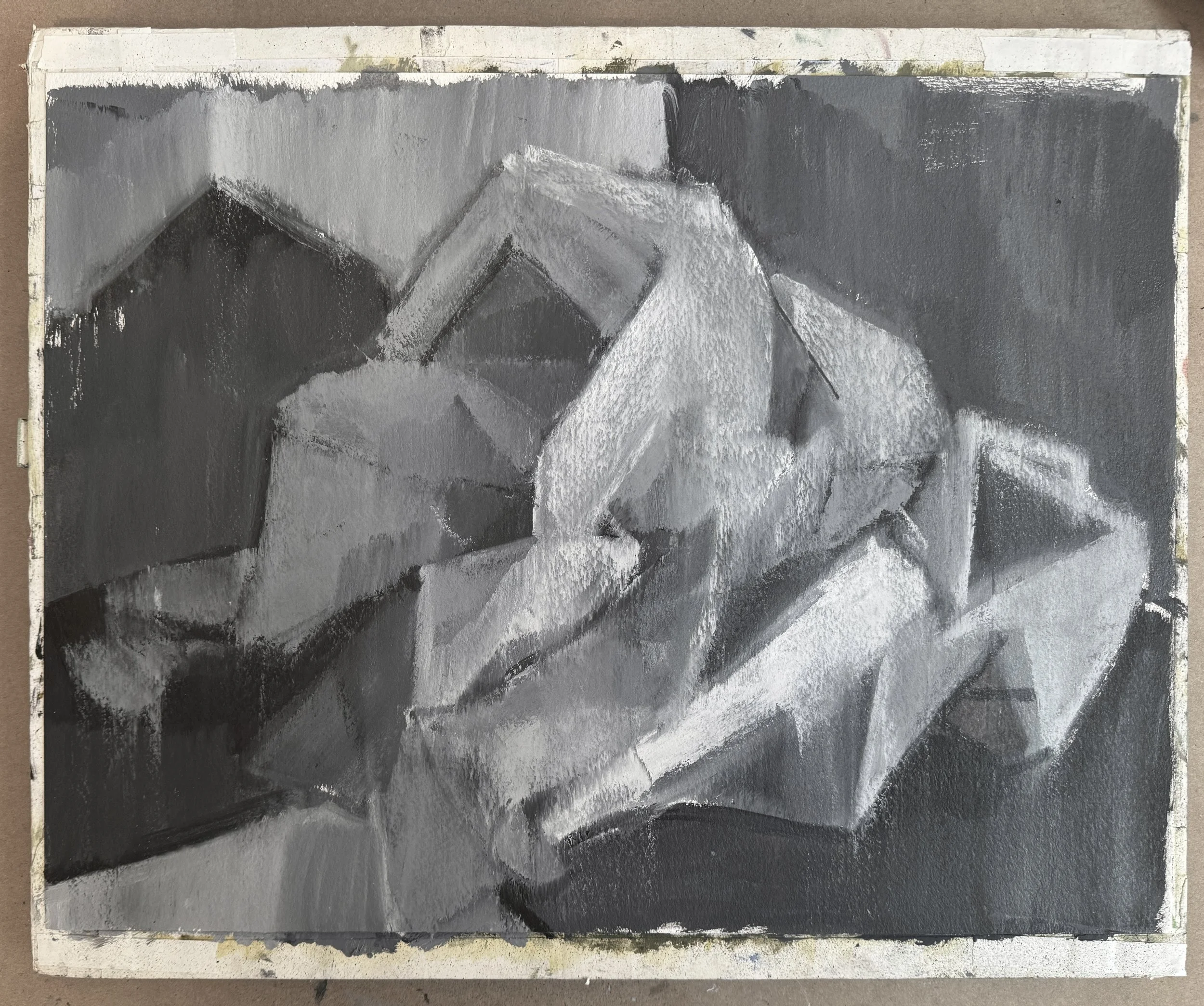
The Scrape down after first pass
Light palette knife scrape 24hours after first pass
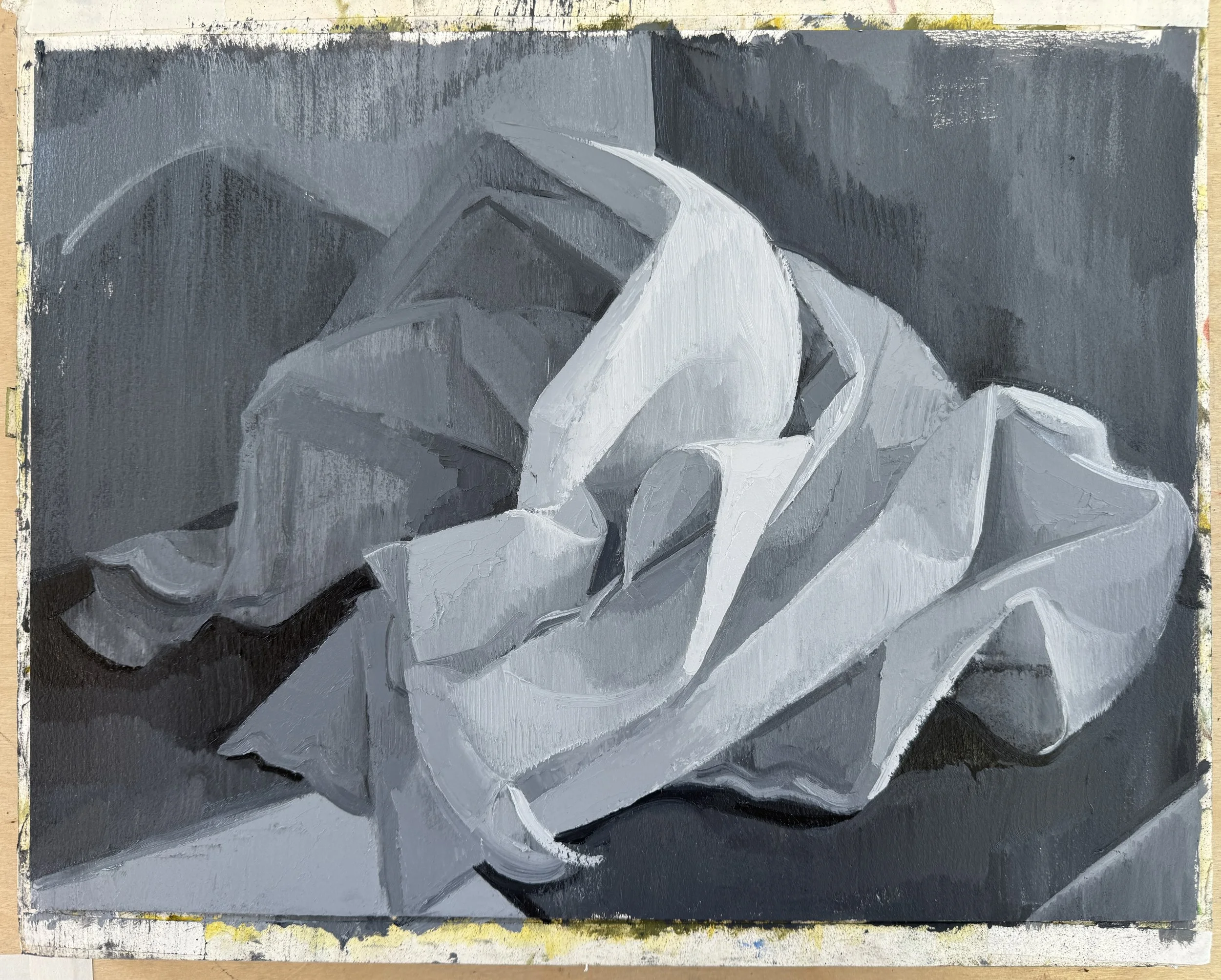
The Return - Second Pass after scrape down
Returning to the scraped-down surface, you can now refine your drawing and build-up the surface of the painting as you see fit. You can scrape-down and return as many times as you wish. Experiment with using both bristle and smooth brushes, as well as different thicknesses and thinnesses of paint.
This is the time to really slow down with your painting and begin building more paint onto the surface. It is at this stage of the painting that I began thinking about touch/mark making or edge quality ie, which areas do I want to be the most “built” in opaque paint, and what areas do I want the edges to be rougher/looser, which brings us back to the idea we discussed last week of Technical Narrative ie:
The technical way in which we build a painted surface is directly tied to its poetic meaning.
The more present you are with your materials and tools, the more open you will be to the process, revealing new insights.
Type of Brush
Viscous vs. Thin
Drawing / Painting
Scraping / Caressing
Re-Structuring / Refining
Scumbling / Touching
Excavating / Adding
Video Demo: REAL TIME: (2 hours) No Audio
Speed Version: 7 min No Audio
Swan
Did you too see it, drifting, all night, on the black river?
Did you see it in the morning, rising into the silvery air,
an armful of white blossoms,
a perfect commotion of silk and linen as it leaned
into the bondage of its wings: a snowbank, a bank of lilies,
biting the air with its black beak?
Did you hear it, fluting and whistling
a shrill dark music, like the rain pelting the trees, like a waterfall
knifing down the black ledges?
And did you see it, finally, just under the clouds –
a white cross streaming across the sky, its feet
like black leaves, its wings like the stretching light of the river?
And did you feel it, in your heart, how it pertained to everything?
And have you too finally figured out what beauty is for?
And have you changed your life?
– Mary Oliver