UNIT 3: Red Green Still Life
Applying Red-Green to a Still Life Theater
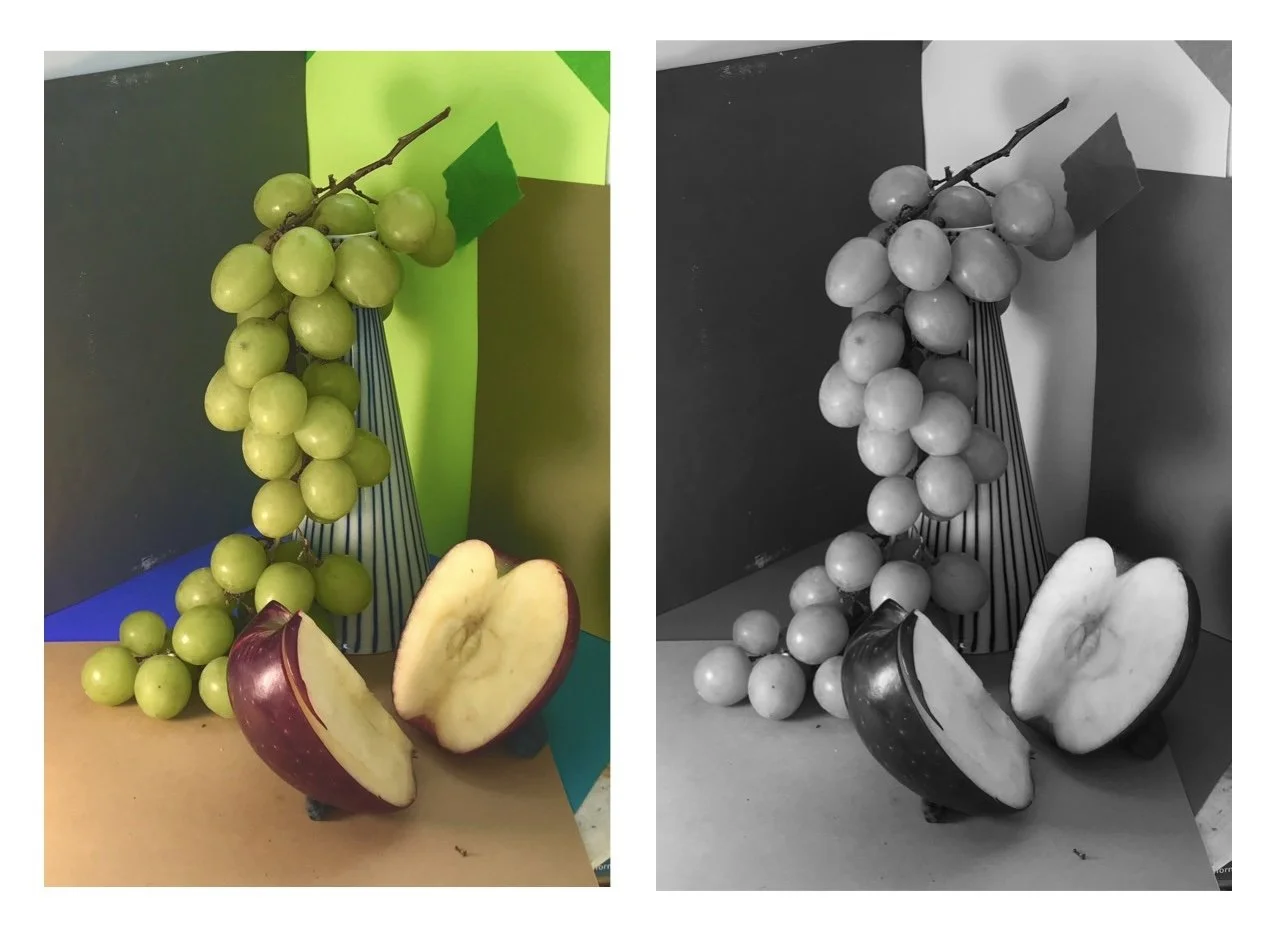
This exercise uses an Apple & Grape motif. You can use your entire Cornucopia Still Life compostion, or a small portion of it to experiment.
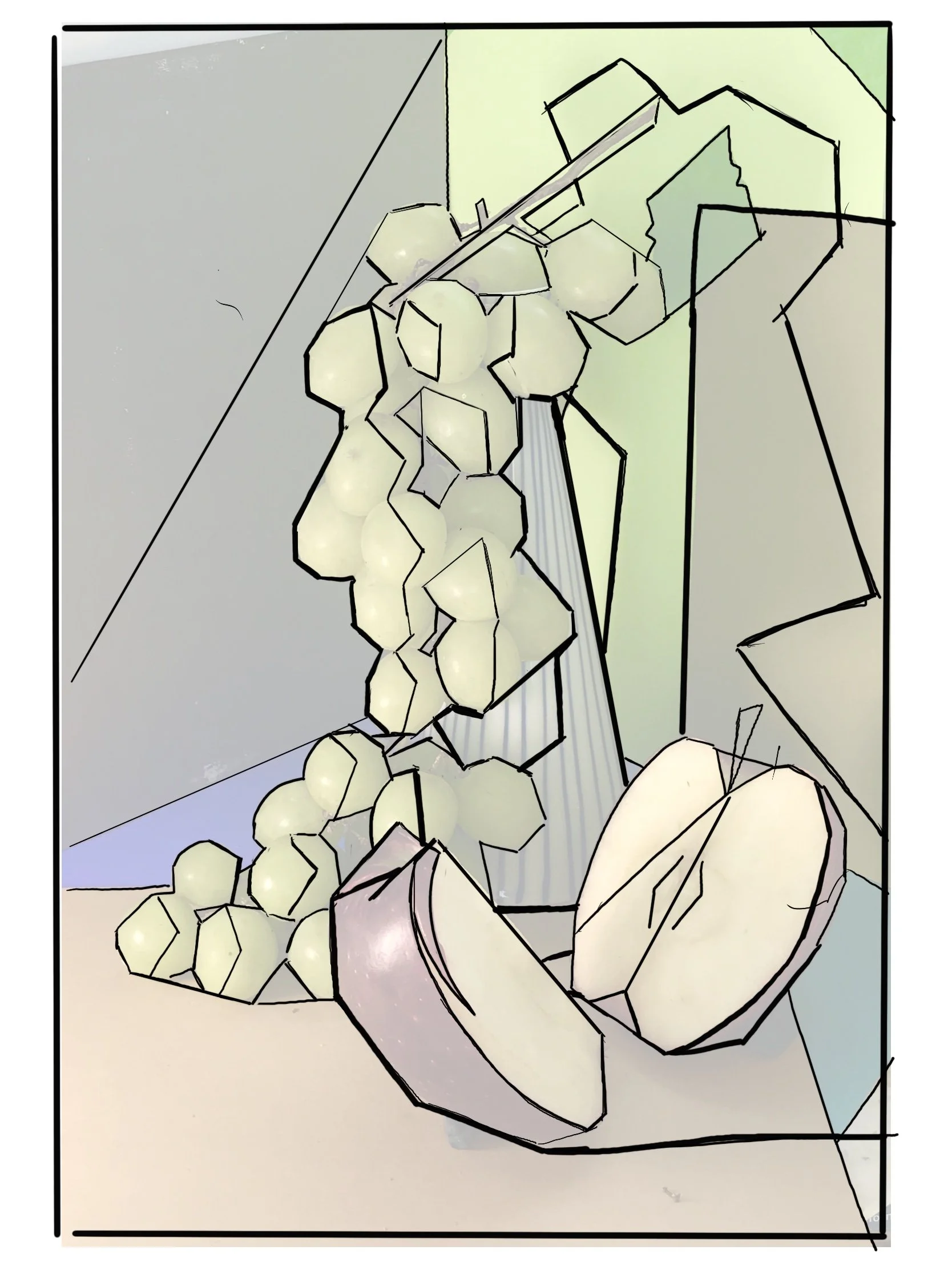
-Create a Template
-Trace two Templates onto Arches Oil paper
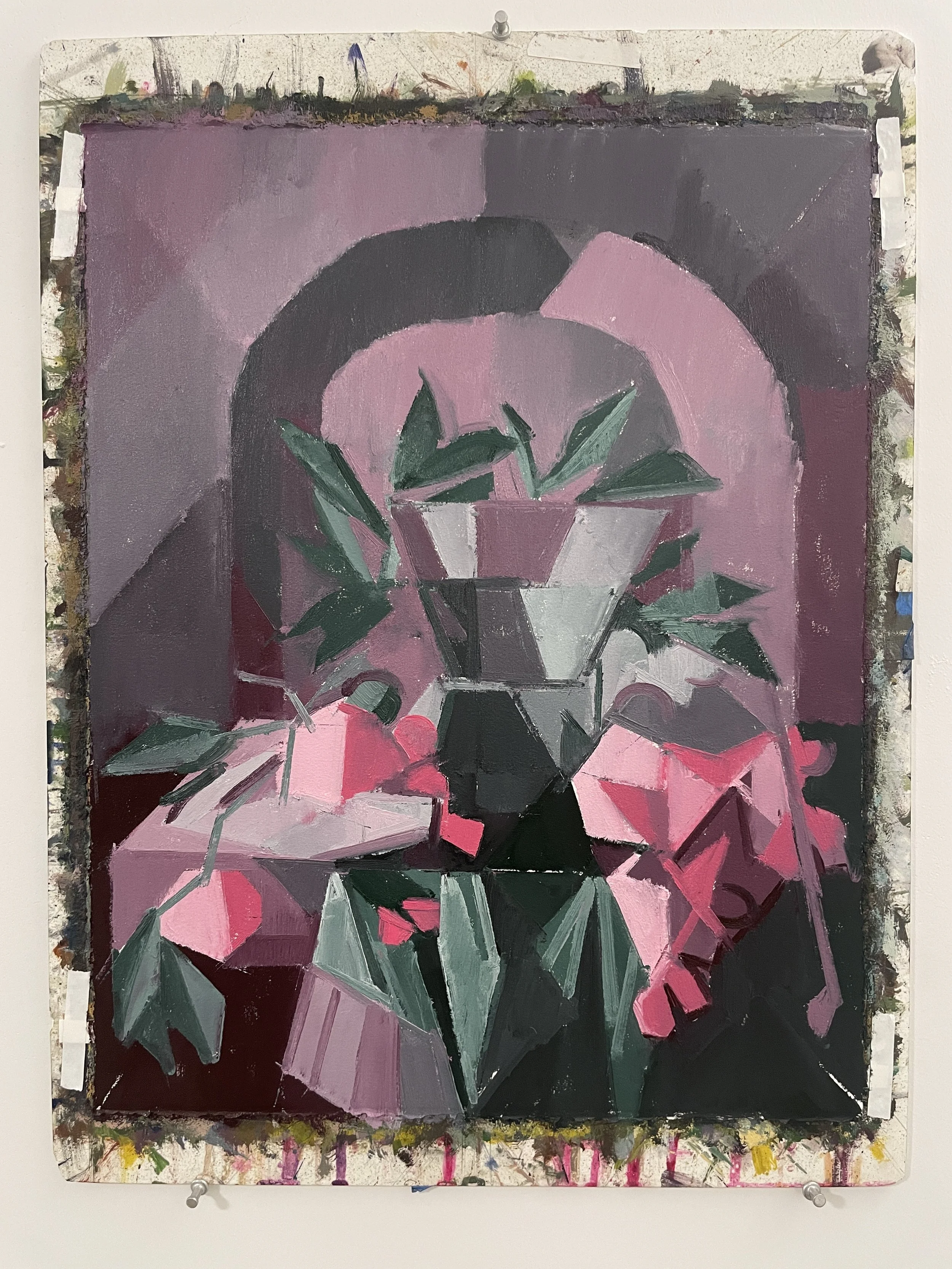
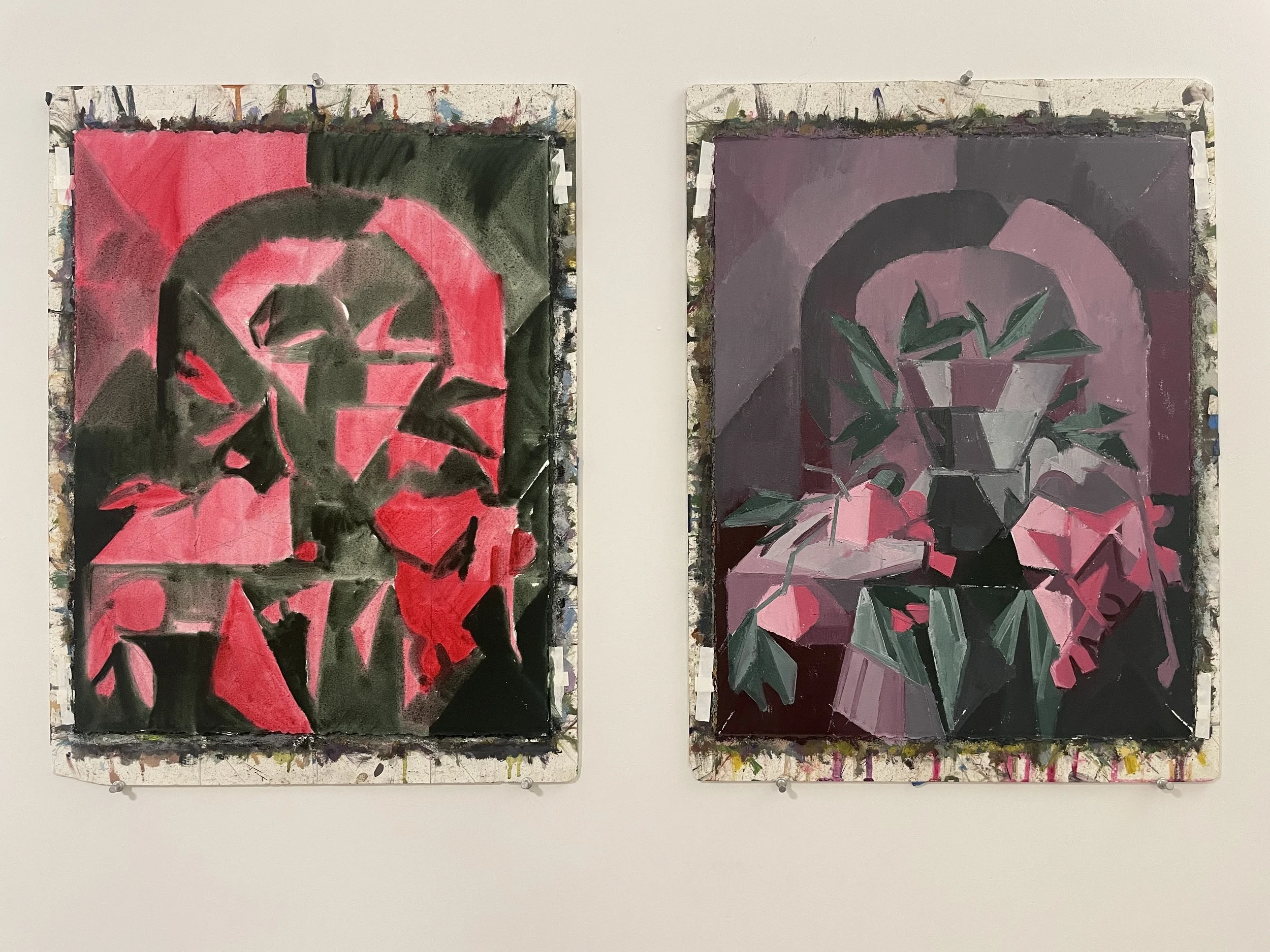
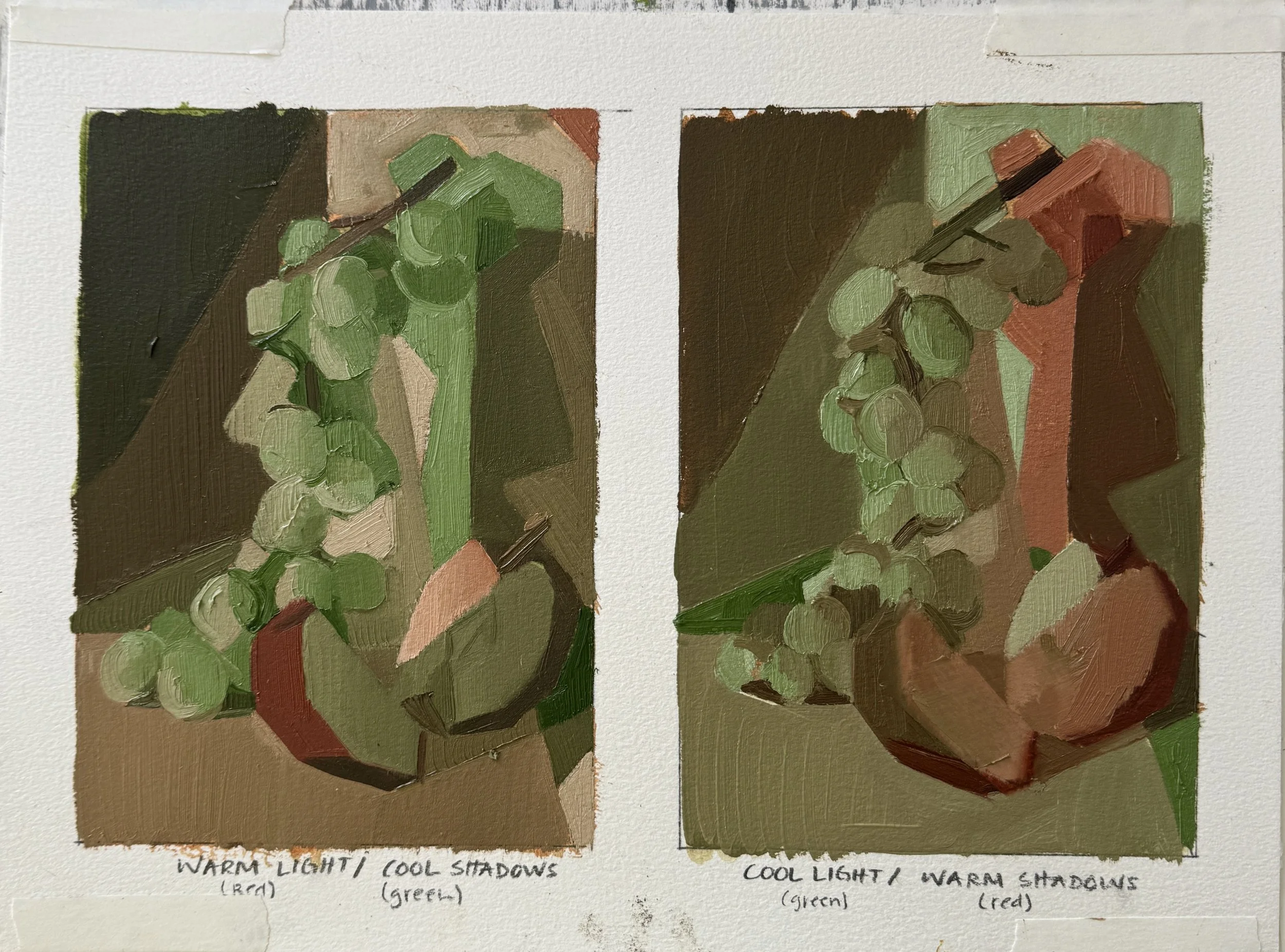
-Begin with inky red/green temperature passes; one with “warm” (red) light and one with “cool” (green) light and then begin adding opaque temperature decisions on top.
-Choose one and enlarge it to a 12” x 16” or 16” x 20” Arches Oil sheet.
THE MOTIF:
THE SKETCH:
DIGITAL PLAY:
Red Light / Green Shadows
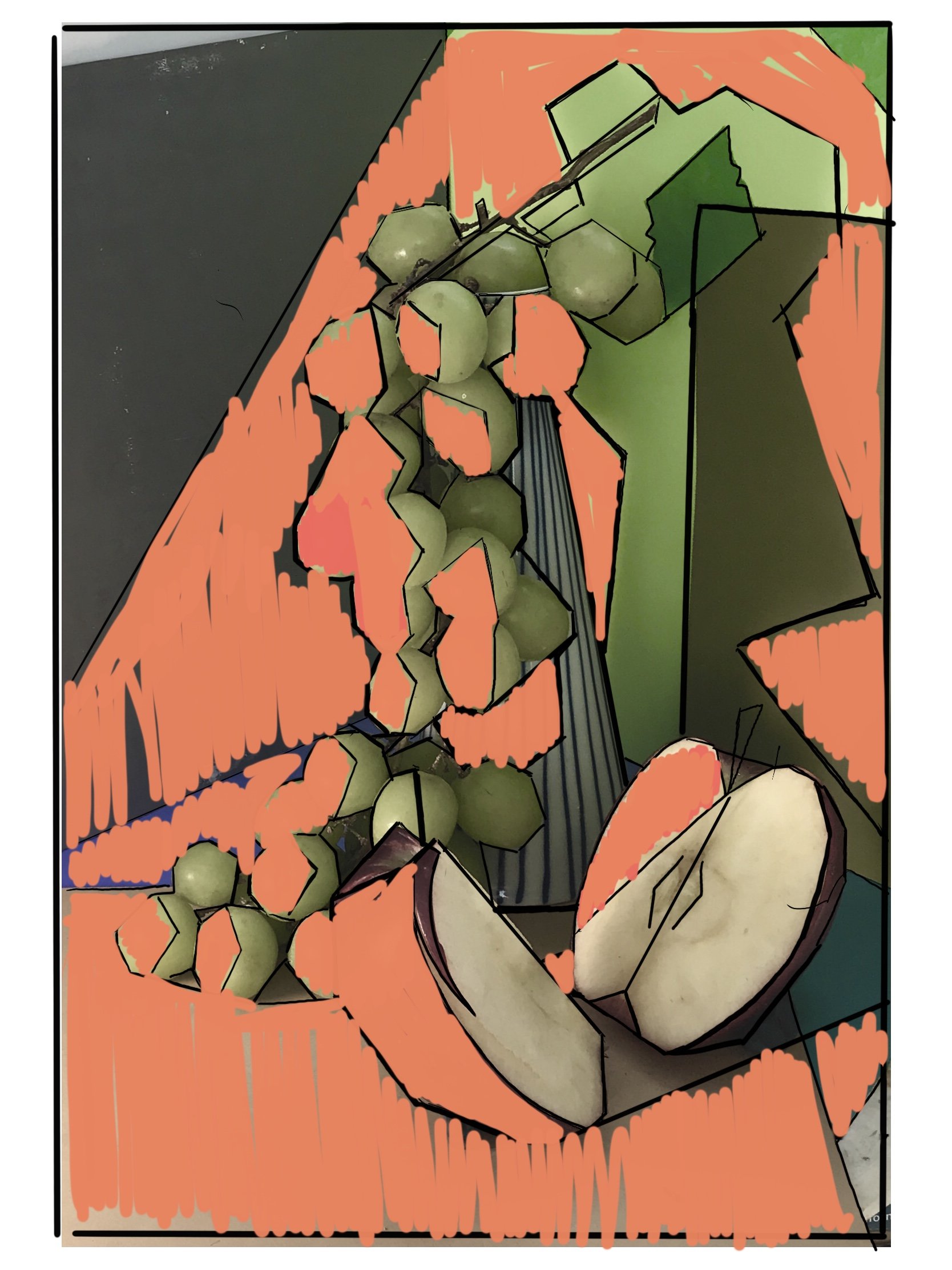
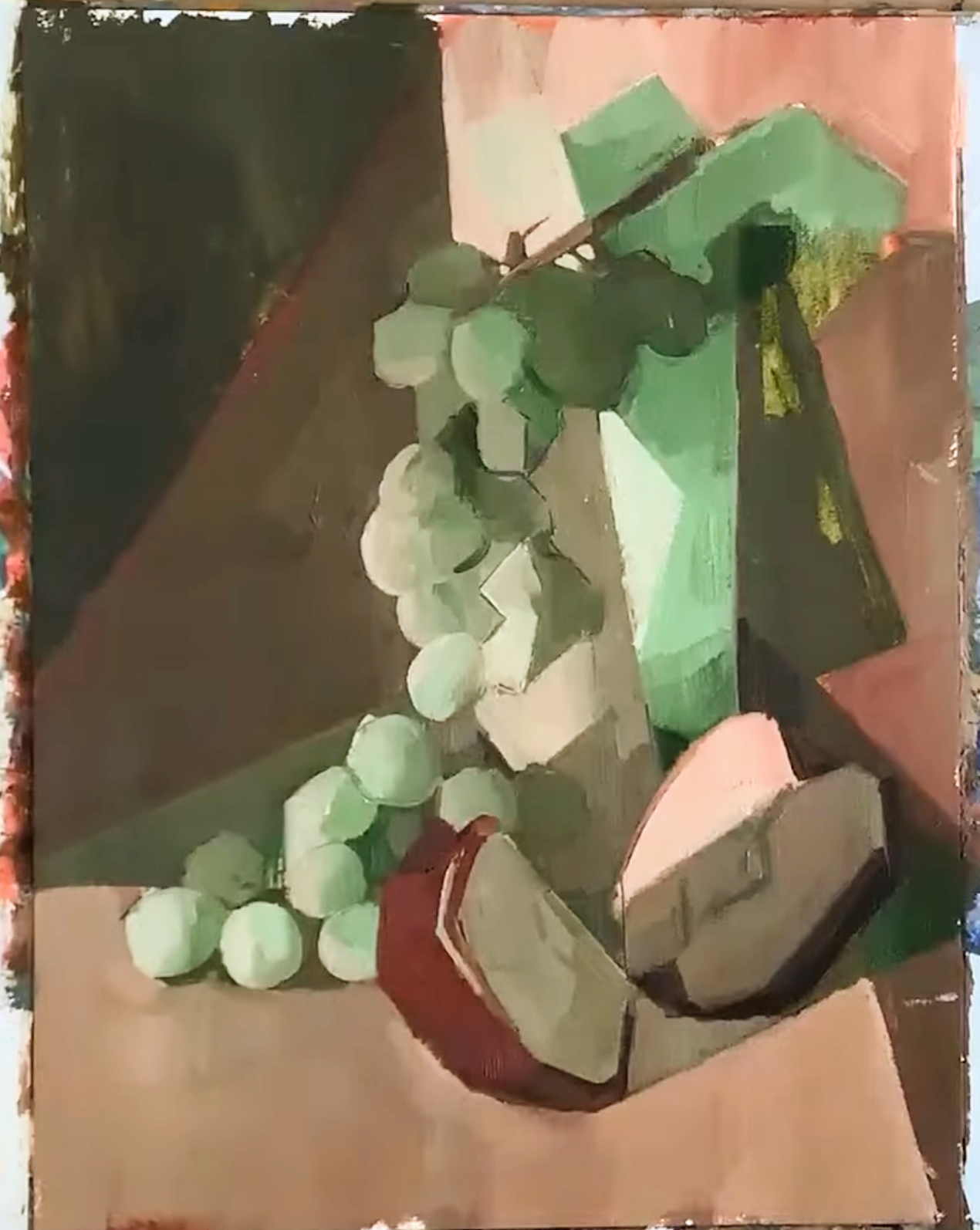
Pigments used: Transparent Red Oxide, Sap Green, and Titanium White
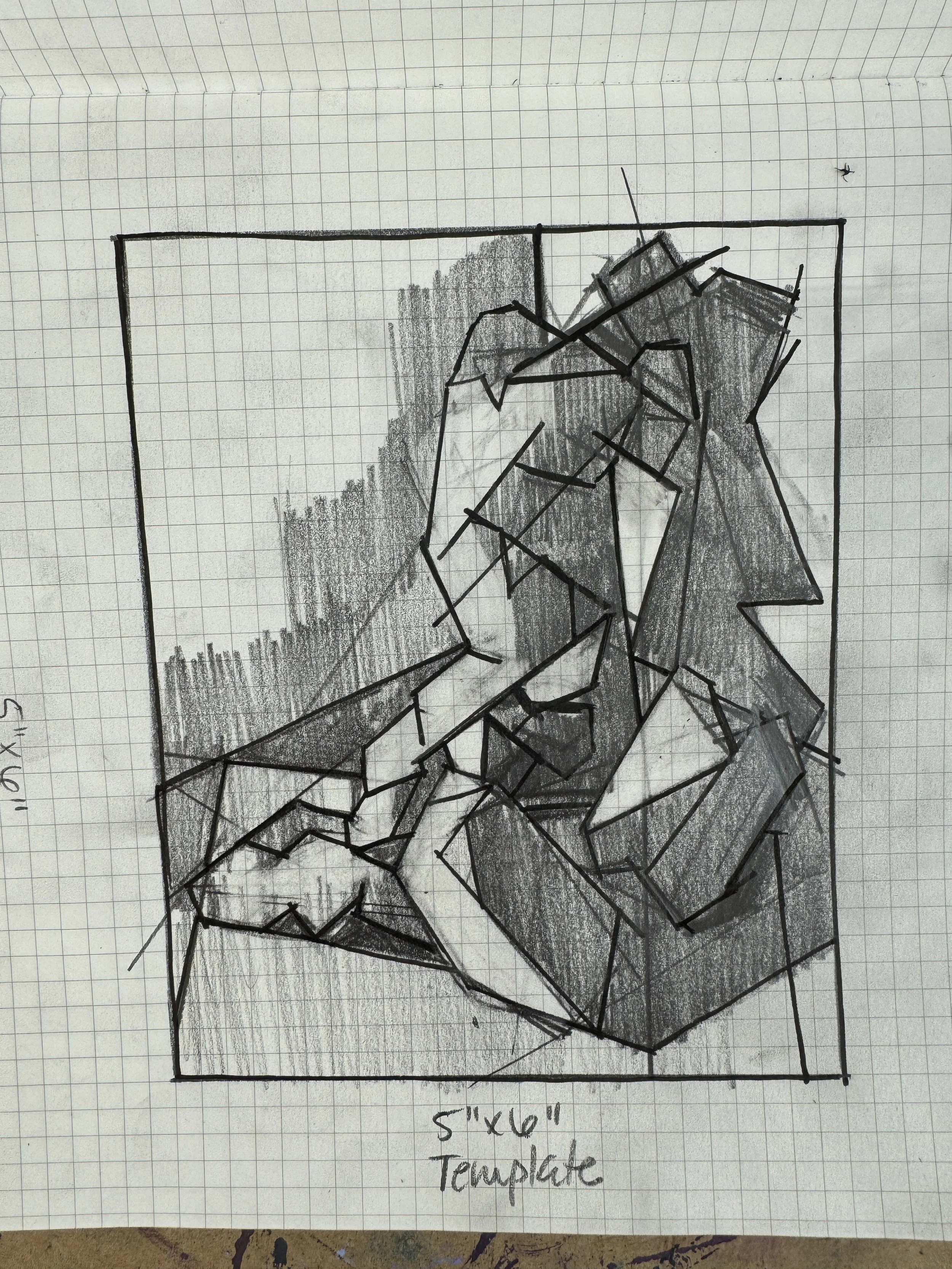
THE TEMPLATE:
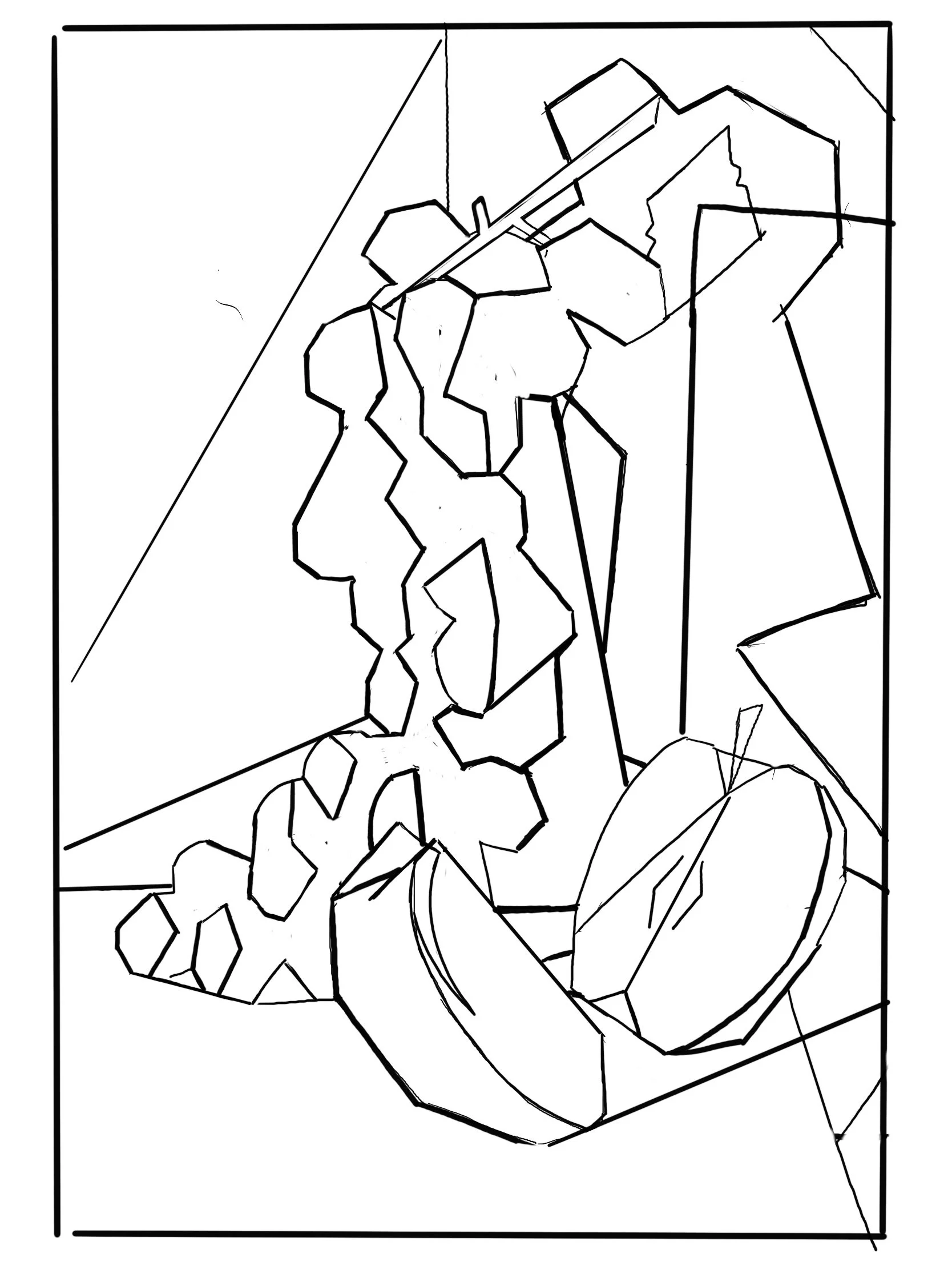
OIL STUDIES:
Two Temperature studies in oil
Pigments used: Transparent Red Oxide, Sap Green, and Titanium White
Choosing the red light/ green shadow one above, I sized-up to a 12” x 16” Arches Oil paper surface, and blocked-in a 1st pass. This video demonstrates the development of a 2nd pass. NO AUDIO.
Applying Red-Green to a de Heem Still Life
I.
This example uses a detail from a complicated de Heem still life, to experiment with the application of a Red/Green palette.
-Create a Template
-Begin with inky red/green temperature gesture
-Begin adding full temperature palette
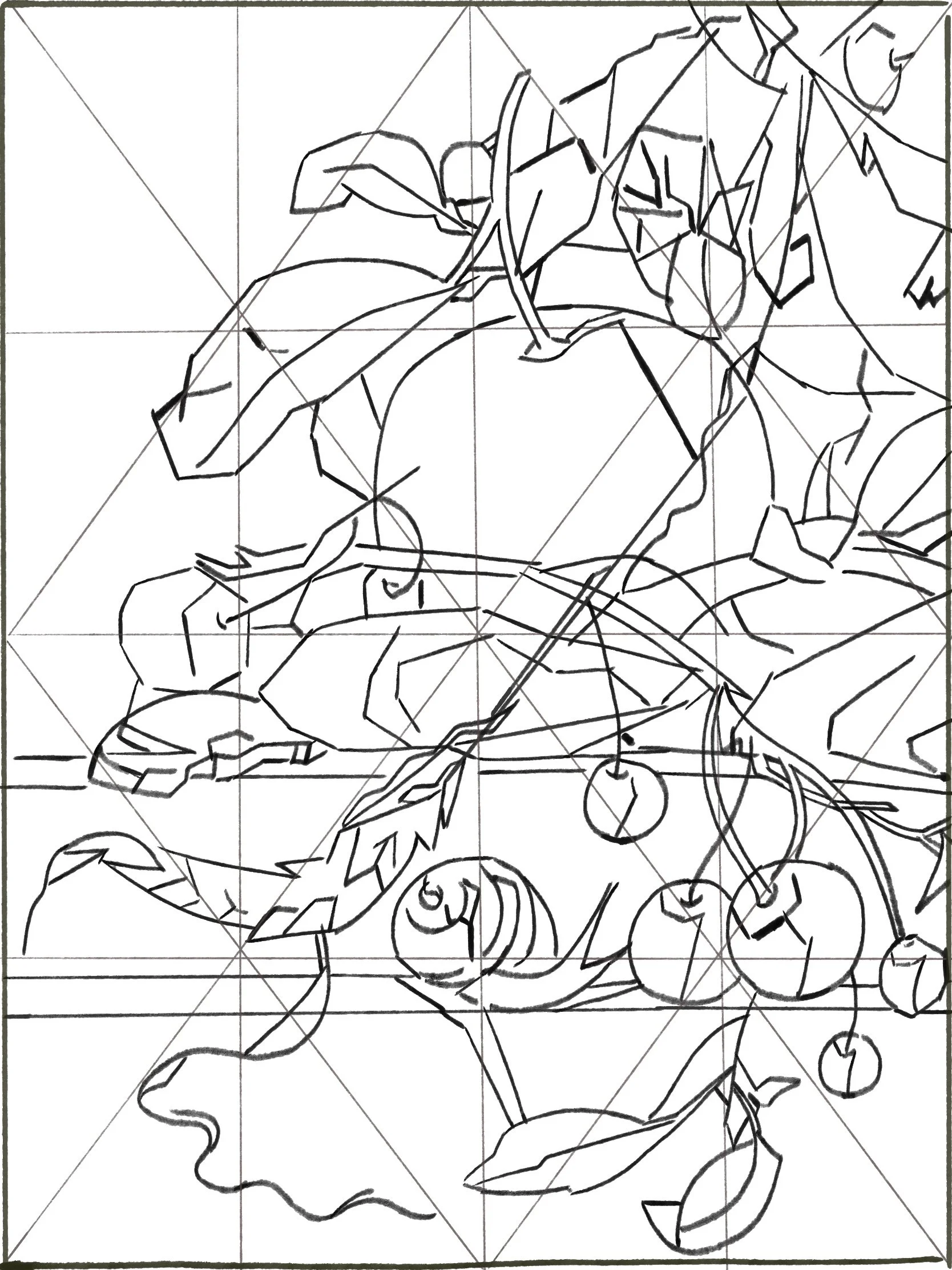
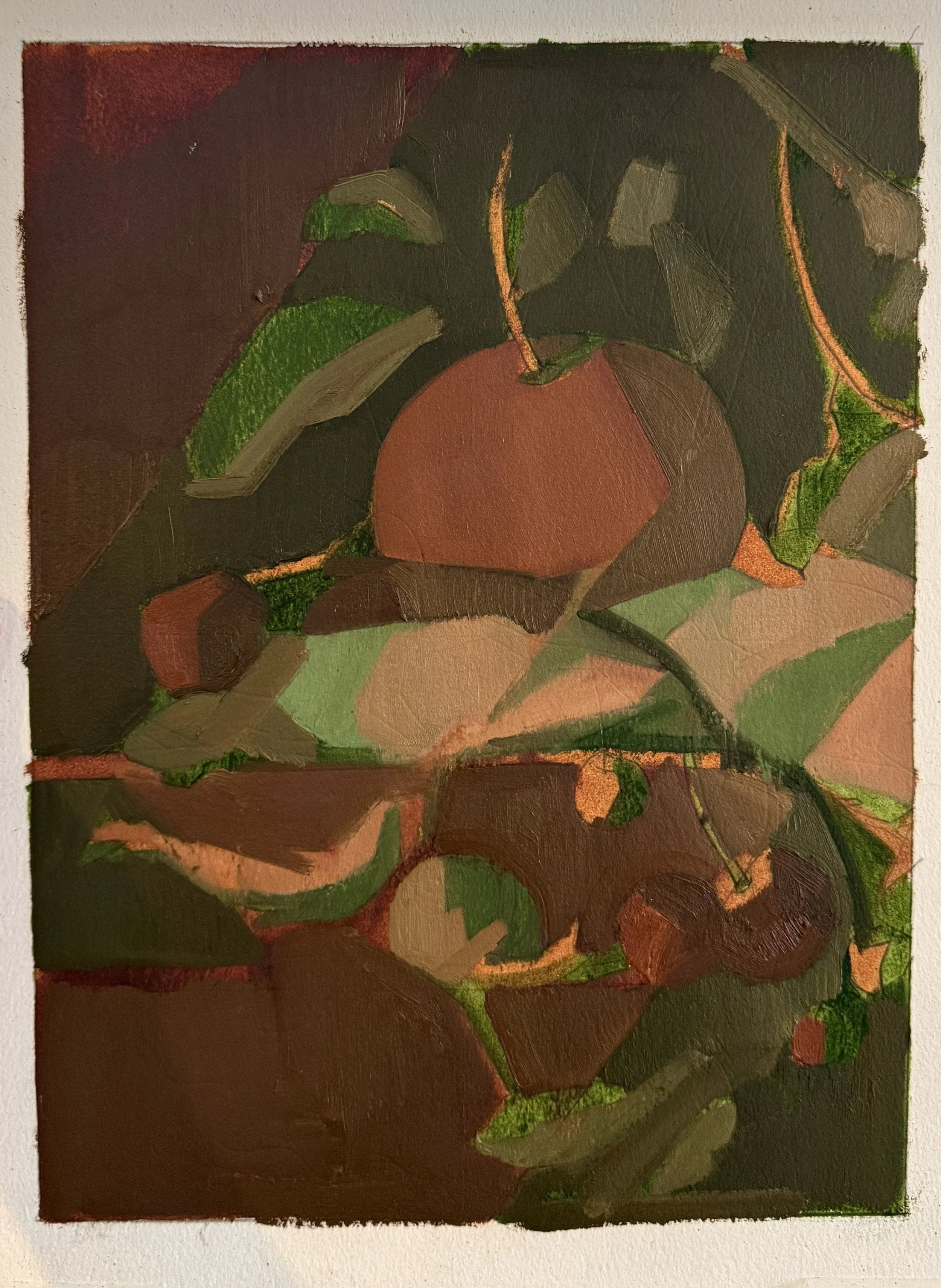
This video shows the development of an oil painting, starting with a temperature gesture.
NO AUDIO
Pigments used: Transparent Red Oxide, Sap Green, and Titanium White
II.
These next examples use a full de Heem composition and a palette of Quinacridone Red and Courbet Green.
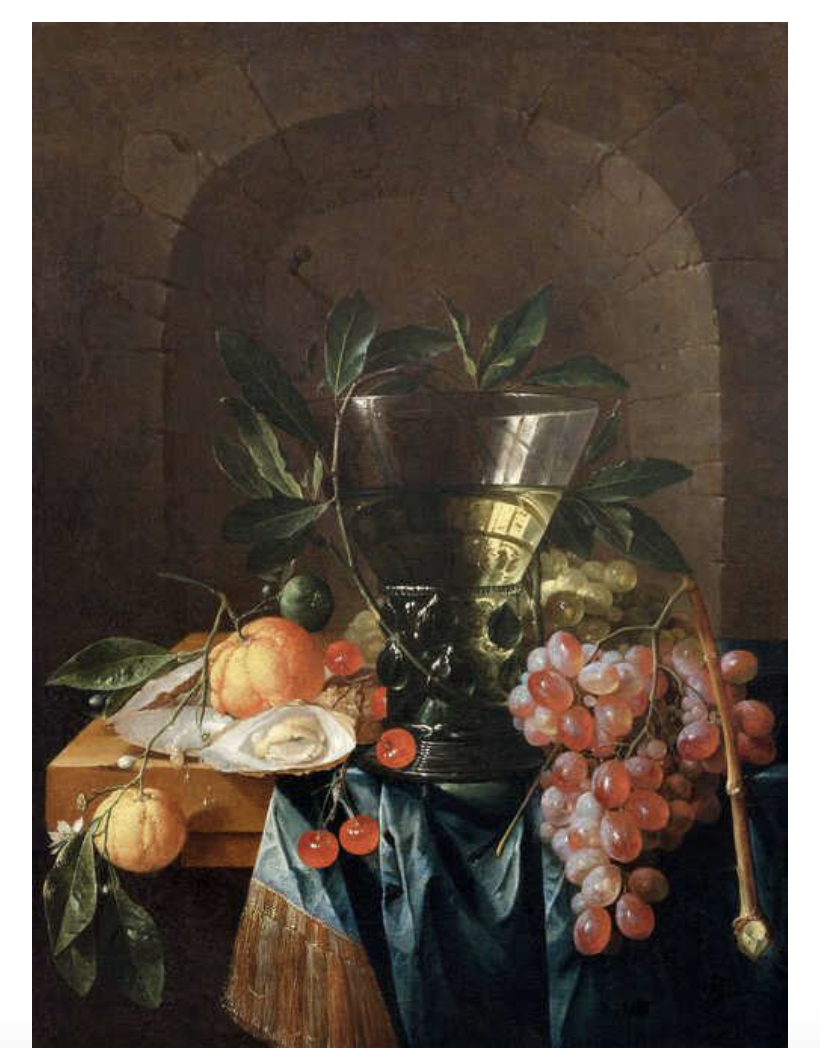
Cornelis de Heem
Still life with Römer, Grapes, Cherries, Oranges and Oysters on a Table Top before a Niche
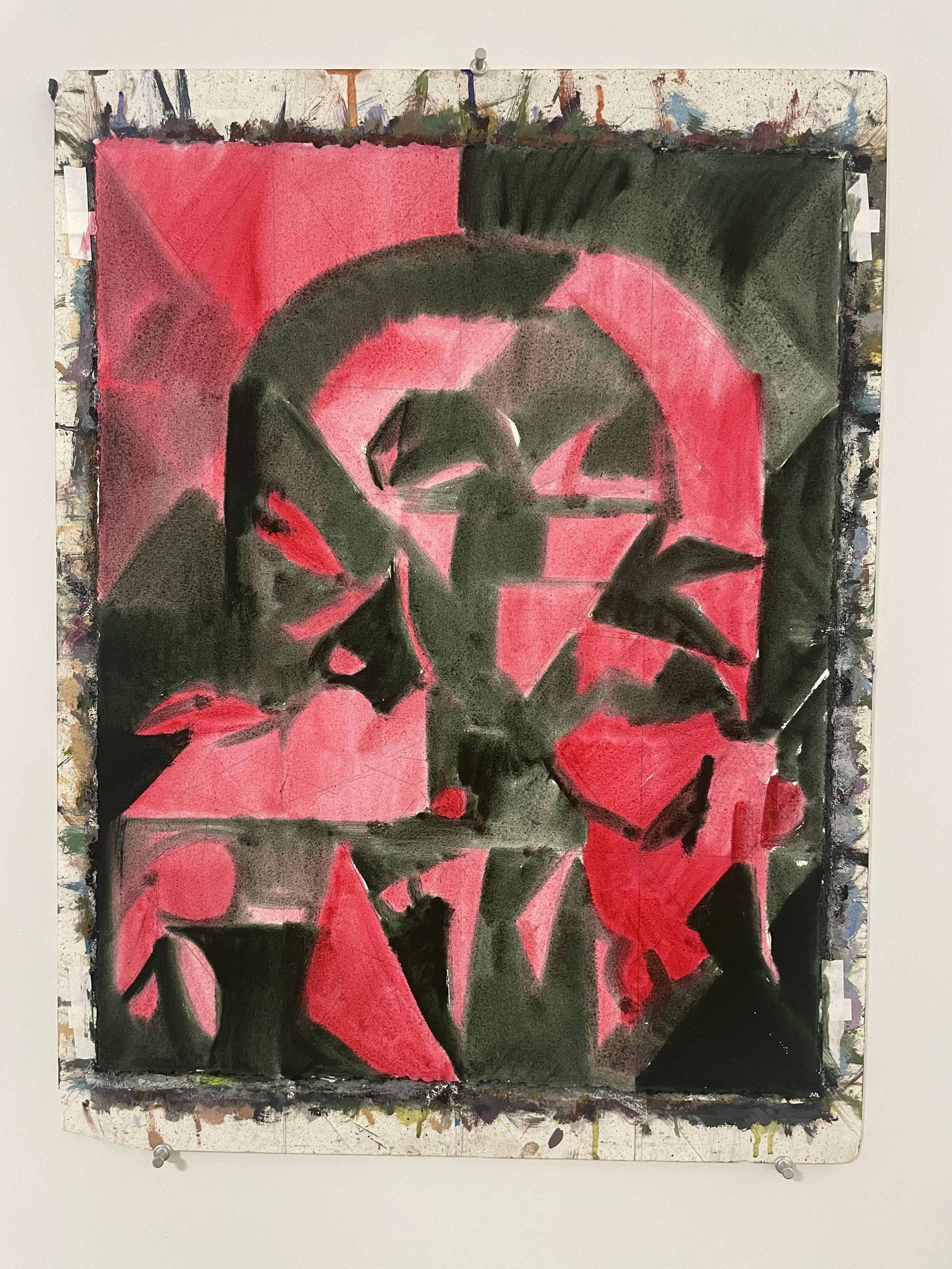
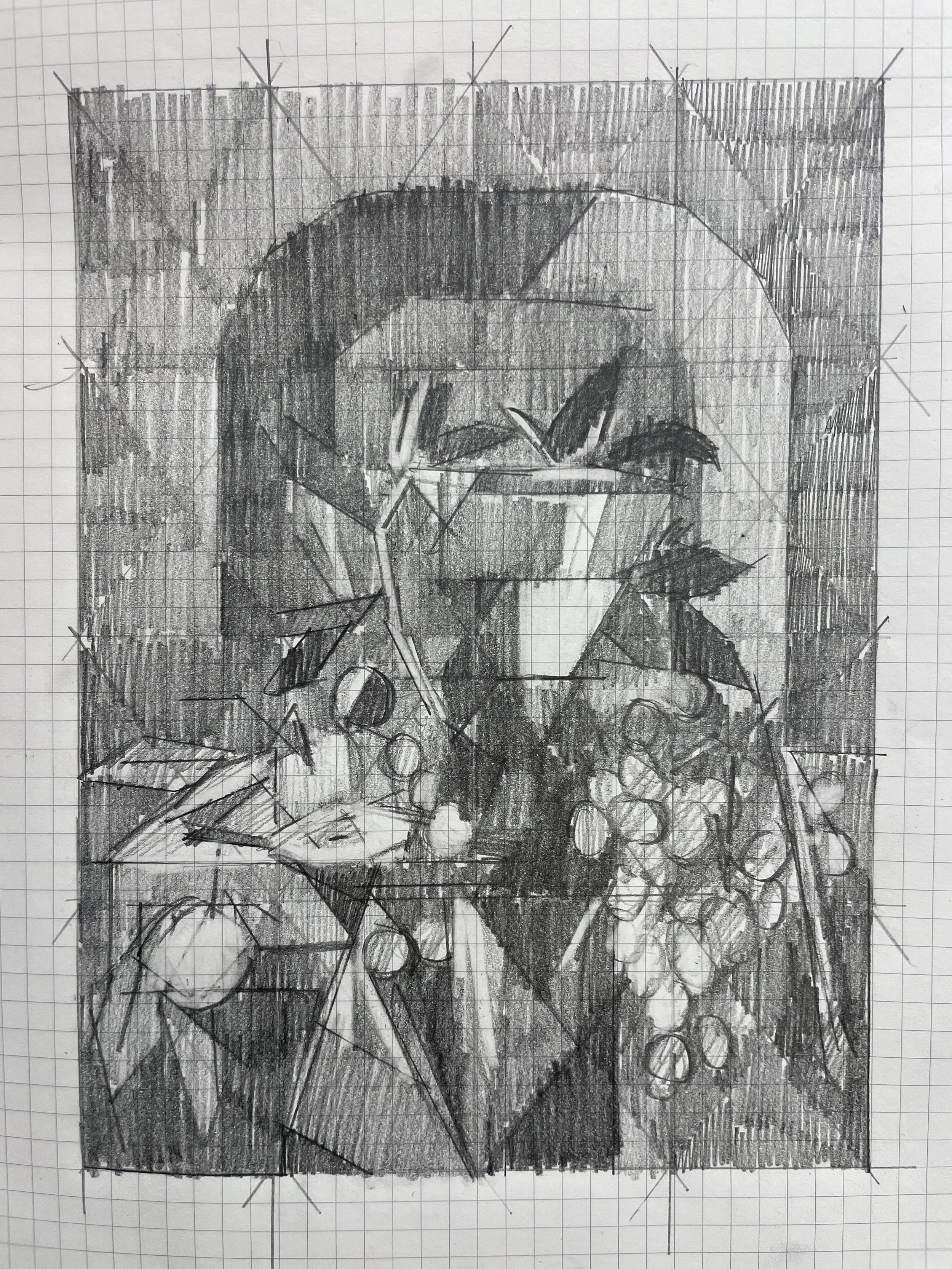
TEMPERATURE GESTURE
Using just out-of-the-tube, thinned paint to block-out major lights and shadows, designating red as my light, and green as my shadows.
-Grid and Linear Sketch
-Temperature Gesture
NO AUDIO
FULL DYAD BLOCK-IN
Using the full range of tertiaries and saturates from my mixed palette, I blocked-in a first pass using opaque paint. I did not adhere strictly to a temperature structure, but rather danced with the colors and contrasts more instinctually, often responding more to the local hue groupings, rather than a temperature structure of light and shadow.
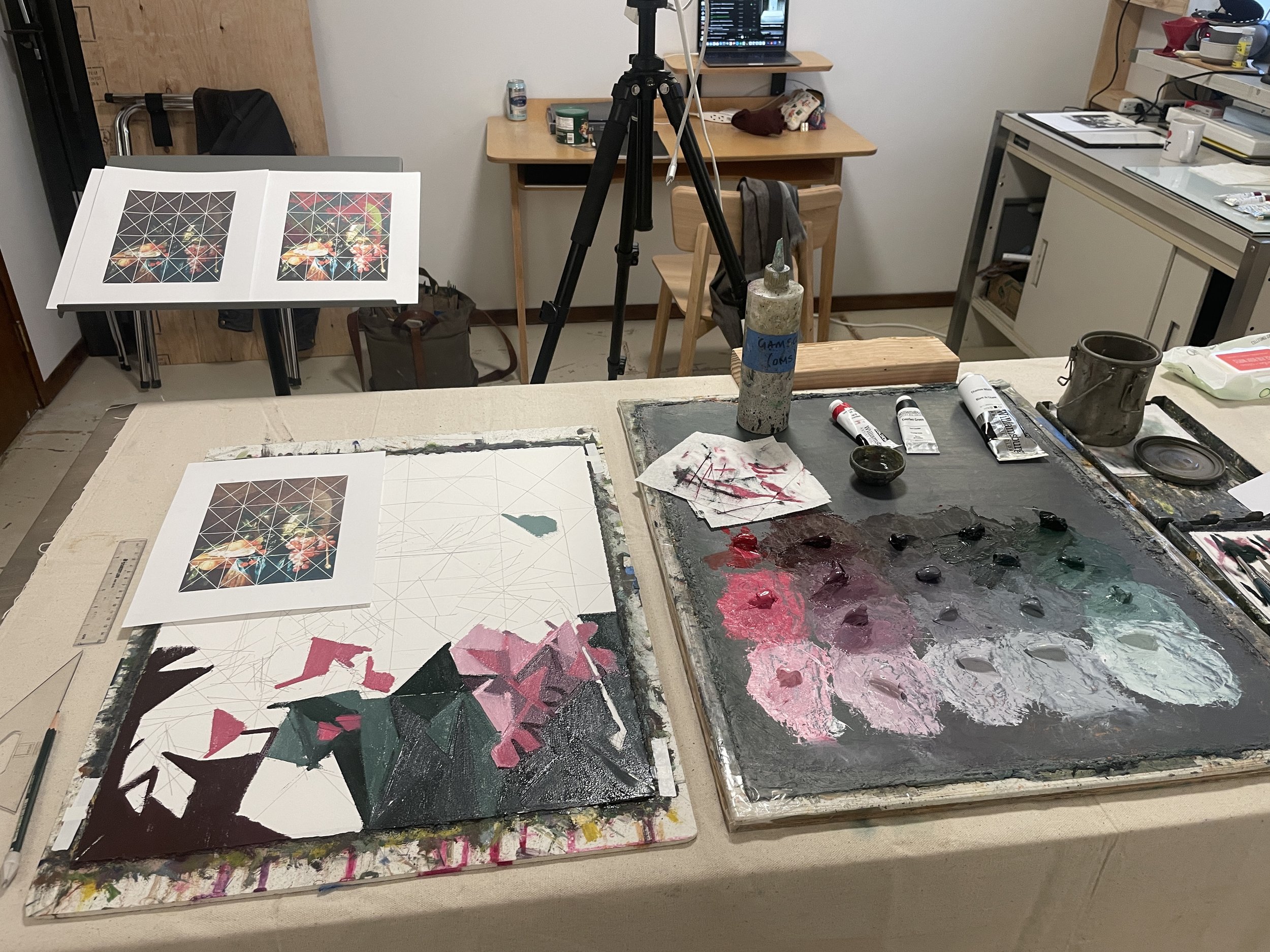
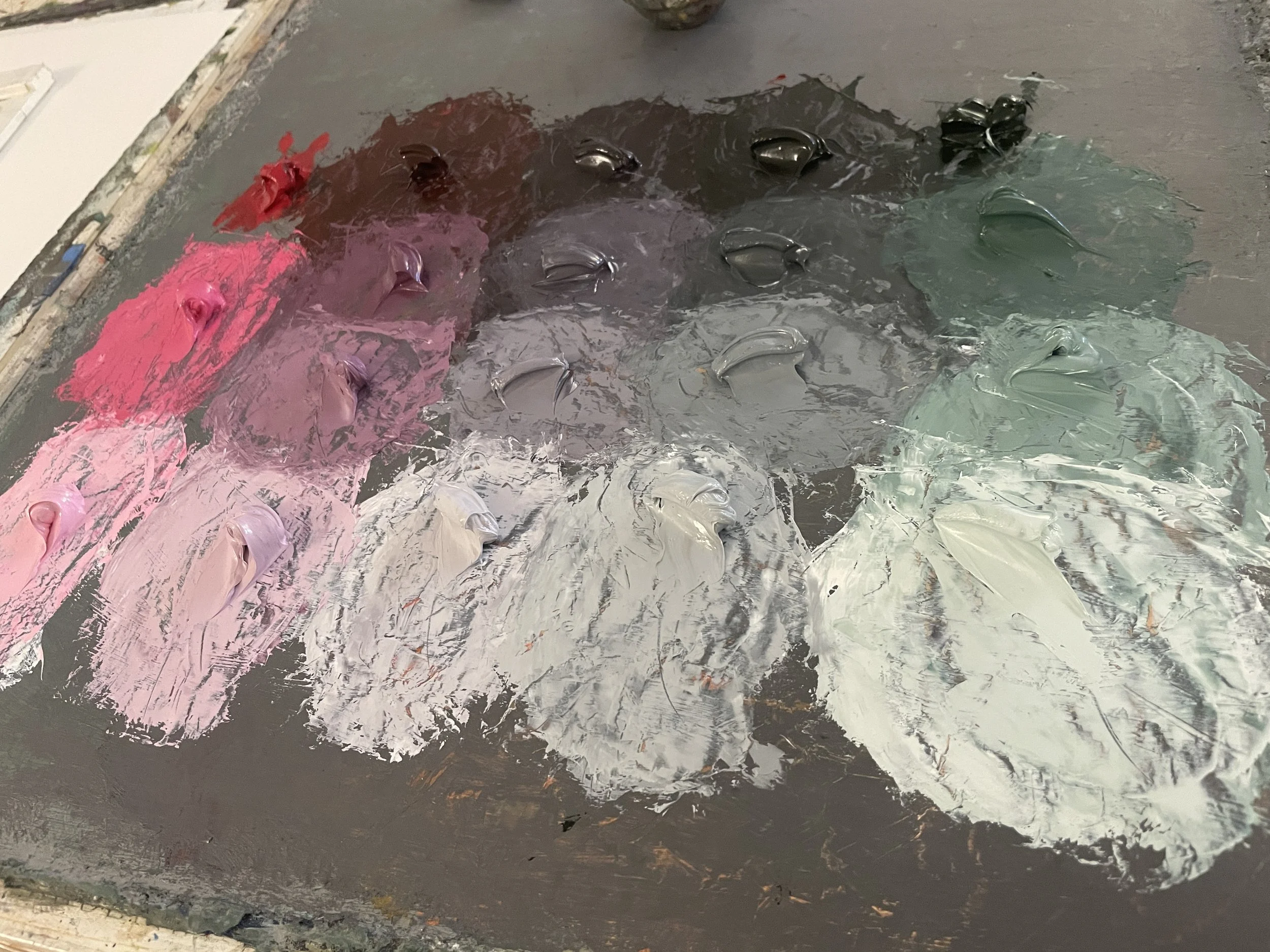
NO AUDIO