OBJECTIVE:
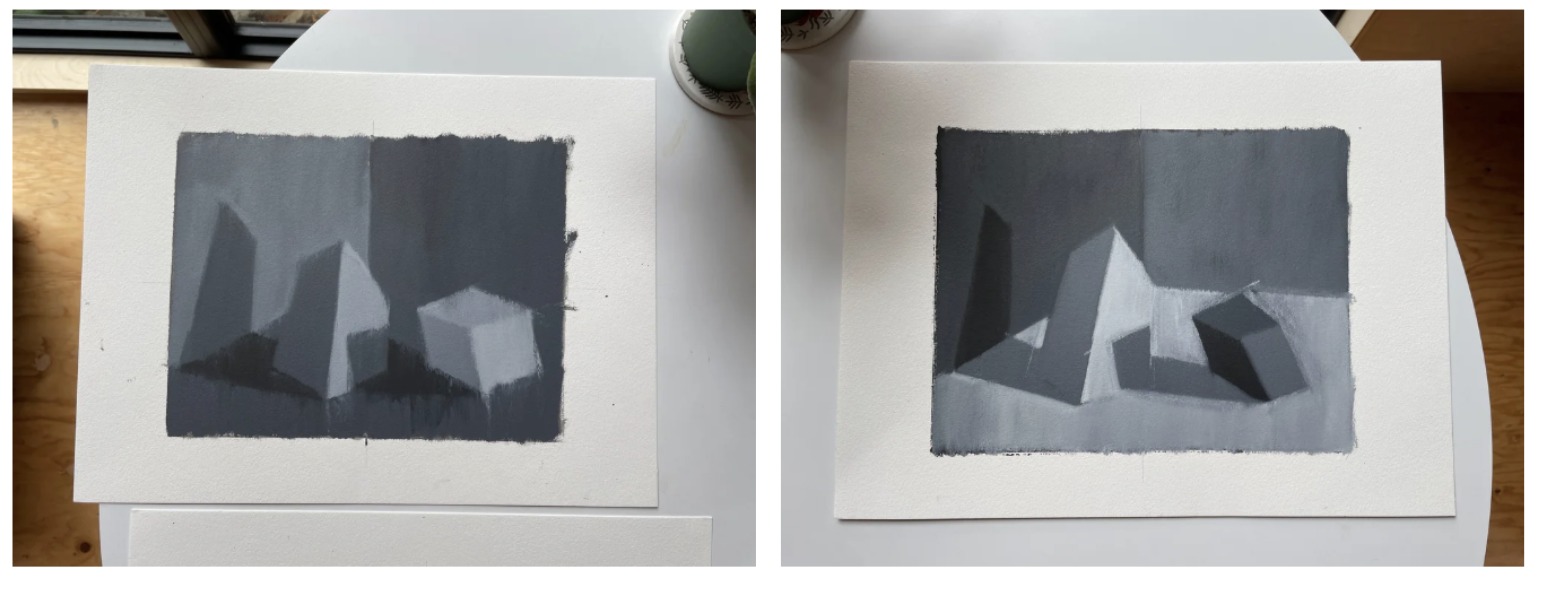
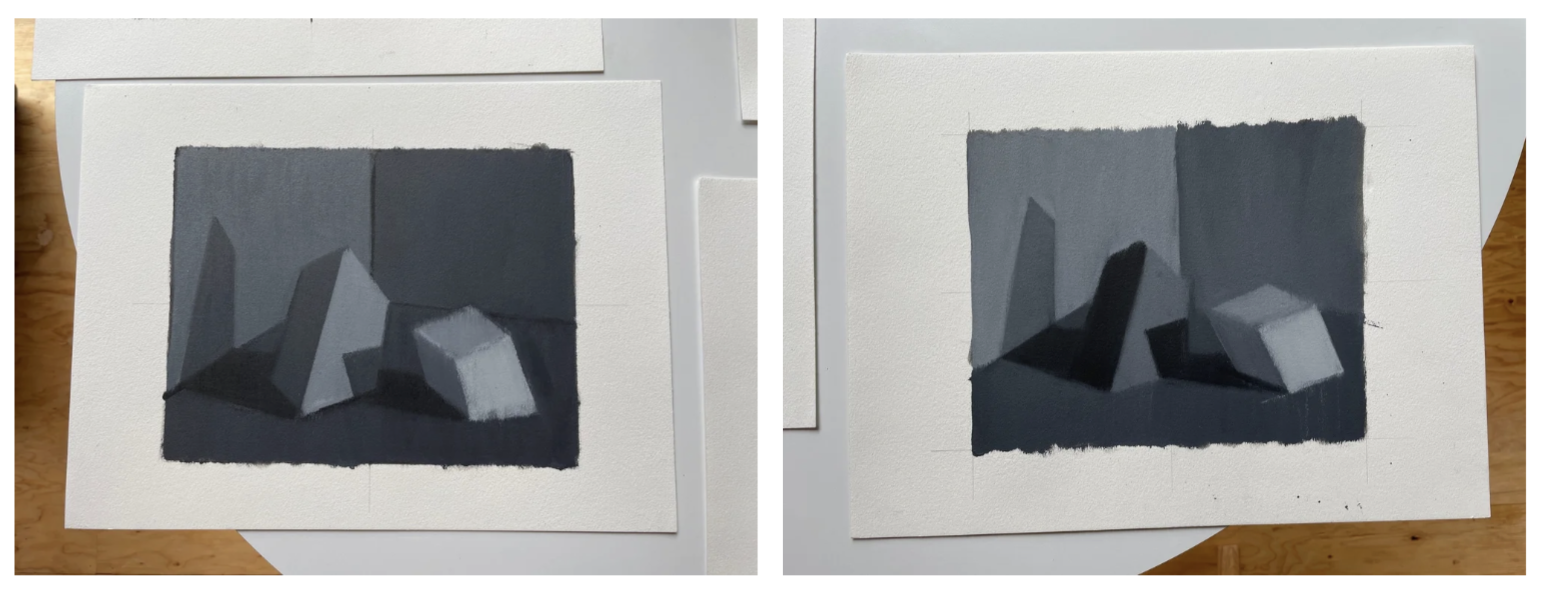
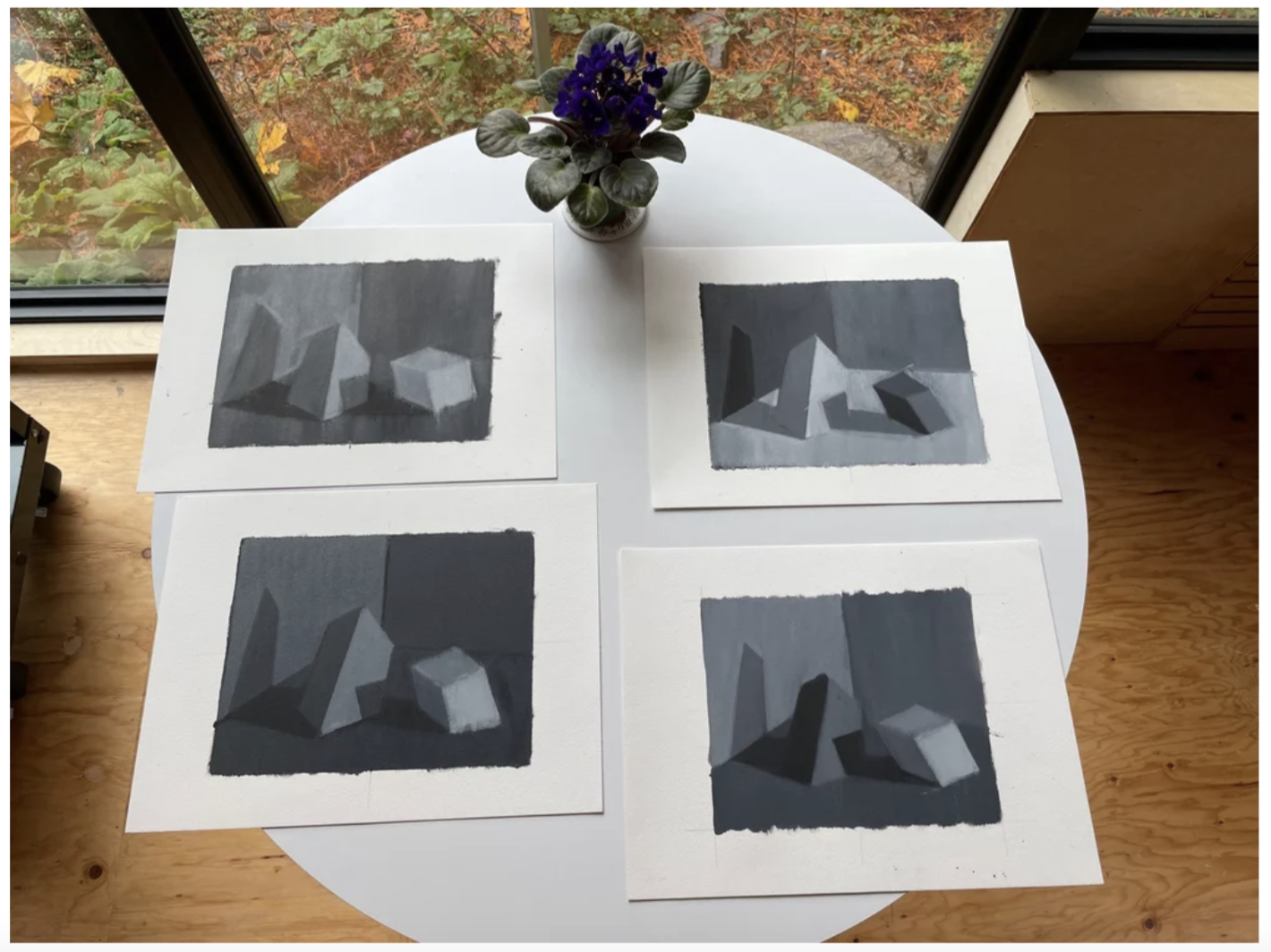
Create a minimum of 2 oil studies from your Template/ Rock Theater.
Experiment with scraping-down and returning to at least one of these painted studies. Experiment with different brushes, application methods, and viscosity of the paint. Pay close attention to Relative Value relationships.
UNIT 3:
INTRO TO OIL PAINTING
A painting is a living, breathing entity asking for our full attention so that we can respond intuitively. Each painting is unique and requires individual considerations and presentness.
Step 1: Studio Set-Up
Discussion of materials, mediums, brushes, and studio equipment.
Audio ON
Step 2: Create your Format / Sizing-Up
Mounting your traced template to a board. How to size-up your composition if desired.
Audio ON
Mix 5 distinct Values using Mars Black and Titanium White, or other black and white pigments. Black can be your darkest value, but make your lightest value a subtle gray, not white out of the tube. Test them next to each other to make sure they are clearly distinct from each other. Adjust and re-calibrate as needed.
Audio ON
Step 3: Mixing 5 Values
Block-In opaque shapes of value, paying special attention to Relative Value Relationships. Using a bristle brush, “scumble,” or push, the paint across the surface.
Step 4: Block-In Methods:
Opaque & Viscous
Audio ON
Audio Optional, ambient sounds of traffic, rain, palette knife. ASMR.
Step 4: Block-In Methods:
Palette Knife
Step 4: Block-In Methods:
Thin & Gestural
In this example, I create an initial, linear gesture with thinned-out oil paint responding to my template, rather than already having a tracing. I complete a first pass by blocking-in the darkest values, and then covering the rest of my surface with a transparent wash using a Bristle Brush and very thinned paint with OMS. Covering the porous surface of the Arches paper with the thinned paint and solvent creates a nice, juicy surface for continuing to build upon in the next layer.
NO Audio.
Mixing 5 distinct values and then “scumbling” the opaque values into the already wet surface.
NO Audio.
Step 5: Scrape-Down
After the initial, opaque block-in, a light scrape-down of the surface with a palette knife to remove any surface texture can be a nice preparation for continuing to build the surface. Scraping-down can happen throughout the process of painting, at the very end, and after letting the painting sit for a day or two.
Example 1:
After 2 days. NO Audio.
Example 2:
Audio ON
The technical narrative should be the preeminent voice of the picture. That if you can merge what’s happening dramatically with the technical narrative, it’ll lead you to more places.
— Vincent Desiderio, from THESEUS
The over-arching conceptual duality we’ve been working with so far is the contrast between light and dark. As we move-into painted oil studies, some profound technical dualities begin to appear:
-Type of Brush: Bristle or Smooth
-Amount of Medium or Solvent: Viscous or Thin
-Type of Action with Paint:
Drawing / Painting
Scraping / Caressing
Re-Structuring/ Refining
Scumbling / Touching
Excavating / Adding
The technical way in which we build a painted surface is directly tied to it’s poetic meaning. The more present you are with your materials and tools, the more open you will be to the process revealing new insights.
There are [different] kinds of narrative at work, at play in the artist’s mind when they’re making work. The first one is the dramatic narrative and that’s simply the subject matter, that’s basically what people call narrative art. The second one is the story of the evolution of the technique, and that is the technical narrative. It’s really the movement of the painter’s mind through the course of a picture, arriving at its terminus, and in the terminus the implication of everything that went into it is there, even though it’s not necessarily decipherable by everybody.
— Vincent Desiderio, from THESEUS
Technical Narrative:
Step 6: Returns
Returning to the scraped-down surface, you can now refine your drawing and build-up the surface of the painting as you see fit. You can scrape-down and return as many times as you wish. Experiment with using both bristle and smooth brushes, as well as different thickness and thinness of paint.
NO Audio.
Further refinement of drawing and building the surface and edge-quality. I ended up noticing the lighter object in my template had more “personality” than my painted version, so I did some pretty major re-structuring. Continue to experiment with both bristle and smooth brushes, as well as paint viscosity.
NO Audio.