
UNIT 2: MOTIF & BONES
CORNUCOPIA
Cornucopia is our thematic guide this term. Think plenty, think ripeness and abundance. Think also death and decay, temporality.
Think of the over-the-top decadence pictured in the pain-staking and lush still lifes of the Dutch Golden Age. Think of dismantling them and building them back with your own language, with your own shapes of color.
Think of spilling outwards and inwards. Think too-muchness. Think ravishing beauty and staggering darkness. Think of the madness of the artist- you- trying to organize your sensations in the context of the studio!
Using a Red/Green dyad we will enter into this meaningful visual narrative…
THE MOTIF:
Choosing our motif is a wonderful part of the process. Sometimes it is done quickly, as though it chooses us; and sometimes it takes great deliberation.
I find it freeing to keep in mind that no matter the constellation of relationships I choose to work from, the entire universe of meaning is available to me. I can trust each motif to be exactly the Tarot of colored shapes that I need to investigate.
We have 2, concurrent motif’s this term: The Master Study and The Still Life Theater. You may choose to toggle back and forth between them, or to focus on only one… no matter. Be mindful of your time and focus and try to follow the path of most playful discovery.
CORNUCOPIA: The Master Study
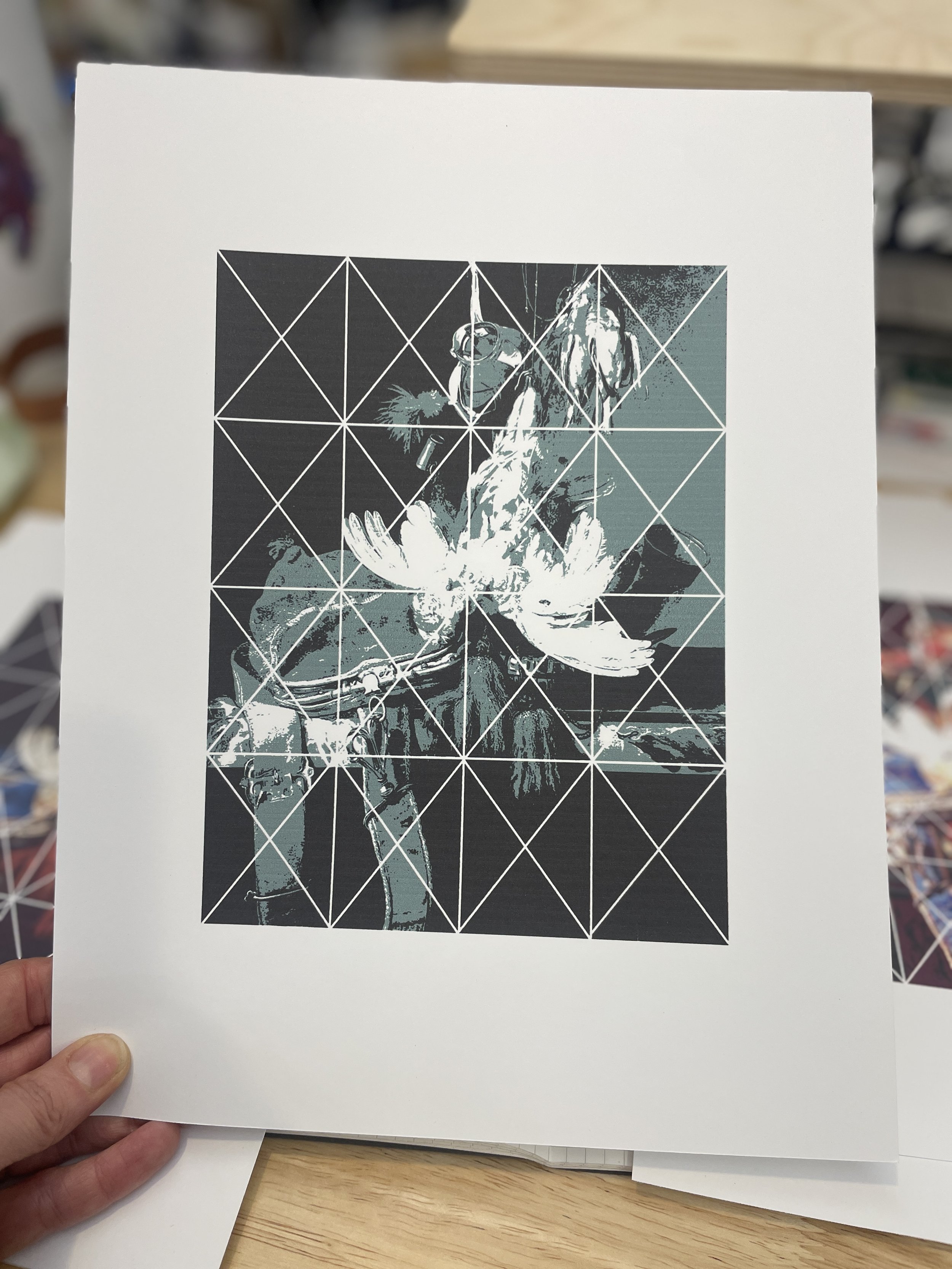
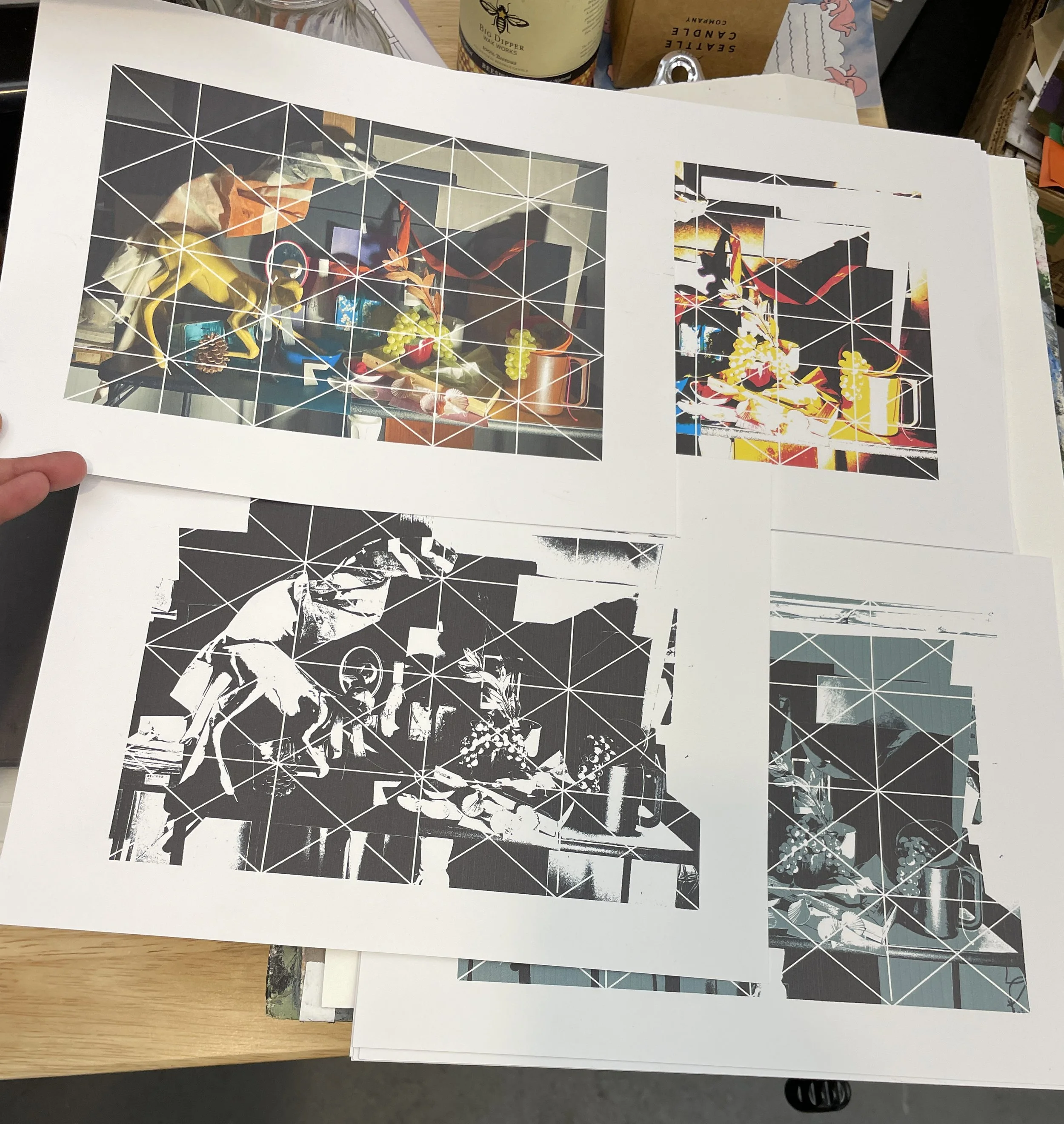
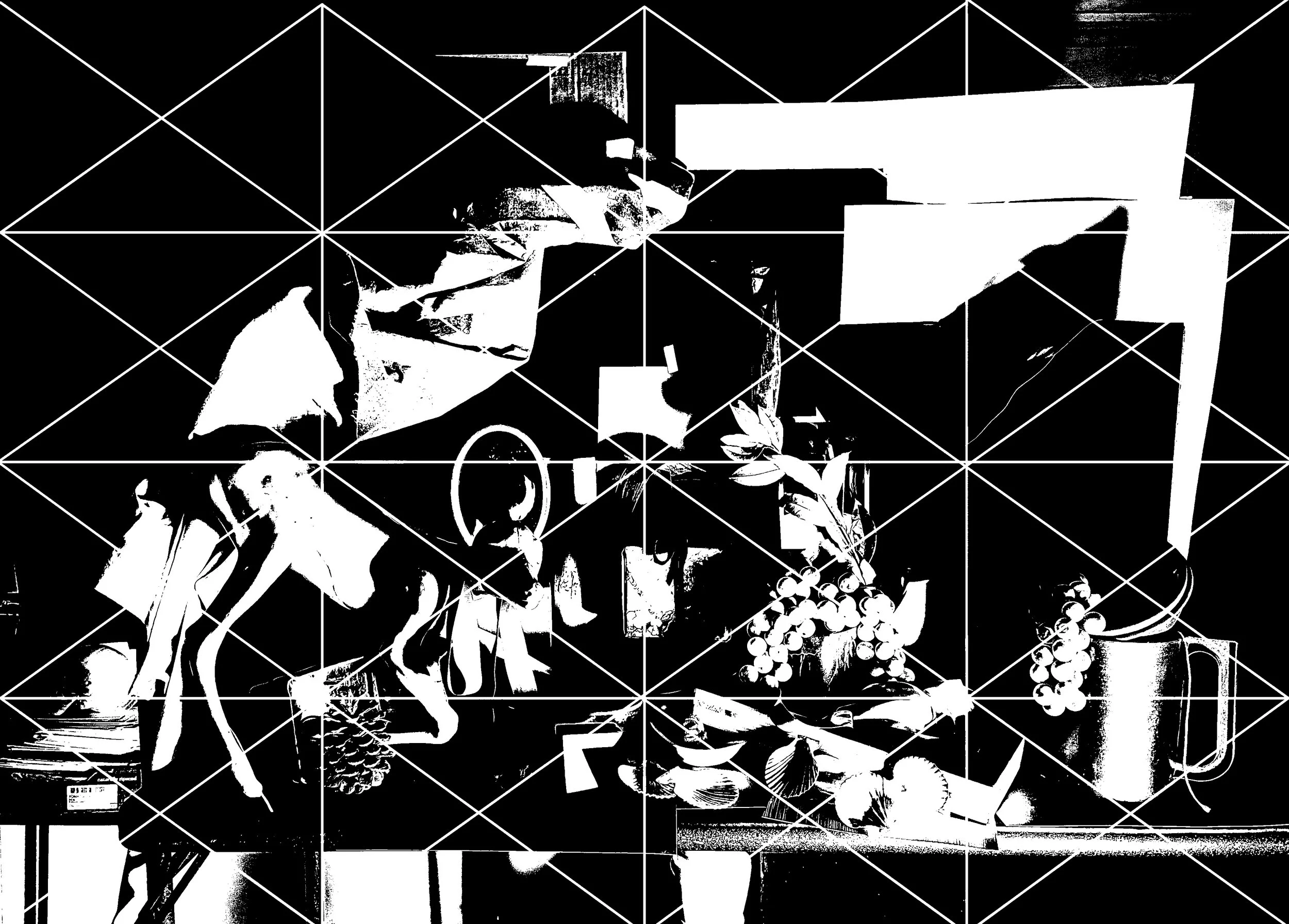
Choose an image from our Dutch Still Life pdf, or find your own to work from. Print it out if you can, grid it up, trace it, digitally alter it, change the levels, posterize it, etc. In other words: gather your data!
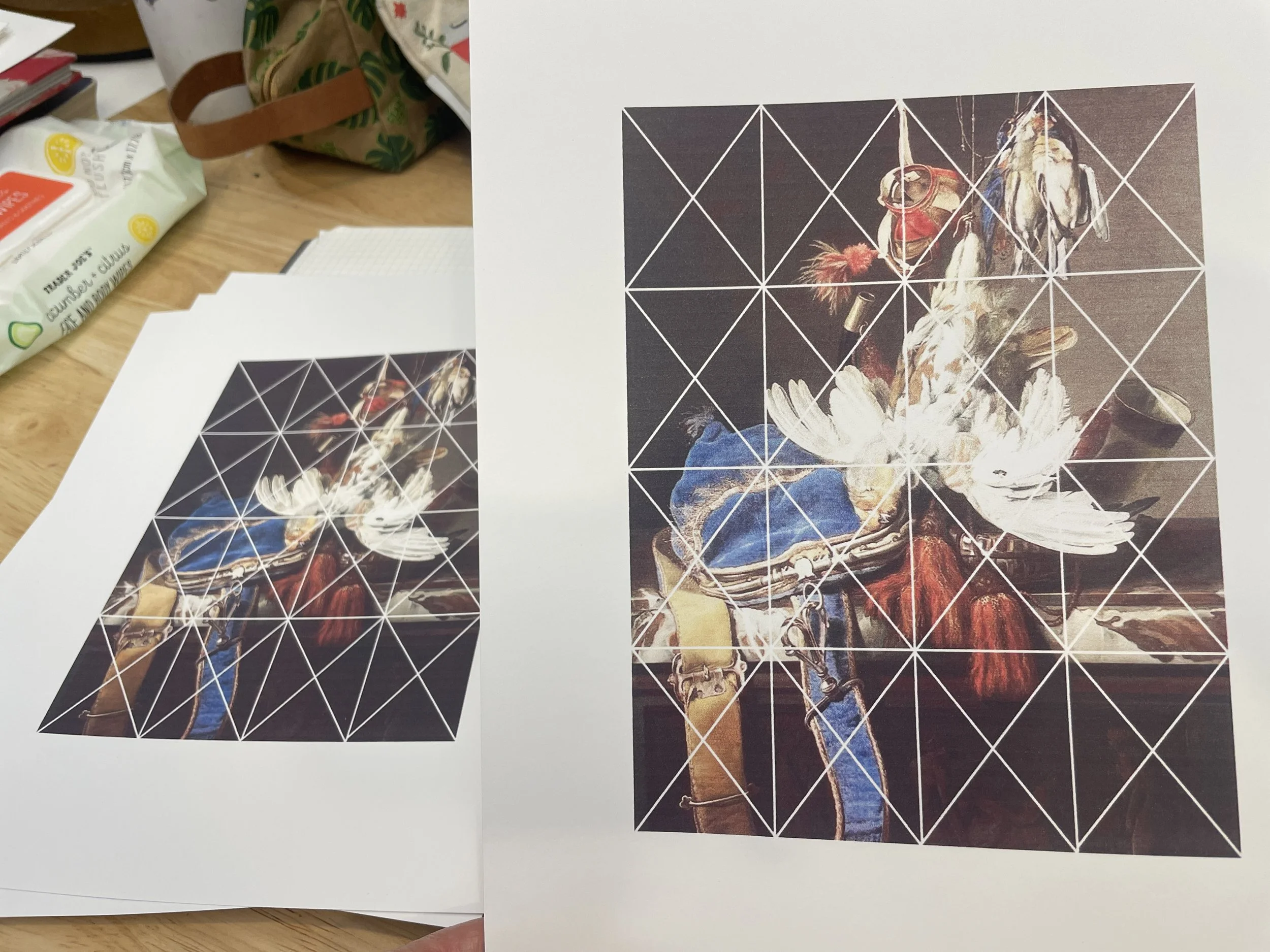
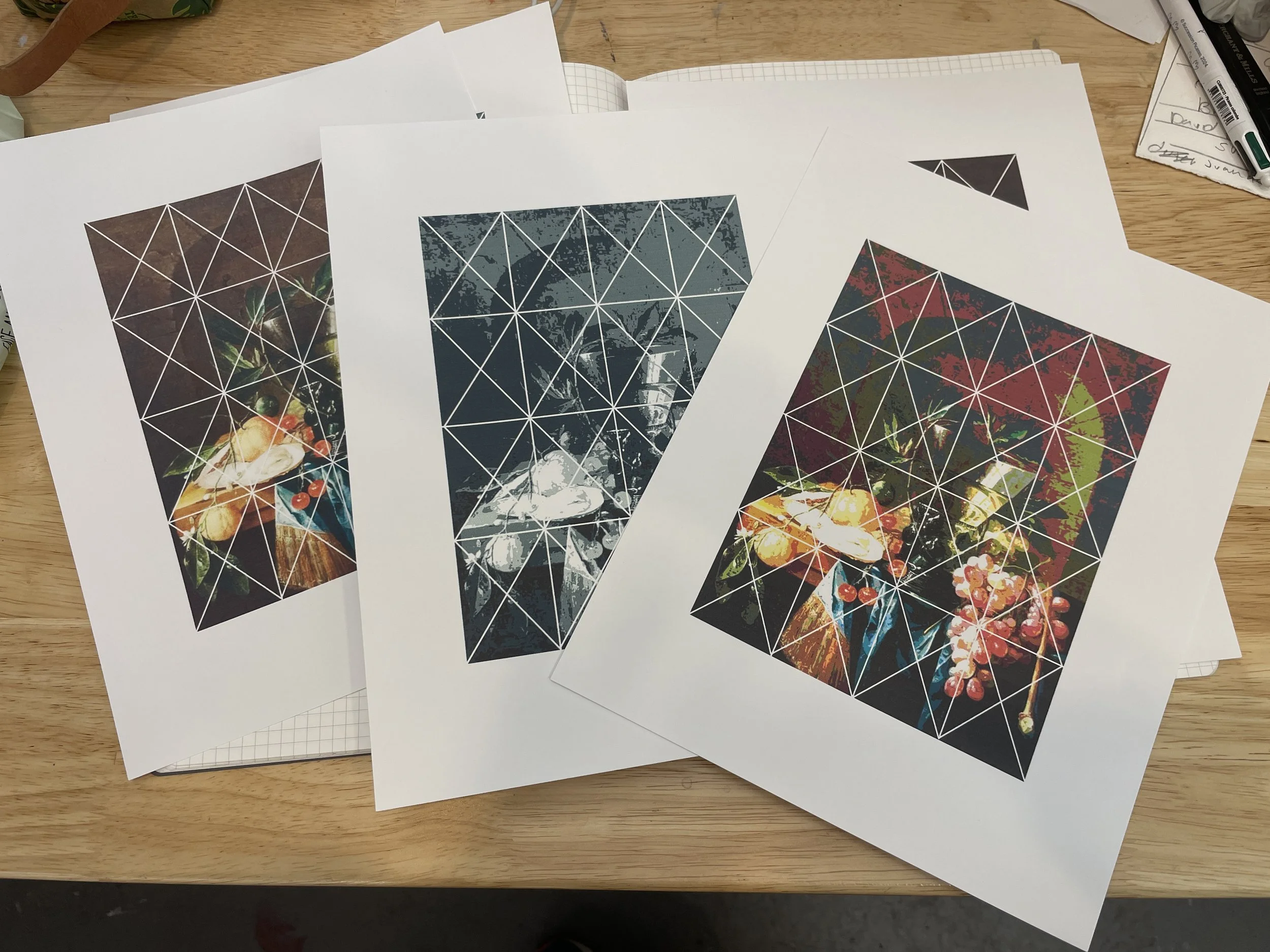
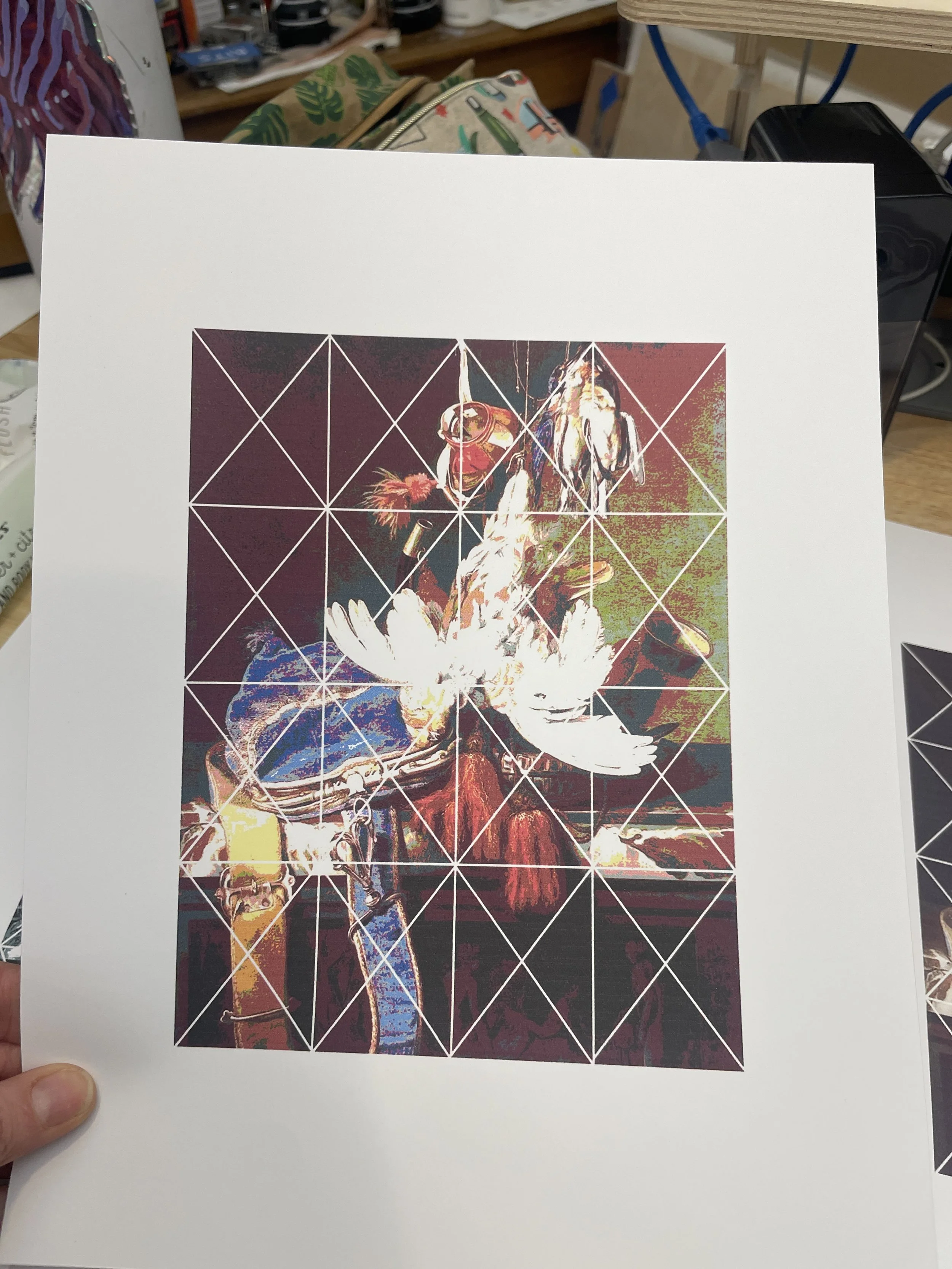
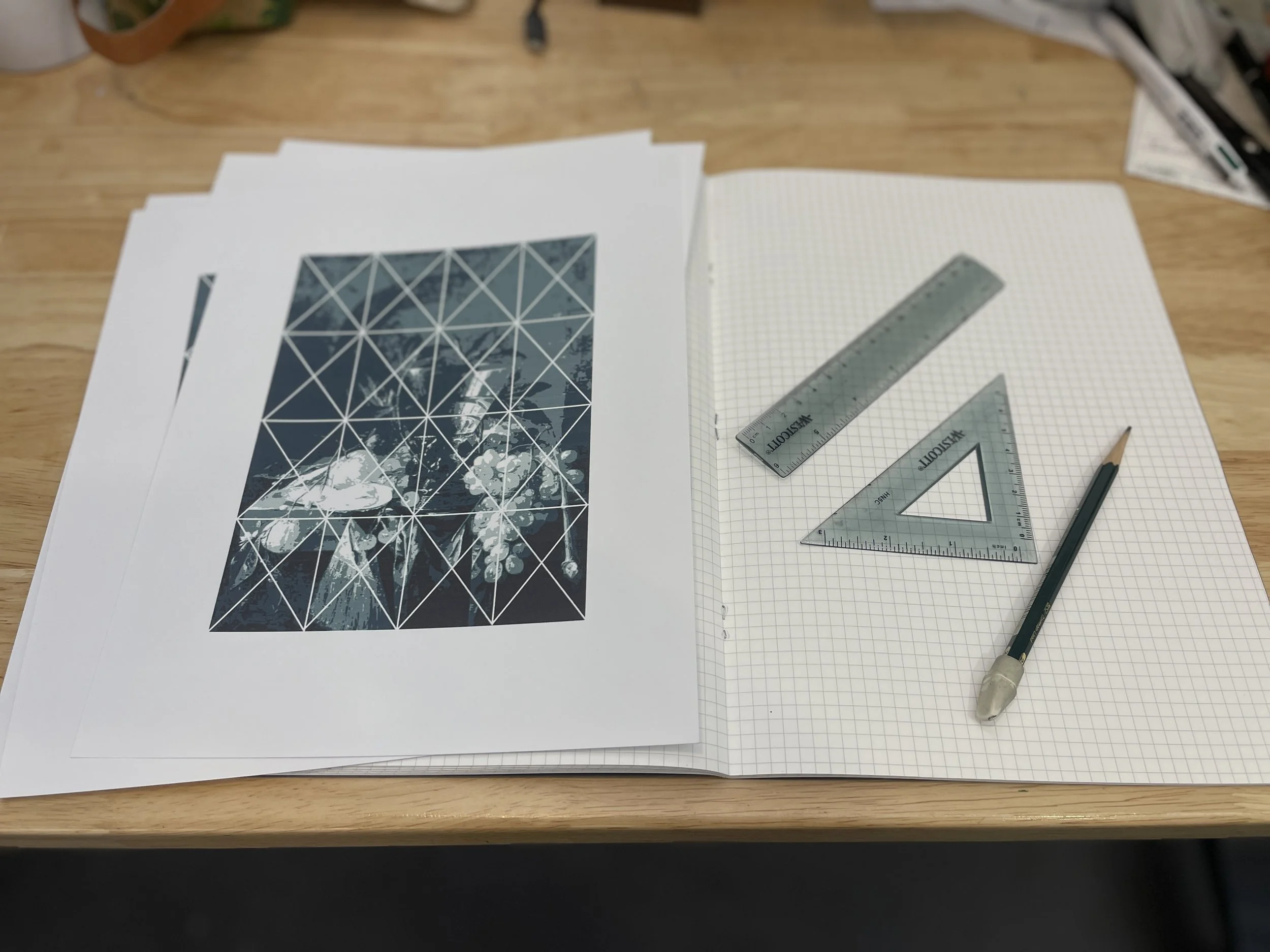
CORNUCOPIA: The Still Life Theater
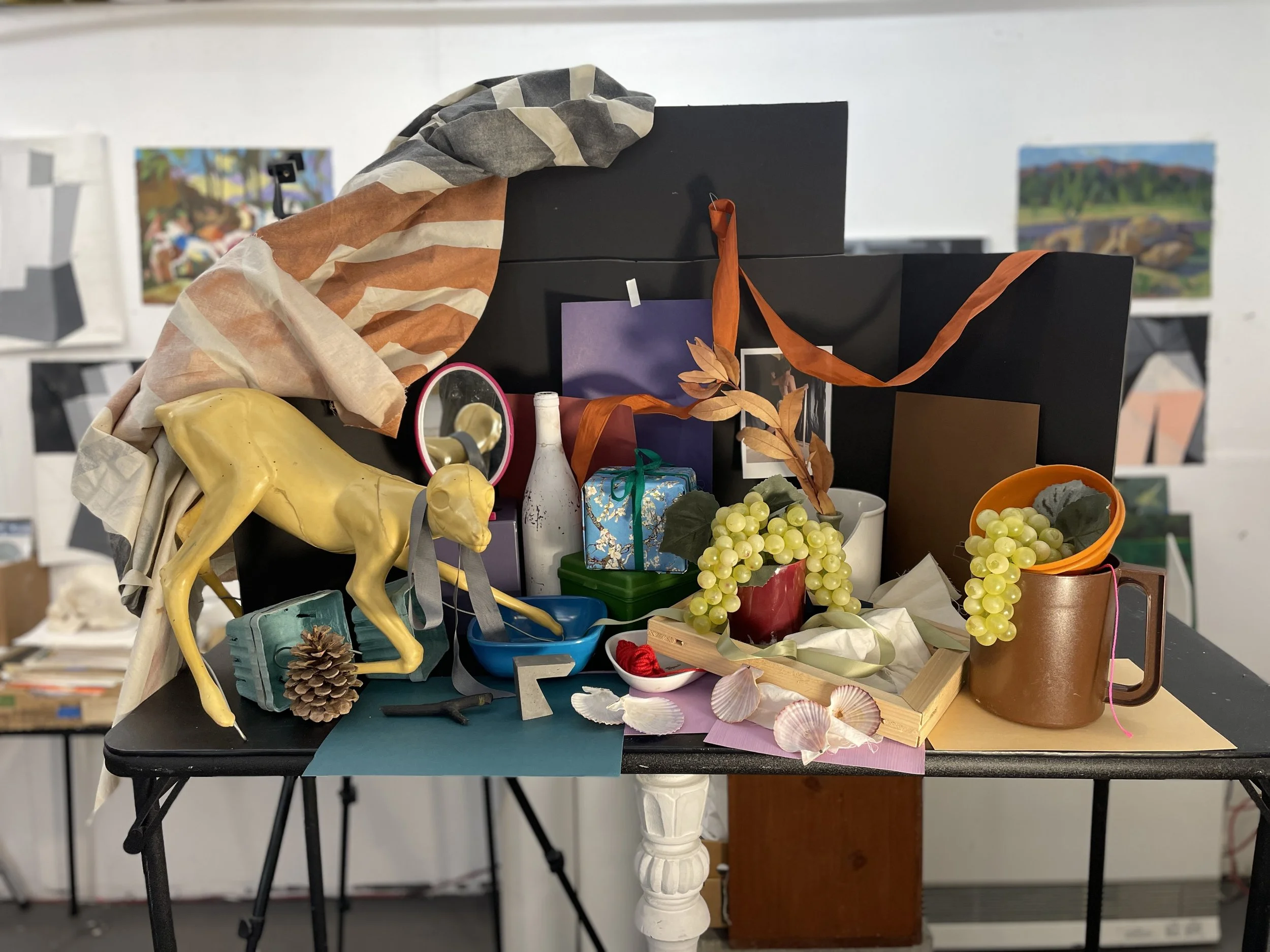
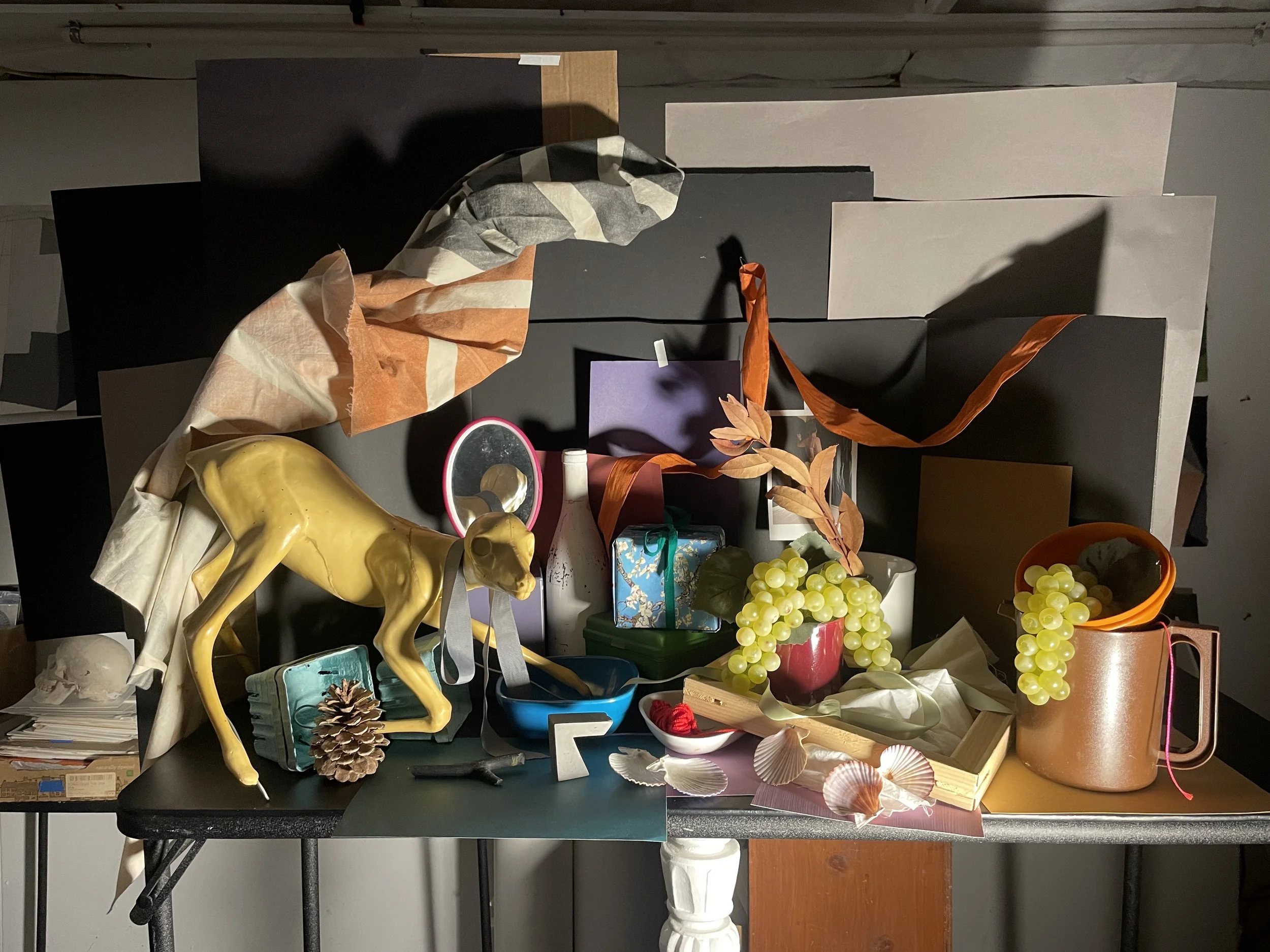
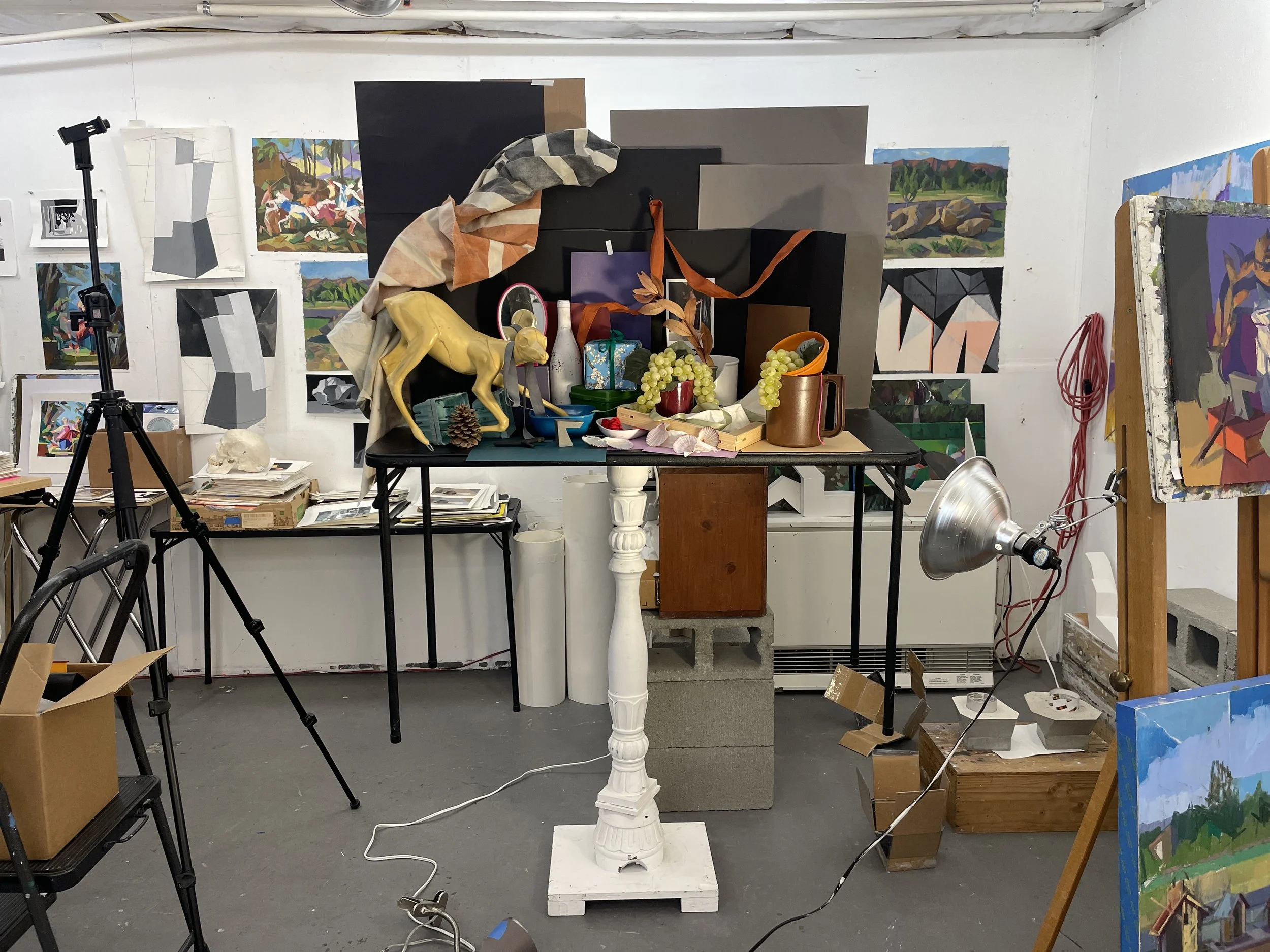
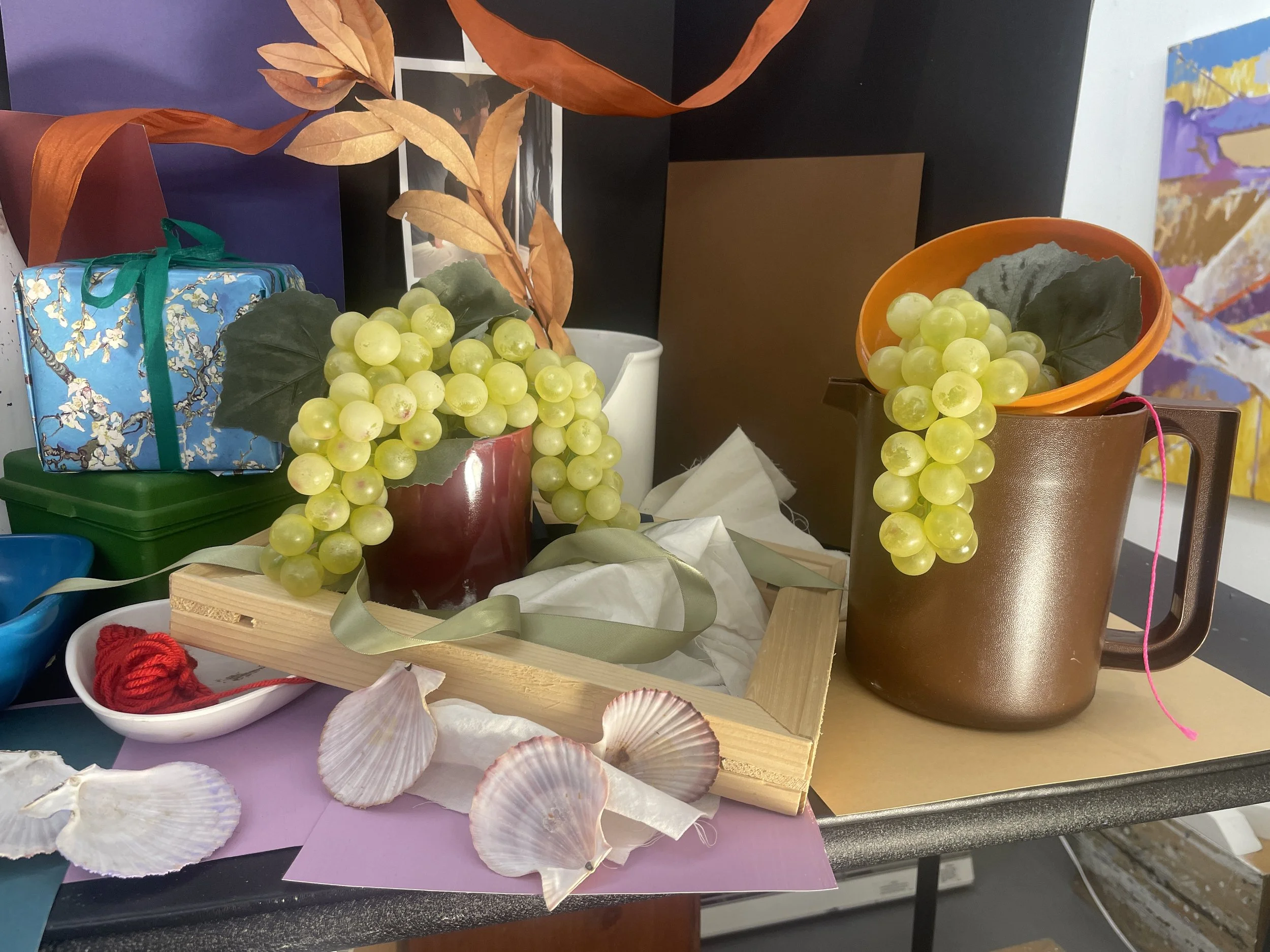
Set-Up a Still Life Theater to work from. Make it a bit over the top. A little too much. A bit baroque.
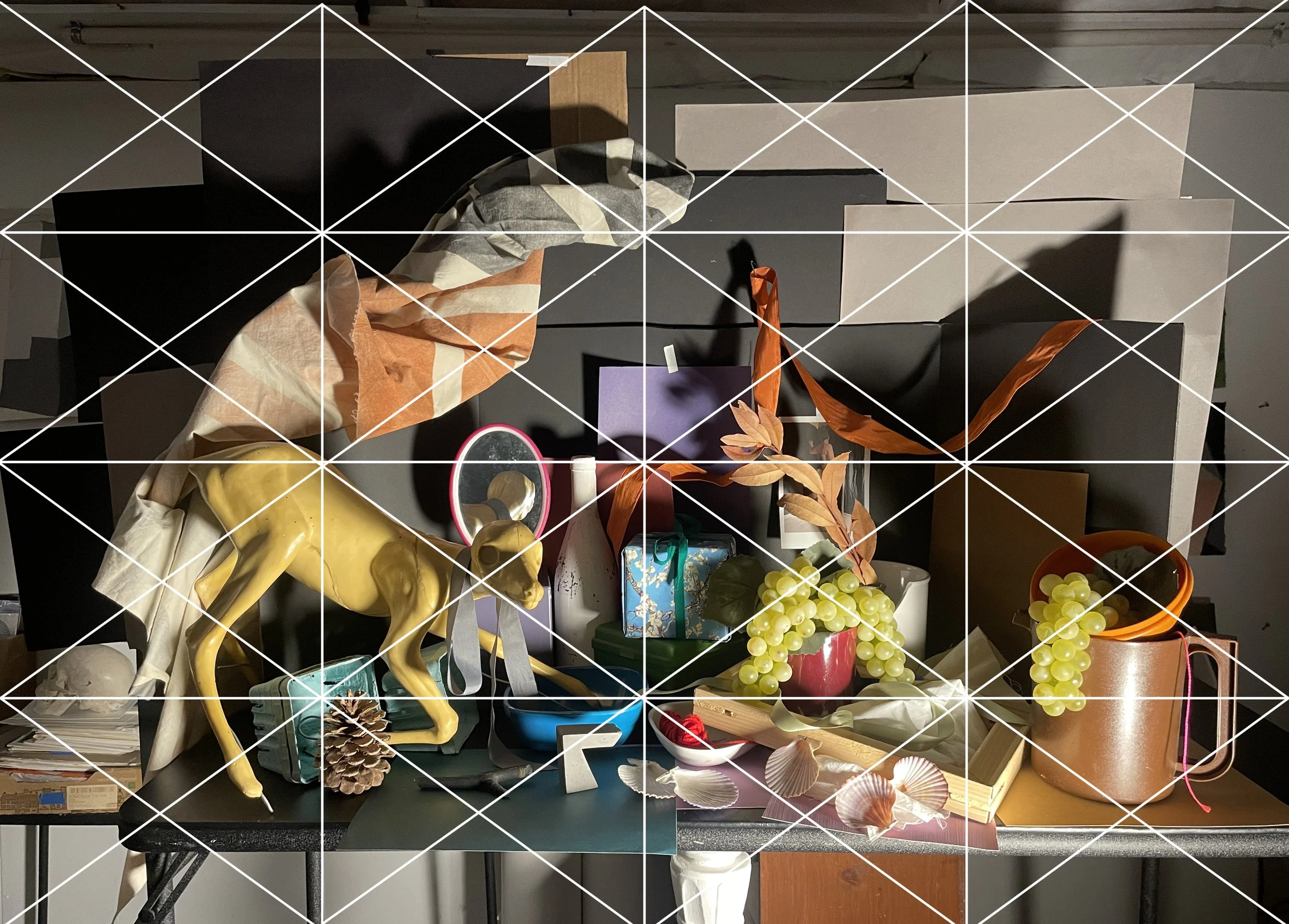
I like to work from my Still Life Theater both observationally and from gridded print-outs. Flat and Spatial. In full color and reduced to value shards. I like to have lots of different data!
BACK TO THE BONES
REMEMBER ALL SHAPES ARE POSITIVE and
FIGURE- GROUND RELATIONSHIPS reveal the poetic structures embedded in our images.
YUP.
A deep-dive into the VALUE structures of our image will always feed us powerful information. This can happen in the beginning of developing an image, or it can come in later. It will always feel good and it will always bring great insight to your inquiry.
There are SO MANY fun and rich methods for this research:
Crayons, Gouache, Collage, Graphite, Oils
Limited-Value Gouache Painting:
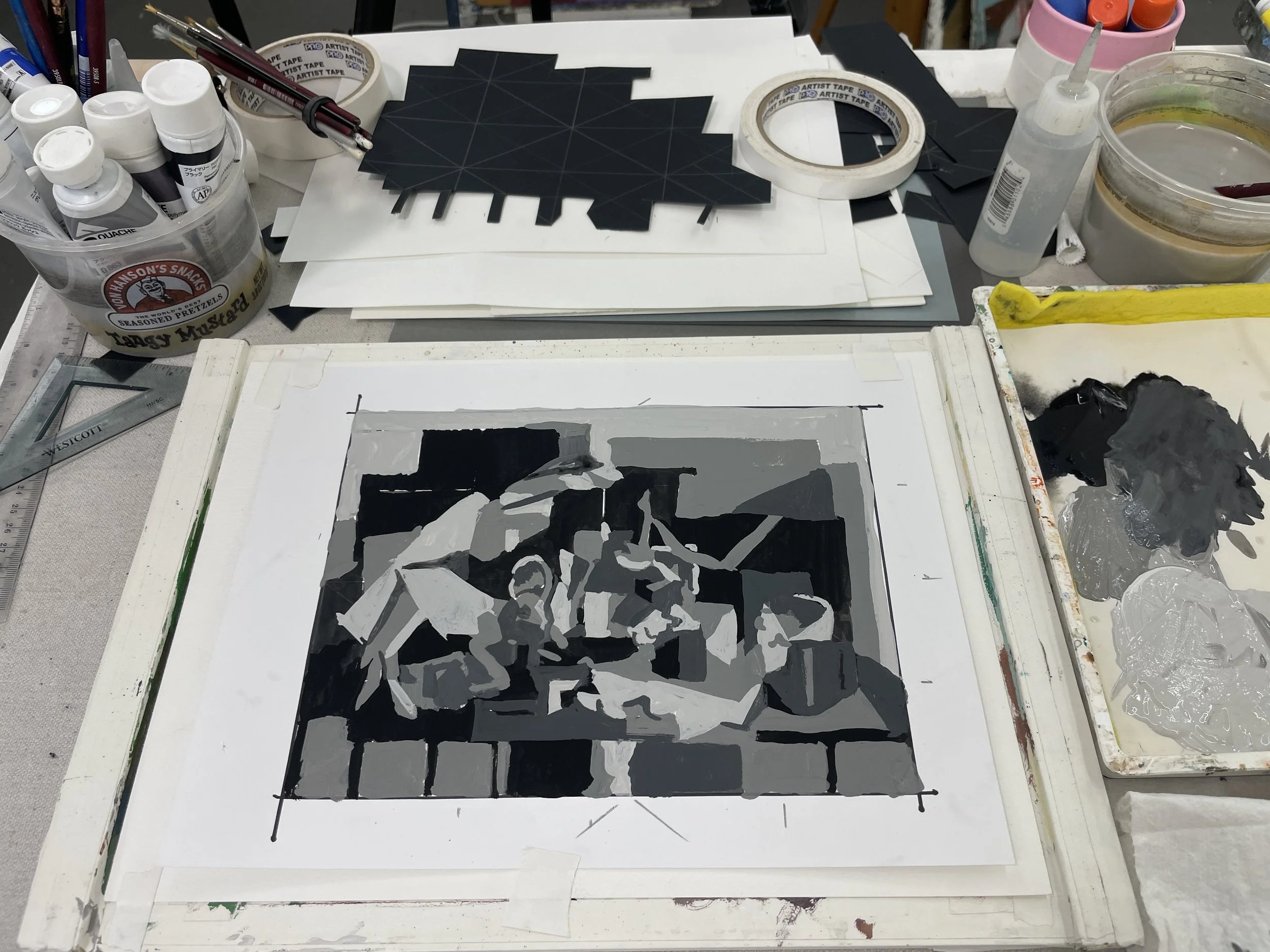
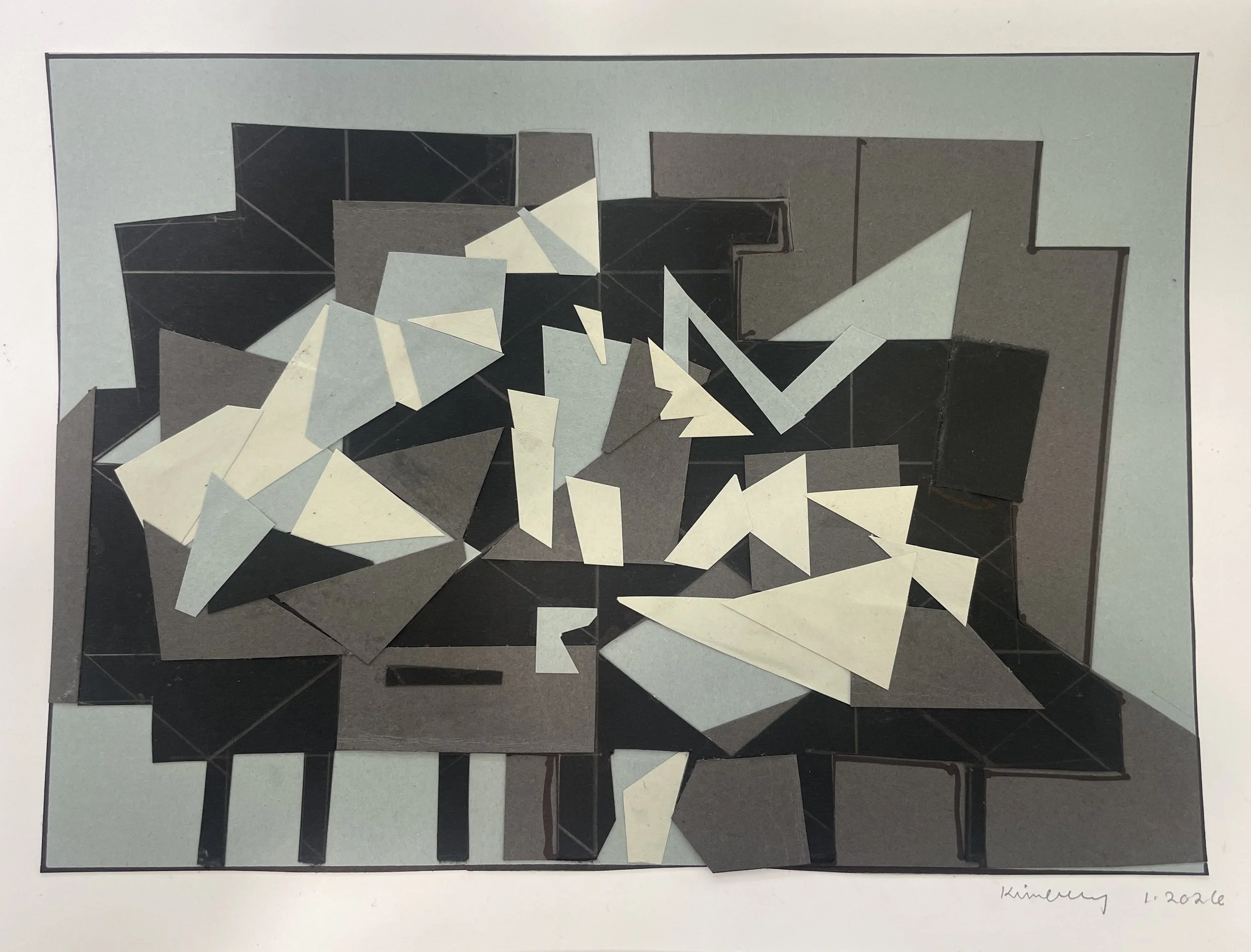
The above collage was not glued down. I dismantled it and rebuilt it during our in-class studio session, and here is a recording snippet of that process. NO AUDIO until the “share” at the very end!
This Video shows a 4-Value Gouache Painting. I am using Holbein Acryla Gouache and a Sta-Wet Palette, painting directly on top of a black and white, printed image on cardstock. NO AUDIO.
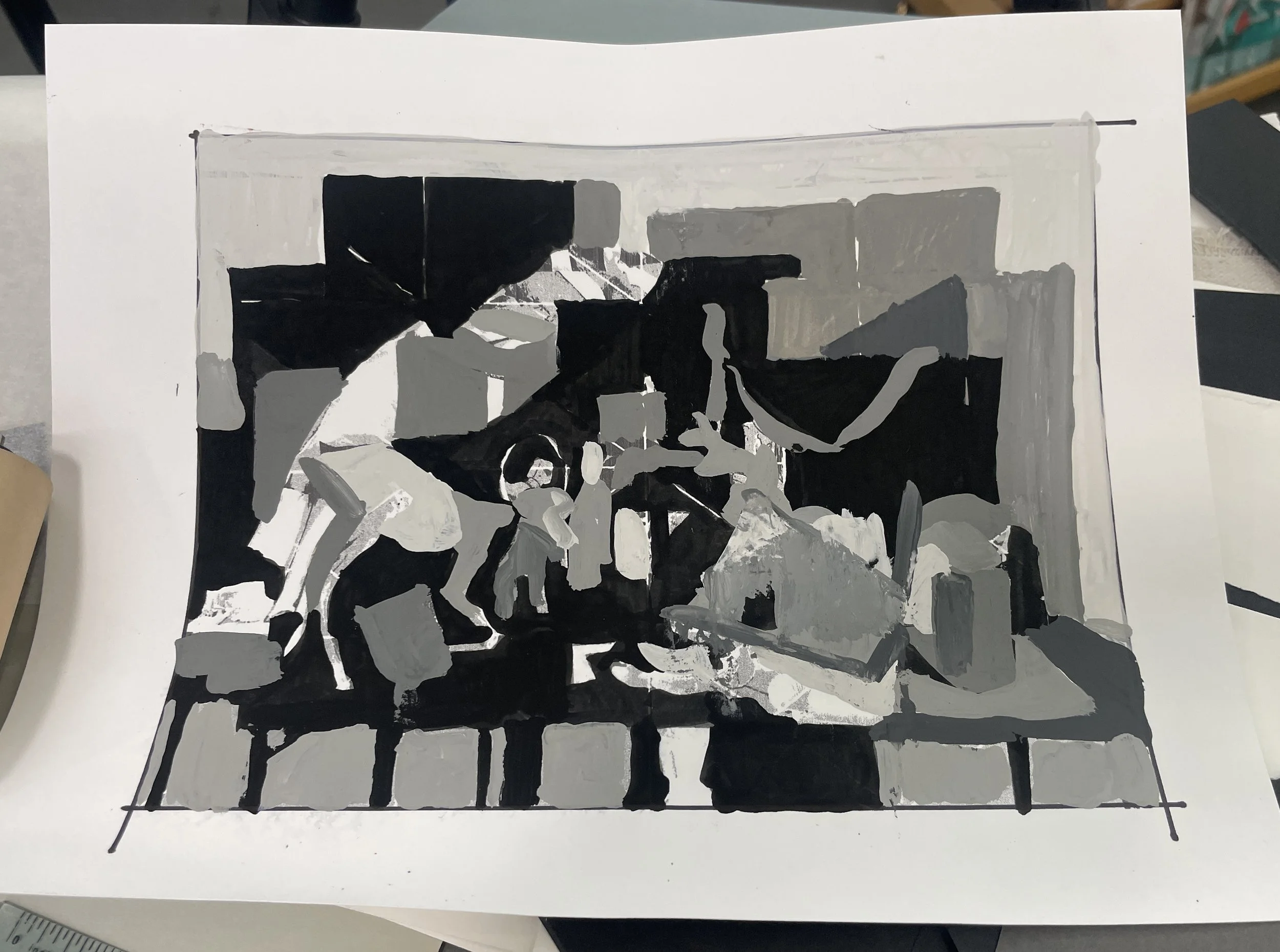
This flattened, value reduction helped me to see some of the larger shapes, and to identify some of the compositional rhythms that excite me. It made this complicated image feel more playful, instead of just overwhelming!
Limited-Value Collage:
Using the 4-Value Goauche Painting as my guide, I constructed a collage from an assortment of tonal papers. This feels like just a begining to an exciting line of inquiry…
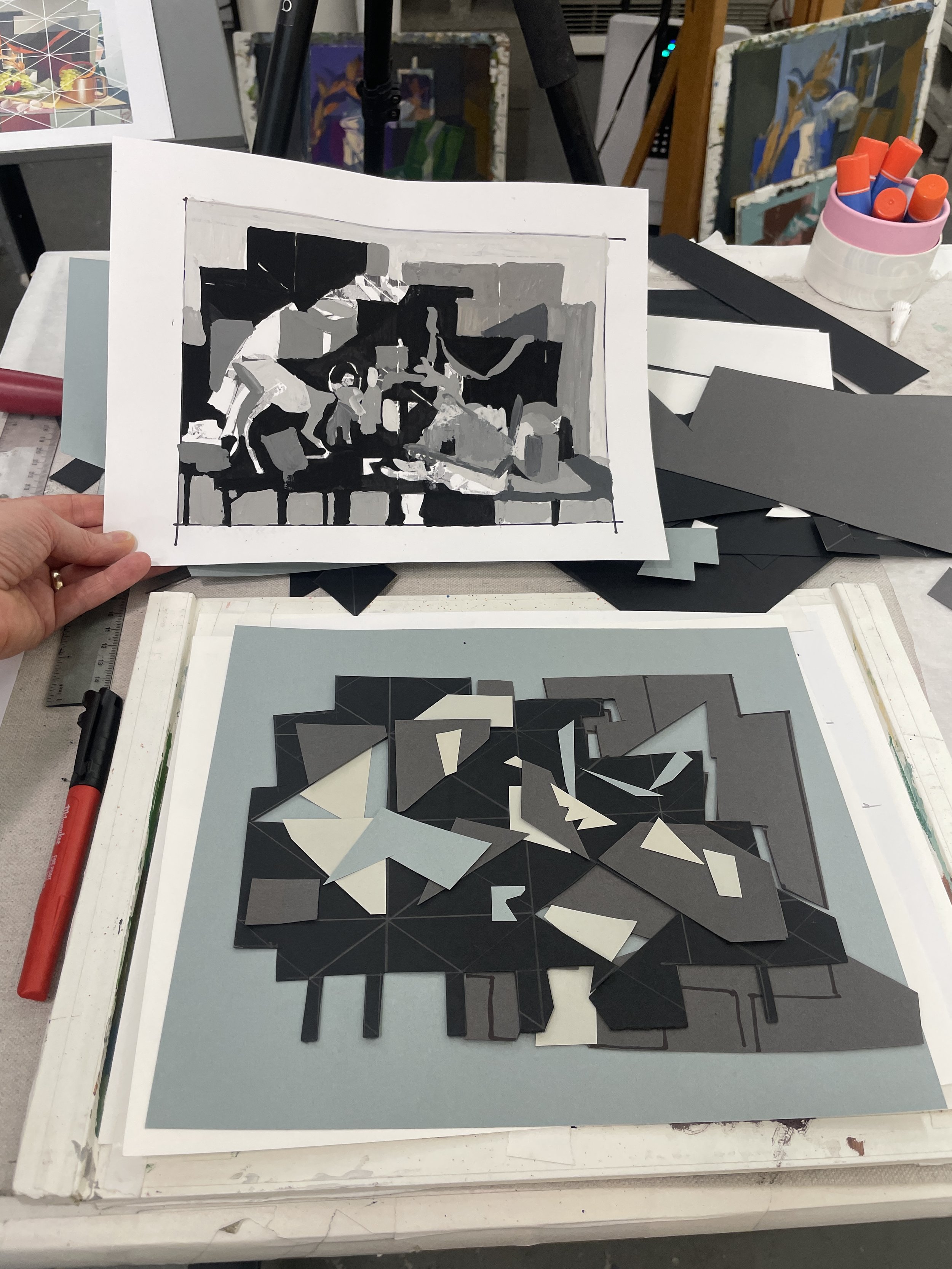
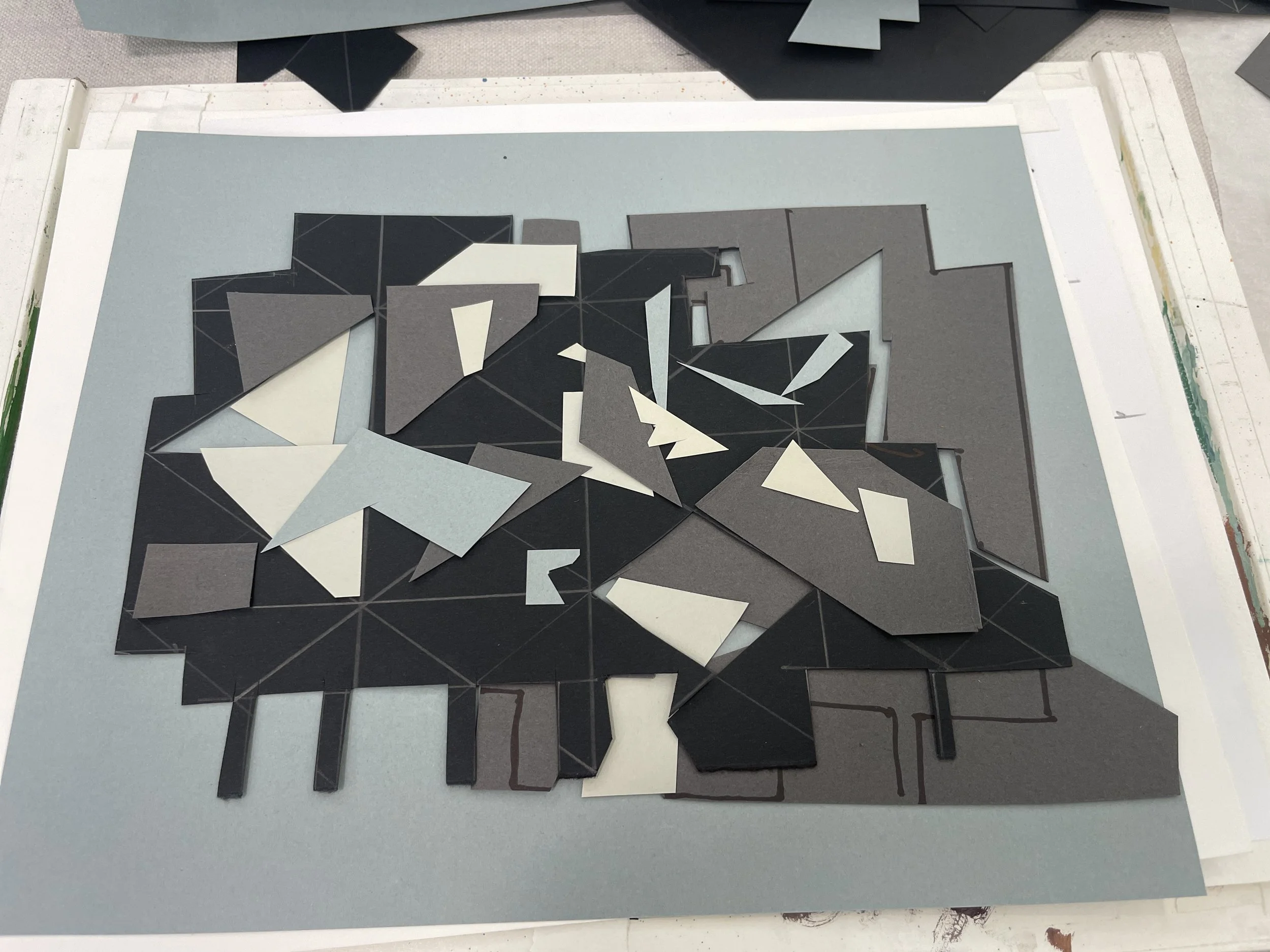
so much more to come!…