UNIT 2:
RELATIVE VALUE
Relative Value
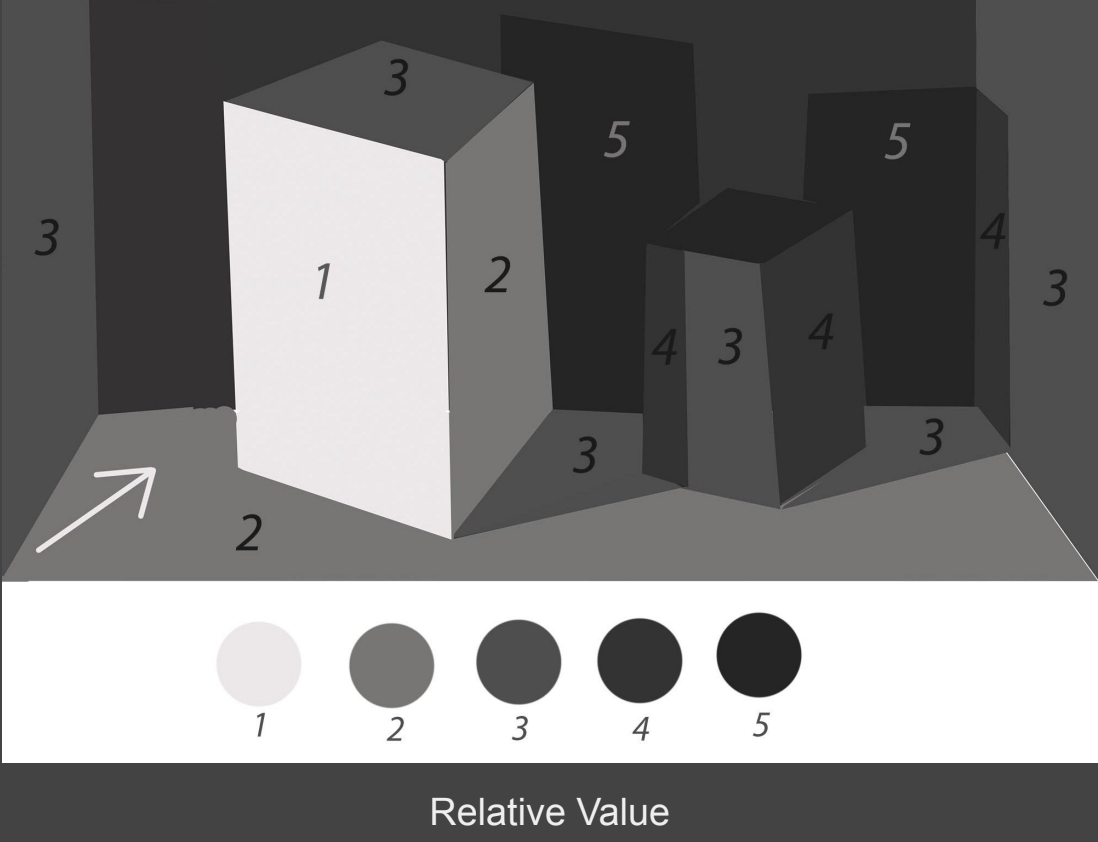
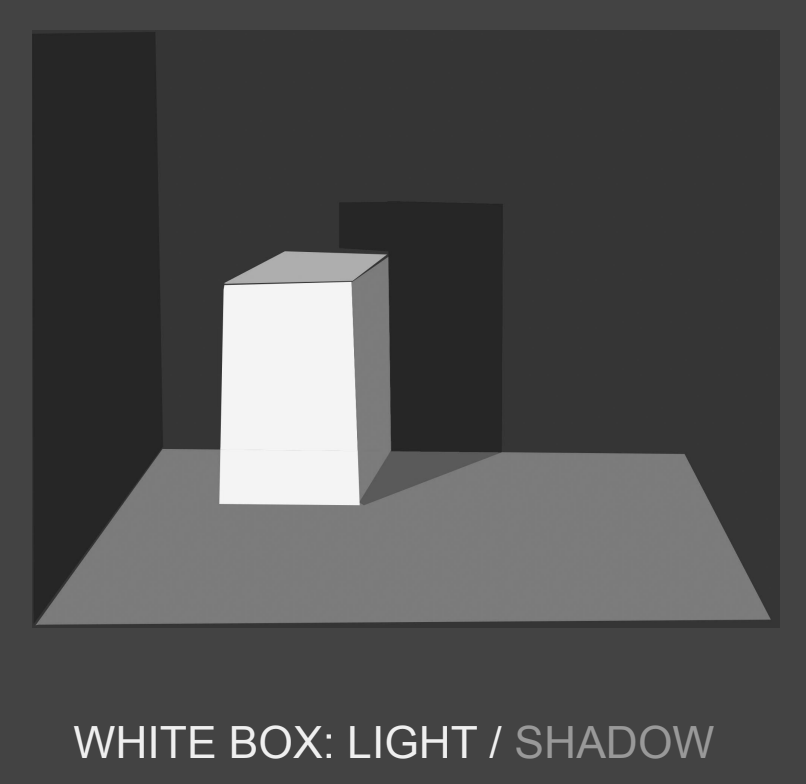
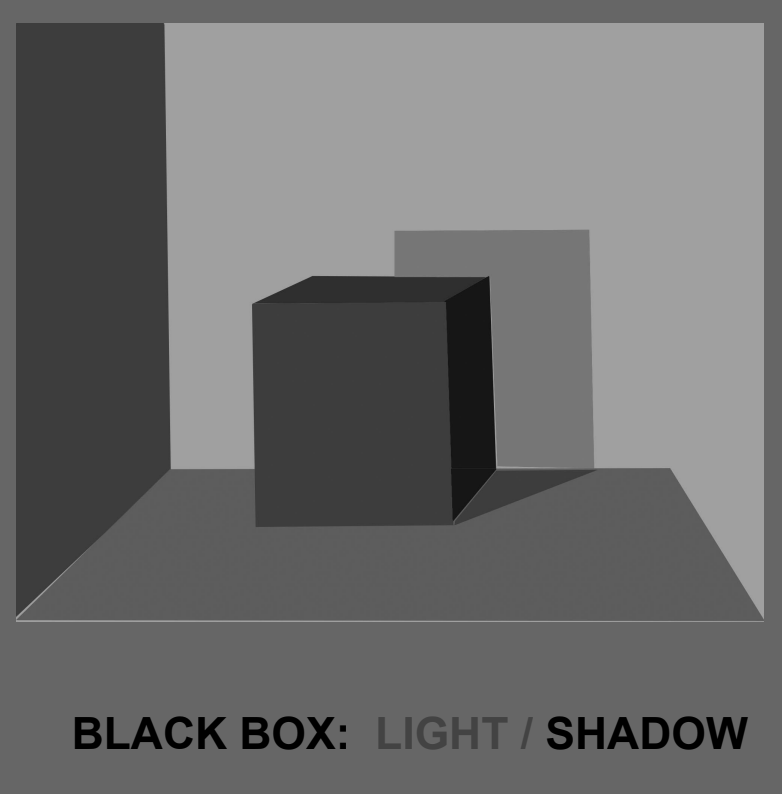
Each object has its own inherent scale, relative to its local hue
For instance, on a scale of 1 (white) to 5 (black), a light-colored object may only span values 1 -3;
while a darker object may only span values 3-5. Put differently, a shadow on a light object will appear quite pale in relation to a shadow on a dark object; light on a dark surface will remain darker than the same light on a lighter surface.
It can be tempting when working tonally to have all your objects painted using our full value scale, ie, every object moves from a 1 all the way to a 5, BUT An awareness of the relative value of the objects and surfaces in a scene will bring great sensitivity and nuance to your pictures. Understanding relative value will be an asset to you as we continue to build our color vocabulary.
I. Making Collage Papers
For this exercise, we will be painting our own tonal collage papers using your Holbein Acryla gouache. (You are welcome to use alternate media to paint your papers.)
Video showing the process of painting your collage papers using your acryla gouche. No audio

II. Box Study Exercise
Using our painted collage papers, we will now apply these five values to an invented box study template to help us practice the concepts of relative value.
Click on the above box template image for a downloadable pdf version that you can print and trace onto construction paper.
-Numbering your box Template
-Tracing Box Study Template
Video showing the process of tracing your box template onto construction paper. No audio
Video showing how to number your values on your box template. Audio included on this video.
-Gluing down your collage box studies
Video showing you glueing down to box study collage. Audio included until minute 2:33 on video
III. Collaging your Rock Motif
Sped up video of building 5 value collage of my rock motif. No Audio
IV. Extension
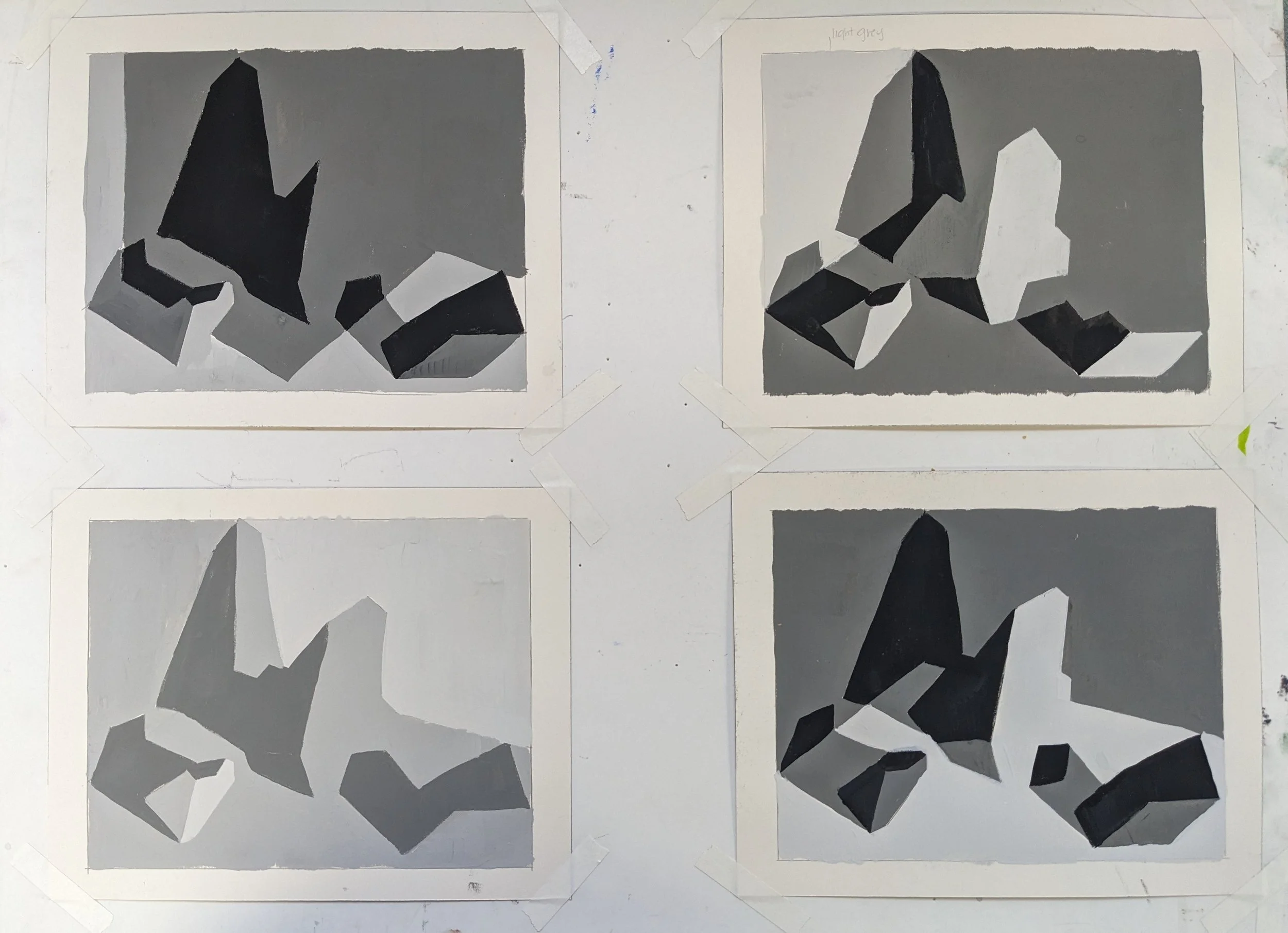
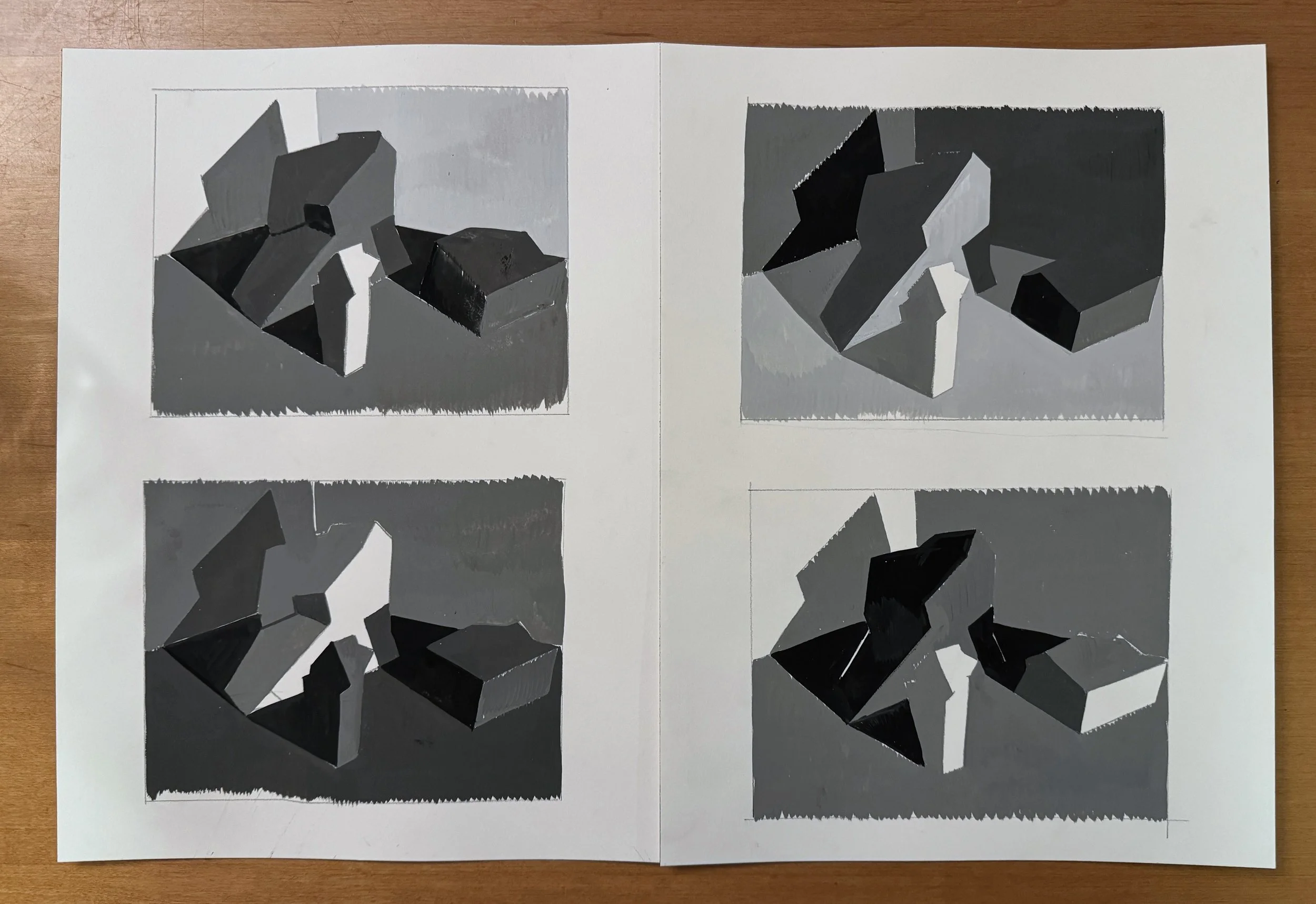
VALUE SHAPES WITH GOUACHE
RULES TO FOLLOW: Keep your light source/ direction of light consistent, so that each object and surface is lighter as it faces the light, and darker in its shadow.
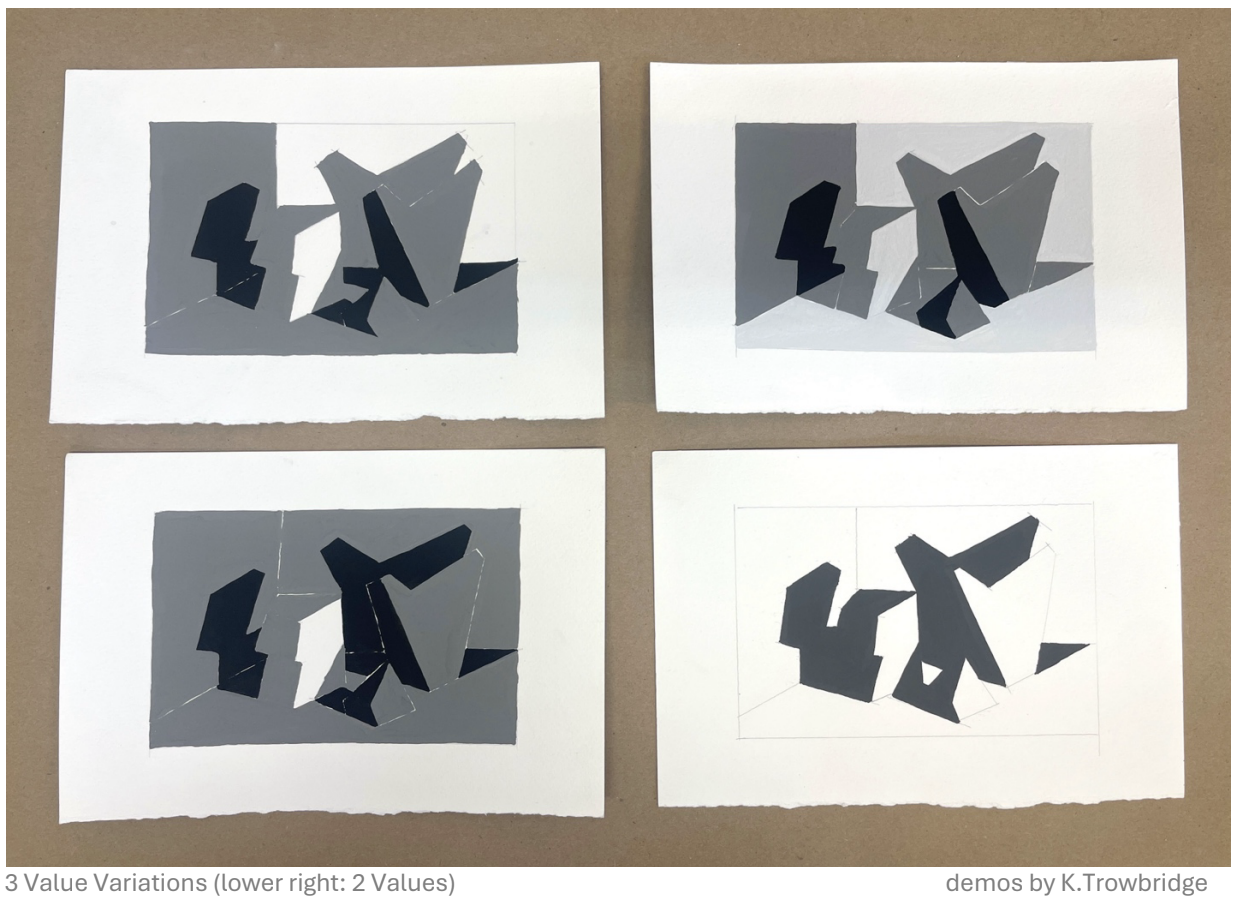
VARIATIONS WITH 3 VALUES: Limiting our palette to only 3 Values is a wonderful way to explore groupings and patterns of light and dark shapes. Figure-Ground Relationships are prevalent when we limit our values.
Notice the different groupings of values, the pattern of shapes, the figure-ground relationships that are revealed with each variation that you create. Think of this as a puzzle, or a riddle with many solutions, or a choose your own adventure... see what happens IF...