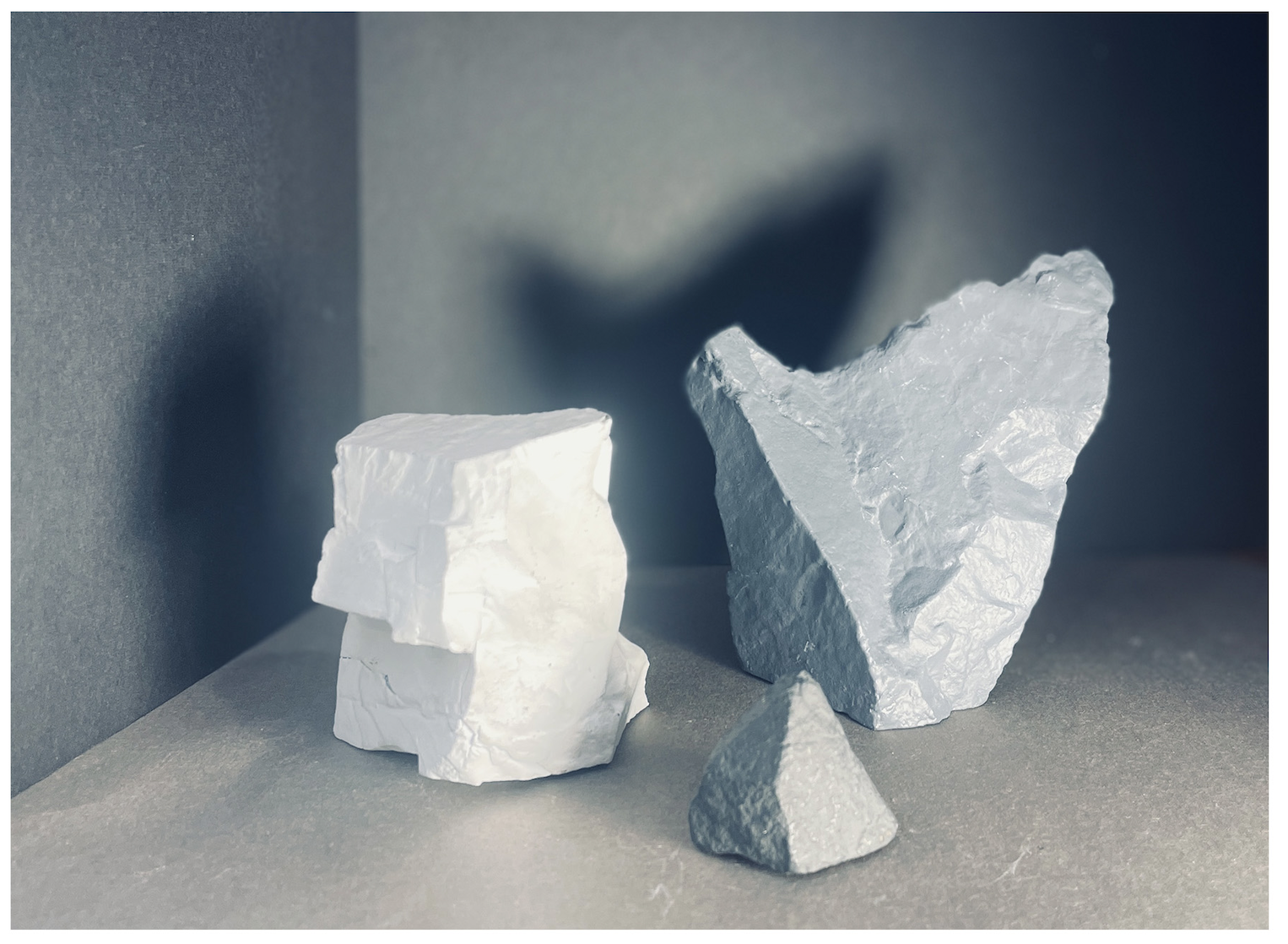
STILL LIFE THEATER SET-UP
The Still Life Theater is an intentional space for observing, experimenting, and learning formal visual concepts. It is also a place for developing narrative associations and personal meaning.
The Theater
Create your box theater by assembling sheets of foam core, cardboard, wood, etc. Two walls and a floor work well. We’ll start by using sheets of black, white, and gray paper to line your walls and floor. You can also begin collecting other colored papers for your theater and/or paint your own along the way…
How to construct your Theater:
Assembling Your Cast
Who are your characters?
Begin assembling a cast of 3-5 “formal” characters- simple, 3D objects that are unique and unnameable (NOT “apple’, “jar”, “vase”, “cube”, “cylndar”, etc). These formal objects will help teach us to see and think visually, separate from our naming mind. That being said, you should love these forms! Choose interesting shapes and gestures that make you happy.
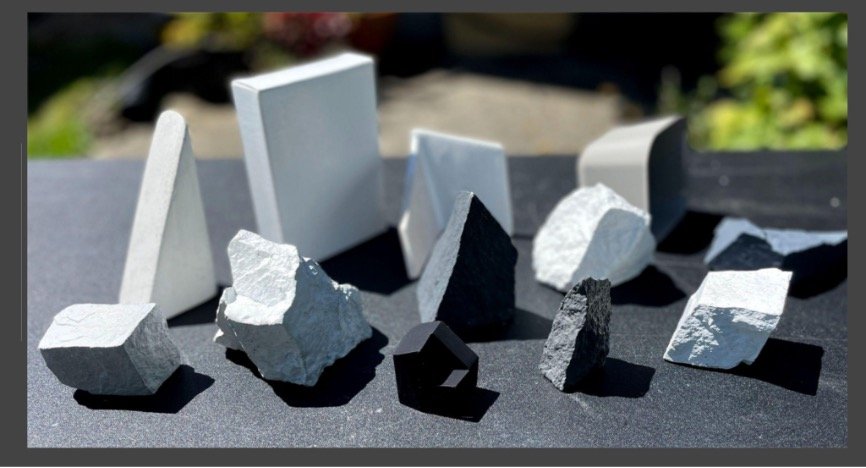
Things to consider when assembling your cast:
- Three-dimensional, planar, geometric forms work best. These can be rocks, folded paper forms, or found objects. You can construct your own by splicing and gluing pieces of foam-core or cardboard, etc.
-Avoid spherical and fully rounded objects as this will be a challenge to visualize clear planes of light and shadow. More organic forms are fine, as long as there are clear sides/planes (see note on “tuning” below).
-Not too large or too small. You should be able to pick-up these forms and move them around. Not too small and finicky (they need to have enough surface area to clearly pick up light and shadow).
-Variation in size, shape and “personality” is important.
-Contrasting values are important. Paint your forms with gouache or matte acrylic: some dark, light, and middle value.
The Light:
It is crucial to have a portable light source that you can easily move around and manipulate, like a clamp light or desk lamp with an adjustable neck.
I like to use a warmer-leaning LED bulb.
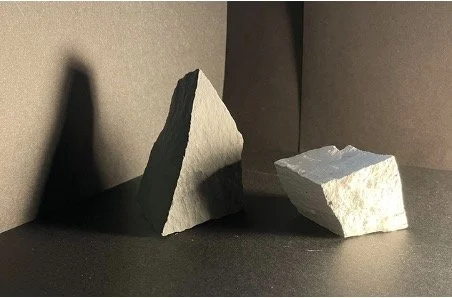
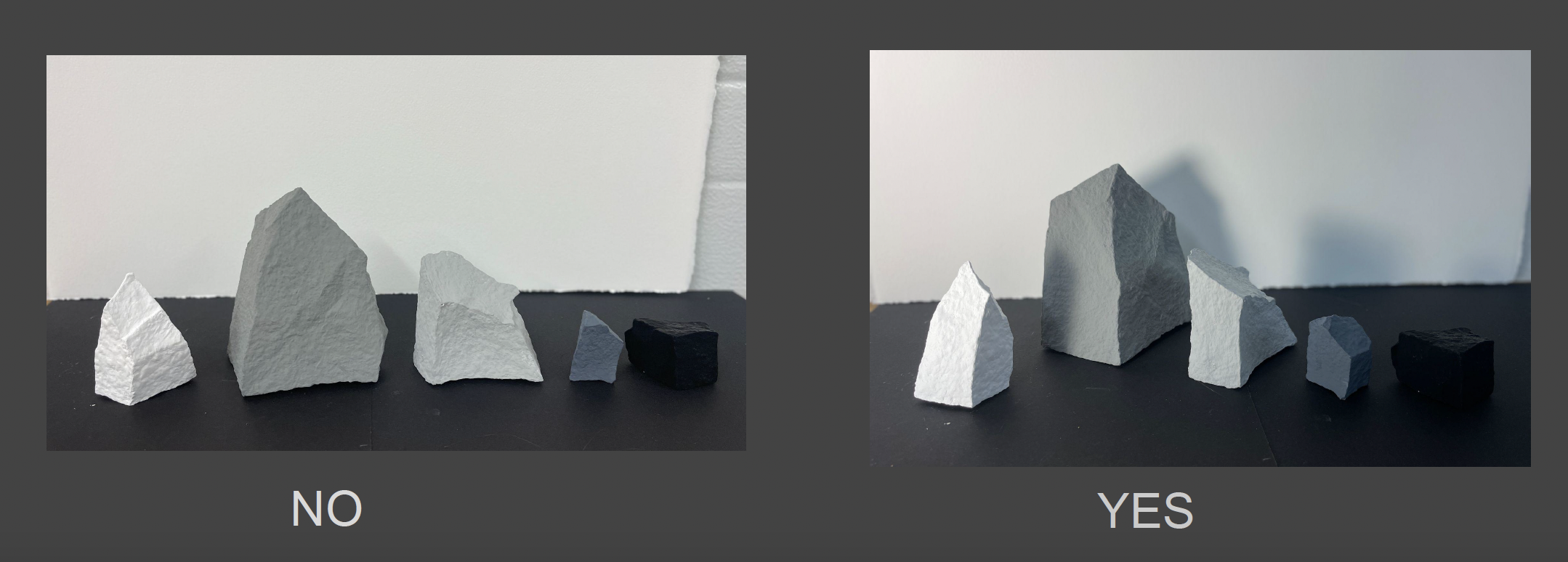
Experiment with moving your light left/right, higher/lower while observing the shadow-shapes. Setting-up your light on one side of your objects, and quite low, typically creates dramatic cast shadows. Experiment with one form casting a shadow upon another form. Imagine this shadow as one form “touching” the other, a kind of bridge that unites them. In the above example, the final shadow climbs up the wall and becomes another character in the drama. Squint your eyes and look for compelling shapes of light and dark that both dissolve and announce the character-forms.
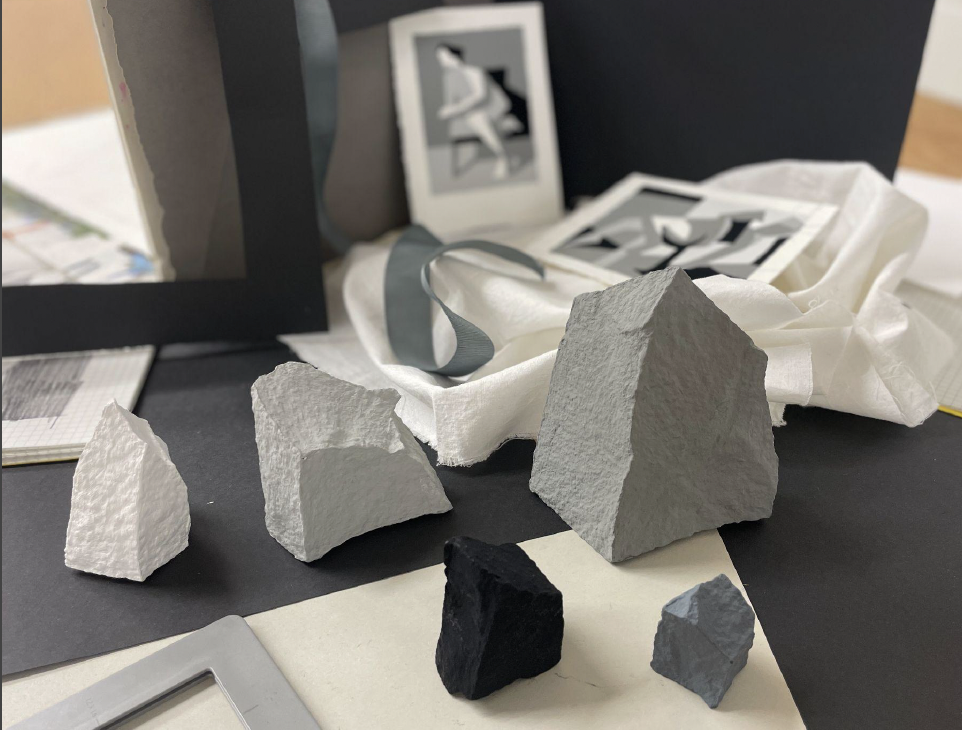
“Tuning” your objects to the Light
Rotate your objects, “tuning” them to the light so that each object in your theater has a clear plane that is in light and a clear plane that is in shadow.
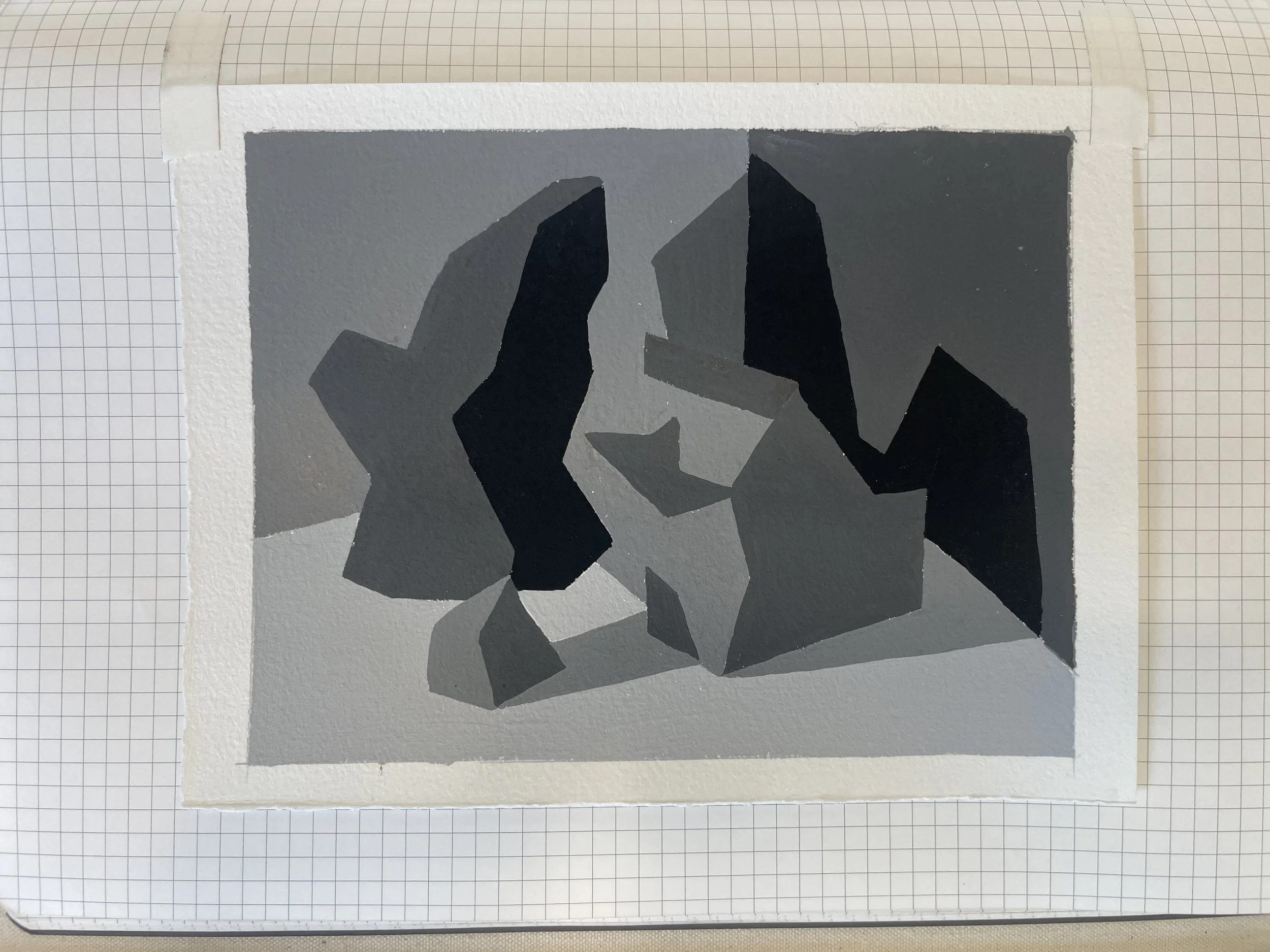
gouache on paper